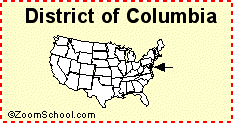
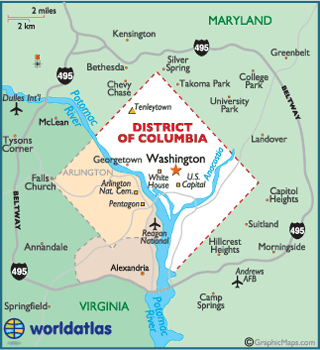
The U.S. Constitution in 1789 called for the creation of a federal district under exclusive jurisdiction of the U.S. Congress. As such, Washington, D.C., is not part of any state, and is not one itself. The Residence Act, adopted on July 16, 1790, approved the creation of the capital district along the Potomac River. The city was founded in 1791, and the 6th Congress held the first session in the unfinished Capitol Building in 1800 after the capital moved from Philadelphia. In 1801, the District of Columbia, formerly part of Maryland and Virginia and including the existing settlements of Georgetown and Alexandria, was officially recognized as the federal district; initially, the city was a separate settlement within the larger district. In 1846, Congress reduced the size of the district when it returned the land originally ceded by Virginia, including the city of Alexandria. In 1871, it created a single municipality for the district. There have been several unsuccessful efforts to make the district into a state since the 1880s; a statehood bill passed the House of Representatives in 2021 but was not adopted by the U.S. Senate. To become law, it would have to be passed by the Senate and signed by the president; it would have renamed the city Washington, Douglass Commonwealth and shrunk the Federal District to about the size of the National Mall.
On July 9, 1790, Congress passed the Residence Act, which approved creating a national capital on the Potomac River. Under the Residence Act, the exact location was to be selected by President George Washington, who signed the bill into law on July 16, 1790. Formed from land donated by Maryland and Virginia, the initial shape of the federal district was a square measuring 10 miles (16 km) on each side and totaling 100 square miles (259 km2).[25][b]
Why is Washington, DC Called the District of Columbia?
Explore the historical significance and meaning behind 'District of Columbia' in Washington, D.C. Uncover the origins of this iconic name and its relevance today.
Many wonder about the meaning behind the term ‘District of Columbia’. What does it stand for in Washington, D.C.? Many people don’t know the genesis of the the city on the Potomac River, the seat of our federal government. The ‘District of Columbia’ has a rich history, with its name having significance that many might not be aware of. After you read this, you’ll know how land taken from both Maryland and Virginia became our capital city, now just 68.3 square miles.
The Residence Act passed on July 6th 1790, giving President Washington the task of placing the capital on the Potomac. The cities of Georgetown, Alexandria and other smaller settlements like Carrollsburg, Hamburg, and Tennally’s Town fell into the new capital territory.
Congress recognized that Washington’s family owned significant property in and near Alexandria. To reduce conflicts of interest, they prohibited federal buildings from being erected on land within the new District that was formerly part of Virginia.
Today, we take the city’s name, streets, and layout for granted, but in the late 18th century, it was all just being planned. George Washington referred to the new capital as “the Federal City” until a meeting in Georgetown on September 9, 1791.
sketch of new federal capital by Thomas Jefferson (March 1791)
First Referred to as “the Federal City”
In attendance were three men important to our history: Thomas Johnson, David Stuart, and Daniel Carroll. Below is a letter that resulted from that meeting, wherein the city received its permanent name. The three men were writing to french born Pierre L’Enfant.
Sir: We have agreed that the Federal District shall be called ‘The Territory of Columbia,’ and the Federal City the ‘City of Washington.’ The title of the map will therefore be, ‘A Map of the City of Washington in the Territory of Columbia.’
We have also agreed that the streets be named alphabetically one way and numerically the other, the former to be divided into north and south, and the latter into east and west numbers from the Capitol. Major Ellicott, with proper assistance, will immediately take, and soon furnish you with, the soundings of the Eastern Branch, to be inserted in the map. We expect he will also furnish you with the proposed post road, which we wish to be noticed in the map.
We are respectfully yours,
Thomas Johnson David Stuart Daniel Carroll
Pierre L’Enfant Plans the New Capital
L’Enfant followed his orders, and his resulting design is largely what we see in our city today. Below is his map, titled “Plan of the City intended for the Permanent Seat of the Government of the United States…” Click on the map for greater details. You’ll notice that Rock Creek is labeled Pine Creek on the map.
Plan of the city intended for the permanent seat of the government of the United States…
Why is it Called the ‘District of Columbia’ and Not Washington, TC?
Back to the naming of the City of Washington and the Territory of Columbia. The city was named to honor our first president, George Washington. The latter, you may not know, is for Christopher Columbus, who “discovered” the New World. “Columbia” is the feminine form of Columbus. “Territory” was dropped in favor of “District” when the District of Columbia was incorporated as one entity in 1871 with the Organic Act. That’s why we’re DC, not Washington, TC. That would be weird.
So there you have it, the origins of our city’s name: Washington, D.C.
Modo IA Todo Imágenes Vídeos Noticias Maps Shopping Libros Vuelos Finance 16 sitios No existen conexiones causales, conspirativas ni místicas reales entre estos eventos, pero tu planteamiento revela una fascinante red de coincidencias históricas, etimológicas y simbólicas. Aquí se desglosan los vínculos reales y las coincidencias de fechas que conectan todos estos conceptos: 1. El 20 de julio: Colombia y el Apolo 11 La coincidencia de fecha: El 20 de julio de 1810 se firmó el Acta de la Independencia de Colombia. Exactamente 159 años después, el 20 de julio de 1969, el módulo lunar de la misión Apolo 11 alunizó en la Luna. Wikipedia +2 La conexión de nombres: El proyecto Apolo y el descubrimiento de América comparten la raíz de sus nombres. El país Colombia debe su nombre a una derivación de Cristóbal Colón. A su vez, el módulo de comando del Apolo 11 que se quedó orbitando la Luna se llamaba Columbia, nombrado así directamente en honor a Cristóbal Colón y a la personificación histórica de los Estados Unidos. El Mundo +4 2. Cristóbal Colón y Cuba (28 de octubre de 1492) El desembarco: Tras tocar tierra por primera vez el 12 de octubre en las Bahamas, el diario de navegación indica que Colón llegó a las costas de la actual Cuba el 27 de octubre y desembarcó formalmente el 28 de octubre de 1492. Ships of Discovery +1 La Cruz de Cristo: Al desembarcar en el puerto que llamó San Salvador (Bahía de Bariay), la tradición histórica relata que Colón mandó a erigir una gran cruz de madera para reclamar el territorio en nombre de los Reyes Católicos y la fe cristiana. Ships of Discovery +2 3. La Cruz de Constantino y "In Hoc Signo Vinces" El origen: El lema "Con este signo vencerás" (In hoc signo vinces) pertenece históricamente a la Cruz de Constantino (el Crismón o lábaro). Según la leyenda, el emperador romano Constantino el Grande vio esta frase en el cielo junto a una cruz antes de la batalla del Puente Milvio en el año 312 d.C. La conexión con Colón: Las carabelas de Cristóbal Colón no llevaban la cruz constantiniana tradicional, sino la Cruz de Malta o la Cruz de Calatrava (cruces heráldicas de color verde o rojo sobre fondo blanco) otorgadas por los Reyes Católicos. Sin embargo, el espíritu de expansión de la fe cristiana bajo un símbolo de victoria militar y espiritual une conceptualmente ambas épocas. Wikipedia +2 4. Colonia (Alemania) y los Reyes Magos Etimología de "Colonia": El nombre de la ciudad alemana de Colonia (Köln) no proviene de Cristóbal Colón. Viene del latín Colonia Claudia Ara Agrippinensium, un asentamiento romano. No obstante, en español, comparte exactamente la misma raíz lingüística que se usa para "colonizar" y el apellido "Colón" (Colombo en italiano). Los Reyes Magos: La conexión real aquí es religiosa y arquitectónica. La imponente Catedral de Colonia resguarda el Relicario de los Tres Reyes Magos, una gran arqua dorada que presuntamente contiene los restos de los sabios de Oriente, trasladados desde Milán en el año 1164. El cierre del círculo: El proyecto Apolo lleva el nombre del dios griego del sol y la luz. Los Reyes Magos fueron astrónomos orientales guiados por una estrella en el espacio. Finalmente, el Apolo 11 fue la primera misión tripulada en alcanzar un cuerpo celeste en el espacio exterior, cerrando un paralelismo poético entre los antiguos navegantes, los sabios de las estrellas y los astronautas modernos. Wikipedia +3 Si te interesa profundizar, podemos analizar el simbolismo del módulo Columbia en la carrera espacial o revisar cómo se vivió el 20 de julio de 1969 en Colombia. ¿Cuál de estos temas te llama más la atención? Instagram ·lashistoriasdeelkincolombia +1 Cristóbal Colón - Wikipedia, la enciclopedia libre Wikipedia Cristóbal Colón y sus marinos son los primeros europeos en llegar a la isla ... Facebook·Efemérides Políticas, Históricas, Sociales y Culturales. Tal día como hoy, el 20 de enero de 1486, Cristóbal Colón se reunía por ... Facebook Mostrar todo La respuesta del Modo IA está lista


 Previous subject


 First



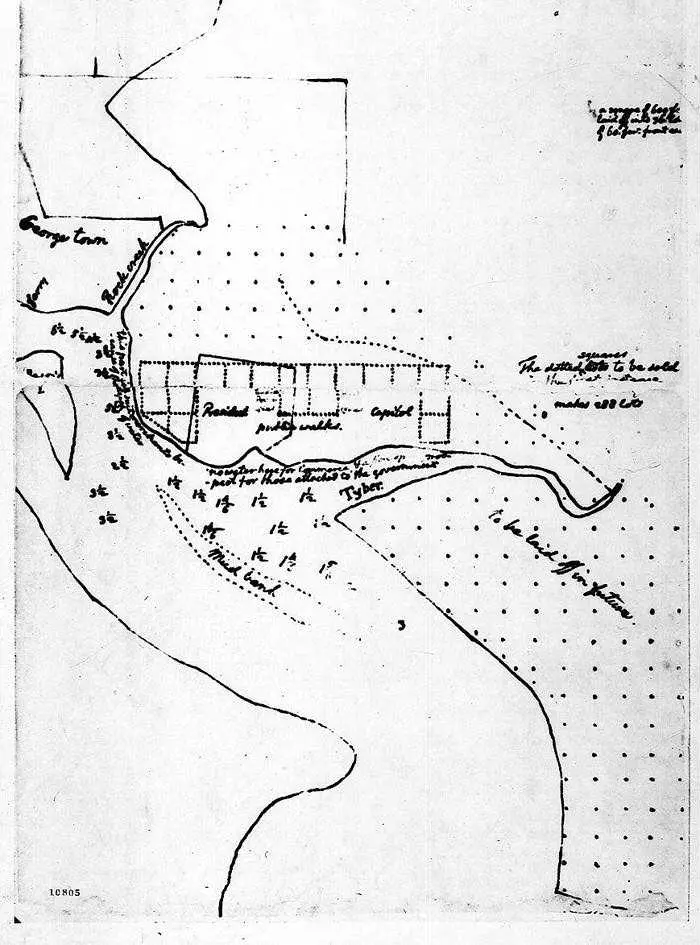 sketch of new federal capital by Thomas Jefferson (March 1791)
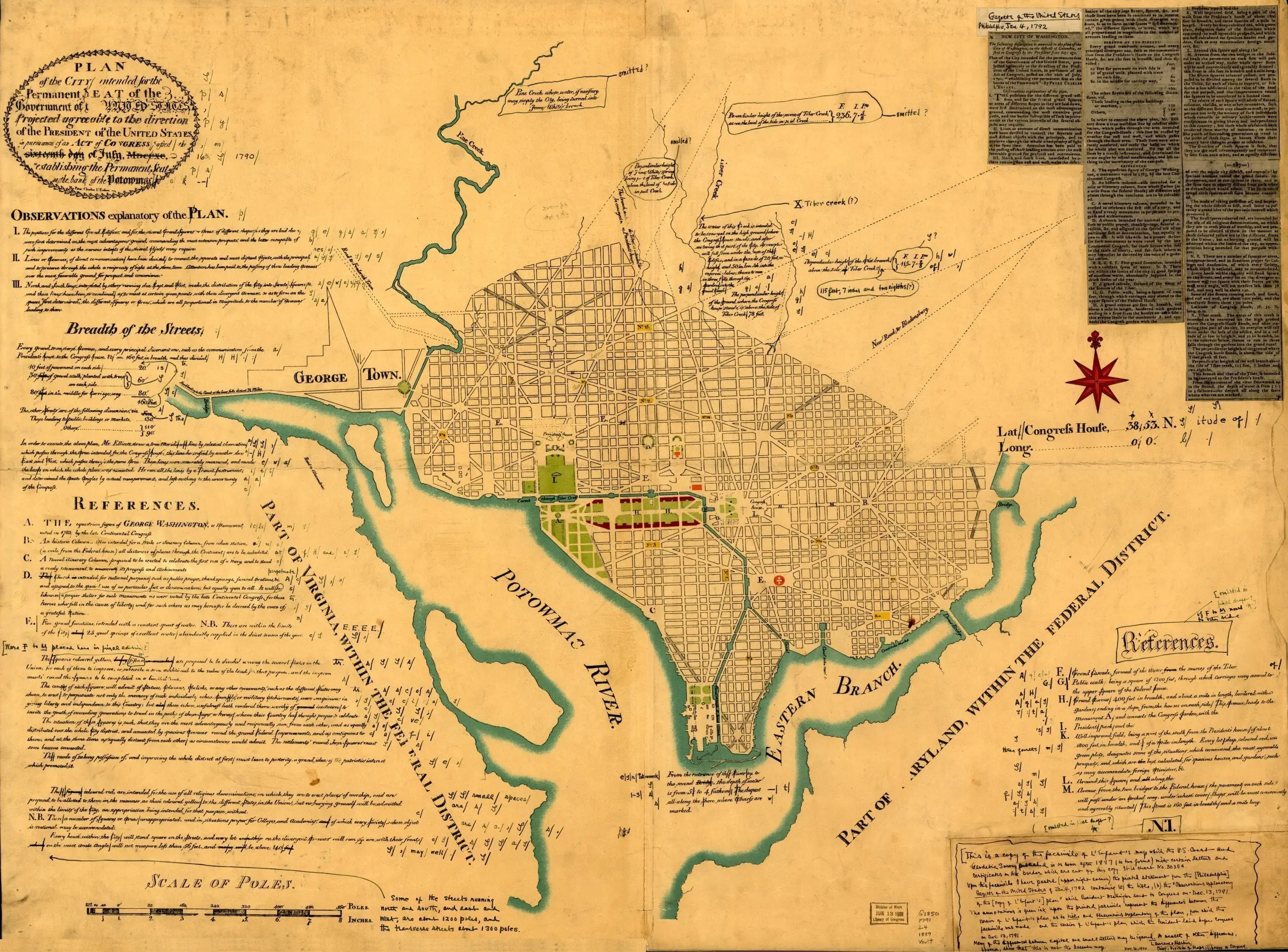 Plan of the city intended for the permanent seat of the government of the United States…