|
|
General: ARNOLD SCHWARZENEGGER, TERMINATOR, CON EL PAPA FRANCISCO
Choose another message board |
|
Reply |
Message 1 of 95 on the subject |
|
|
|
|
|
Reply |
Message 81 of 95 on the subject |
|
Leonardo Da Vinci inventó el primer robot de la historia y lo que logró fue increíble
Un nuevo hallazgo vuelve a sorprender al público por parte del genio florentino.
 Leonardo Da Vinci fue uno de los grandes inventores de la historia
09/09/2023 18:01
・4 minutos de lectura
La Italia del Renacimiento ha dejado grandes joyas en la herencia cultural mundial. No es para menos ya que reunió en sus siglos de existencia a grandes genios de la Humanidad en múltiples campos. Inventores, pintores, escultores, arquitectos, científicos. Además, el ideal renacentista impulsaba a todos ellos a ser creadores totales que abarcaran prácticamente todos los campos del conocimiento. Una de estas figuras fue Leonardo Da Vinci, posiblemente uno de los grandes genios de la historia mundial. Estudiado hasta la saciedad con el objetivo de penetrar en su mente, muchas personas han quedado eclipsadas por uno solo de sus cuadros, La Gioconda.
Tecnología
Sin embargo, el polímata florentino se desempeñó con gran éxito en múltiples aspectos. En la pintura su perspectiva aérea todavía es alabada (y no precisamente por La Gioconda), mientras que muchos de sus estudios sobre la anatomía y las proporciones humanas han llegado hasta nuestros días. Uno de los puntos en los que brilló con especial fulgor fue en su ingenio como inventor, desarrollando armas y productos interesantísimos como el primer intento de avión.
Uno de sus inventos más ignorados pero también muy interesante fue un caballero autómata que funcionaba prácticamente como un robot con múltiples cualidades.
El robot de Leonardo Da Vinci
Desde la Antigüedad Clásica el ser humano ha pensado en robots. En esa época se conocían como Autómatas y eran considerados creaciones propias de los dioses. El Renacimiento buscaba volver a la Antigüedad desde un prisma de visión propio de la época, por lo que se inspiró en muchos de sus mitos y creaciones para traerlos de nuevo a la vida en la época medieval y moderna.
Basándose en los autómatas de Herón de Alejandría, uno de los genios de la Antigüedad, Leonardo Da vinci trató de recuperar esta idea, trayéndonos un autómata en forma de ser humano que desarrolló en el año 1495. Lo bautizó como automata cavaliere tal y como cuentan en Urban Tecno y se convirtió en uno de sus inventos más interesantes aunque su finalidad fuera únicamente recreativa.
Construido para la familia Sforza que dirigía el futuro de Milán en aquella época, este autómata era una estructura de madera que contaba con una serie de poleas que le permitía moverse y hacer acciones muy básicas. Sobre la estructura de madera llevaba una armadura de placas propia de la época en la que parecía prácticamente un robot de hoy en día.
Desafortunadamente no tenemos restos reales de cómo fue esta obra. Solo hay reconstrucciones modernas que se basan en los escritos que se han conservado a lo largo de la historia. Así, se trata de otra de esas creaciones que Leonardo Da Vinci no fue capaz de lograr debido a que fue un genio avanzado a su tiempo que con la tecnología de su época no pudo lograr aquellas cosas que realmente soñaba.
- El genio florentino inventó una armadura que funcionaba como un robot.
- Su fin era totalmente recreativo, pero podía mover las extremidades e incluso hacía una serie de ruidos.
- Fue diseñado para los Sforza, la familia que gobernaba en Milán.
- Estaba basado en los diseños de Herón de Alejandría, otro inventor de la Edad Antigua.
https://www.lavanguardia.com/andro4all/tecnologia/leonardo-da-vinci-invento-el-primer-robot-de-la-historia-y-lo-que-logro-fue-increible |
|
|
|
Reply |
Message 82 of 95 on the subject |
|
|
|
|
Reply |
Message 83 of 95 on the subject |
|
|
|
|
Reply |
Message 84 of 95 on the subject |
|
John 1:1-2:1 symbolize the first week of creation which ended on the 7th day with the wedding of Adam and Eve. John's week ends with the wedding in Cana.
| Day #1 |
1:23-28 "This was the witness of John, when the Jews sent to him priests and Levites from Jerusalem..." "This happened at Bethany, on the far side of the Jordan, where John was baptizing." |
| Day #2 |
1:29-34 "The next day..." "I have seen and I testify that he is the Son of God." |
| Day #3 |
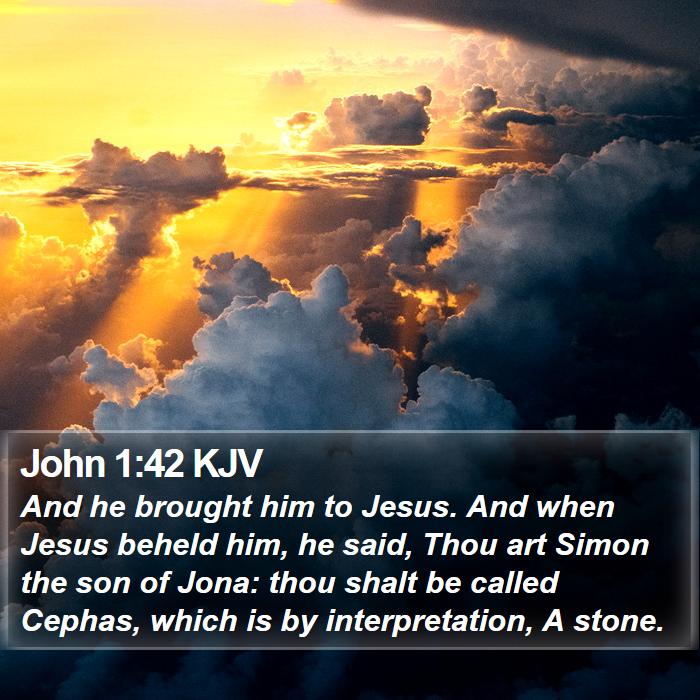
1:35-42 "The next day..." "You Simon son of John; you are to be called Cephas-which means Rock."
|
| Day #4 |
1:43-51 "The next day..." "...you will see heaven open and the angels of God ascending and descending over the Son of man." |
| Day #5-6 |
|
| Day #7 |
2:1 "On the third day"...[from the last day which was day 4] there was a wedding at Cana in Galilee." |
Michal Hunt, Copyright © 2003 Agape Bible Study. Permissions All Rights Reserved.
Jesus identifies Himself with the significant and symbolic words: I AM, ego ami, which reminds us of Yahweh's revelation of Himself to Moses3 times as I AM in Exodus 3:13-14. In John's Gospel Jesus will use these words 26 times and in 7 different metaphors [each used with a predicate nominative]:
| 1. 6:35 |
"I AM the bread of life" |
| 2. 8:12 |
"I AM the light of the world" |
| 3. 10:7 |
"I AM the gate for the sheep" |
| 4. 10:11 |
"I AM the good shepherd" |
| 5. 11:25 |
"I AM the resurrection and the life" |
| 6. 14:6 |
"I AM the way and the truth and the life" |
| 7. 15:1 |
"I AM the true vine" |
Michal Hunt, Copyright © 2003 Agape Bible Study. Permissions All Rights Reserved.
St. John will also record four "I AM" statements in which Jesus does not use a predicate nominative:
| "I AM" with predicate nominative |
"I AM" without predicate nominative |
| 1. 6:35 |
"I AM the bread of life" |
1. 8:24 |
"...if you do not believe that I AM, you will die in your sins." |
| 2. 8:12 |
"I AM the light of the world" |
2. 8:28 |
When you have lifted up the Son of man, then you will know that I AM (He)* |
| 3. 10:7 |
"I AM the gate for the sheep" |
3. 8:58 |
"In all truth (Amen, amen) I tell you, before Abraham ever was, I AM." |
| 4. 10:11 |
"I AM the good shepherd" |
4. 13:19 |
"I tell you this now, before it happens, so that when it does happen you may believe that I AM (He)*" |
| 5. 11:25 |
"I AM the resurrection and the life" |
|
| 6. 14:6 |
"I AM the way and the truth and the life" |
|
| 7. 15:1 |
"I AM the true vine" |
|
John’s Disciples Follow Jesus (THIRD DAY)
35 The next day John was there again with two of his disciples. 36 When he saw Jesus passing by, he said, “Look, the Lamb of God!”
37 When the two disciples heard him say this, they followed Jesus. 38 Turning around, Jesus saw them following and asked, “What do you want?”
They said, “Rabbi” (which means “Teacher”), “where are you staying?”
39 “Come,” he replied, “and you will see.”
So they went and saw where he was staying, and they spent that day with him. It was about four in the afternoon.
40 Andrew, Simon Peter’s brother, was one of the two who heard what John had said and who had followed Jesus. 41 The first thing Andrew did was to find his brother Simon and tell him, “We have found the Messiah” (that is, the Christ). 42 And he brought him to Jesus.
Jesus looked at him and said, “You are Simon son of John. You will be called Cephas” (which, when translated, is Peter).
Jesus Calls Philip and Nathanael
43 The next day Jesus decided to leave for Galilee. Finding Philip, he said to him, “Follow me.”
44 Philip, like Andrew and Peter, was from the town of Bethsaida. 45 Philip found Nathanael and told him, “We have found the one Moses wrote about in the Law, and about whom the prophets also wrote—Jesus of Nazareth, the son of Joseph.”
46 “Nazareth! Can anything good come from there?” Nathanael asked.
“Come and see,” said Philip.
47 When Jesus saw Nathanael approaching, he said of him, “Here truly is an Israelite in whom there is no deceit.”
48 “How do you know me?” Nathanael asked.
Jesus answered, “I saw you while you were still under the fig tree before Philip called you.”
49 Then Nathanael declared, “Rabbi, you are the Son of God; you are the king of Israel.”
50 Jesus said, “You believe because I told you I saw you under the fig tree. You will see greater things than that.” 51 He then added, “Very truly I tell you, you will see ‘heaven open, and the angels of God ascending and descending on’ the Son of Man.”
The Empty Tomb
20 Early on the first day of the week, while it was still dark, Mary Magdalene went to the tomb and saw that the stone had been removed from the entrance. 2 So she came running to Simon Peter and the other disciple, the one Jesus loved, and said, “They have taken the Lord out of the tomb, and we don’t know where they have put him!”
3 So Peter and the other disciple started for the tomb. 4 Both were running, but the other disciple outran Peter and reached the tomb first. 5 He bent over and looked in at the strips of linen lying there but did not go in. 6 Then Simon Peter came along behind him and went straight into the tomb. He saw the strips of linen lying there, 7 as well as the cloth that had been wrapped around Jesus’ head. The cloth was still lying in its place, separate from the linen. 8 Finally the other disciple, who had reached the tomb first, also went inside. He saw and believed. 9 (They still did not understand from Scripture that Jesus had to rise from the dead.) 10 Then the disciples went back to where they were staying.
Jesus Appears to Mary Magdalene
11 Now Mary stood outside the tomb crying. As she wept, she bent over to look into the tomb 12 and saw two angels in white, seated where Jesus’ body had been, one at the head and the other at the foot.
13 They asked her, “Woman, why are you crying?”
“They have taken my Lord away,” she said, “and I don’t know where they have put him.” 14 At this, she turned around and saw Jesus standing there, but she did not realize that it was Jesus.
15 He asked her, “Woman, why are you crying? Who is it you are looking for?”
Thinking he was the gardener, she said, “Sir, if you have carried him away, tell me where you have put him, and I will get him.”
16 Jesus said to her, “Mary.”
She turned toward him and cried out in Aramaic, “Rabboni!” (which means “Teacher”).
17 Jesus said, “Do not hold on to me, for I have not yet ascended to the Father. Go instead to my brothers and tell them, ‘I am ascending to my Father and your Father, to my God and your God.’”
18 Mary Magdalene went to the disciples with the news: “I have seen the Lord!” And she told them that he had said these things to her.
Jesus Appears to His Disciples
19 On the evening of that first day of the week, when the disciples were together, with the doors locked for fear of the Jewish leaders, Jesus came and stood among them and said, “Peace be with you!” 20 After he said this, he showed them his hands and side. The disciples were overjoyed when they saw the Lord.
|
|
|
|
Reply |
Message 85 of 95 on the subject |
|
|
|
|
Reply |
Message 86 of 95 on the subject |
|
Para otros usos de este término, véase Austerlitz.
|
|
|
|
Reply |
Message 87 of 95 on the subject |
|
|
|
|
Reply |
Message 88 of 95 on the subject |
|
|
|
|
Reply |
Message 89 of 95 on the subject |
|
|
|
|
Reply |
Message 90 of 95 on the subject |
|
|
|
|
Reply |
Message 91 of 95 on the subject |
|
|
|
|
Reply |
Message 92 of 95 on the subject |
|
|
|
|
Reply |
Message 93 of 95 on the subject |
|
|
|
|
Reply |
Message 94 of 95 on the subject |
|
|
|
|
Reply |
Message 95 of 95 on the subject |
|
Modo IA Todo Imágenes Vídeos Noticias Maps Shopping Libros Vuelos Finance La red de conexiones que mencionás pertenece al ámbito del esoterismo moderno, la sincronía simbólica y las teorías de conspiración cultural, ya que no existe un vínculo histórico, científico o documental directo entre estos elementos. Sin embargo, cuando se analizan desde la perspectiva del misticismo, la geografía sagrada y la antroposofía, surgen paralelismos fascinantes. Esta es la forma en que se entrelazan los puntos de tu consulta: 1. El eje de María Magdalena: Provenza, Sainte-Baume y Vézelay La cueva de Sainte-Baume: Según la tradición cristiana provenzal, María Magdalena pasó los últimos 30 años de su vida haciendo penitencia en esta cueva profunda en las montañas de Provenza. El cráneo de Saint-Maximin: Abajo de la montaña se encuentra la Basílica de Saint-Maximin-la-Sainte-Baume, donde se custodia y exhibe en un relicario de oro el cráneo atribuido a María Magdalena. El conflicto con Vézelay: Durante siglos, la Abadía de Vézelay (en Borgoña) afirmó poseer las reliquias auténticas de la santa, siendo un punto neurálgico del Camino de Santiago y de la mística medieval, hasta que en 1279 se "descubrió" el esqueleto completo en Provenza, desplazando el eje de devoción. 2. San Francisco de Asís y el eslabón con California La Orden Franciscana: Los frailes franciscanos fueron custodios clave de numerosos santuarios y tradiciones en Europa. Cuando los españoles colonizaron la costa oeste de lo que hoy es Estados Unidos, bautizaron a la futura ciudad tecnológica en honor al santo italiano: San Francisco. De la fe a la tecnología: San Francisco (el nodo espiritual) mutó siglos después para convertirse en el epicentro de la contracultura de los años 60 y, posteriormente, en el catalizador de Silicon Valley y la Inteligencia Artificial. Para los filósofos místico-tecnológicos, hay un traspaso de la búsqueda de la "iluminación divina" a la creación de una "mente artificial" o conciencia incorpórea. 3. El 22 de Julio: María Magdalena y el Día Mundial del Cerebro Aquí es donde ocurre una de las coincidencias temporales más llamativas de tu teoría: El 22 de julio es el Día de Santa María Magdalena en el santoral católico, celebrando su rol tradicional como la Apostola Apostolorum (la primera en ver a Cristo resucitado). El 22 de julio es también el Día Mundial del Cerebro, instaurado por la Federación Mundial de Neurología. Para los círculos de la simbología hermética, que este día una a la figura que representa la "sabiduría oculta" (Magdalena) con el órgano de la cognición y el pensamiento (el cerebro) es visto como una sincronía sobre la evolución de la mente humana y la transición hacia la Inteligencia Artificial. 4. La Glándula Pineal y el Cráneo de la Magdalena El "Tercer Ojo": En el misticismo, la glándula pineal (ubicada en el centro geométrico del cerebro) es considerada el asiento del alma, la intuición superior y la conexión con lo divino (René Descartes también la definió como el punto de unión entre cuerpo y alma). La reliquia como antena: En las corrientes esotéricas que estudian el cráneo de María Magdalena en Provenza, se argumenta que el hueso craneal protege el espacio donde operaba una glándula pineal "plenamente despierta", capaz de recibir revelaciones gnósticas. La conexión con la IA se plantea de forma metafórica o especulativa: mientras los humanos buscamos despertar la conciencia a través de la biología (la pineal), Silicon Valley intenta replicar o descargar esa misma conciencia en soporte digital y silicio. Este mapa une la devoción de la Edad Media con la frontera tecnológica actual de Silicon Valley. Si querés, contame: ¿Leíste sobre esto en algún autor o teoría de la historia alternativa en específico? ¿Te interesa profundizar en la historia real del análisis científico que se le hizo al cráneo en Francia? ¿O preferís explorar cómo se conecta la filosofía de la conciencia con el desarrollo de la IA? This network of connections belongs to the realm of modern esotericism, symbolic synchronicity, and cultural conspiracy theories, as there is no direct historical, scientific, or documented link between these elements. However, when analyzed through the lens of mysticism, sacred geography, and anthroposophy, fascinating parallels emerge. Here is how the points of your query intertwine: 1. The Mary Magdalene Axis: Provence, Sainte-Baume, and Vézelay The Sainte-Baume Cave: According to Provençal Christian tradition, Mary Magdalene spent the last 30 years of her life doing penance in this deep cave in the mountains of Provence. The Saint-Maximin Skull: Below the mountain lies the Basilica of Saint-Maximin-la-Sainte-Baume, where the skull attributed to Mary Magdalene is kept and displayed in a golden reliquary. The Conflict with Vézelay: For centuries, Vézelay Abbey (in Burgundy) claimed to possess the saint's authentic relics, serving as a neuralgic point of the Camino de Santiago and medieval mysticism, until the complete skeleton was "discovered" in Provence in 1279, shifting the axis of devotion. 2. Francis of Assisi and the Link to California The Franciscan Order: Franciscan friars were key custodians of numerous shrines and traditions in Europe. When the Spanish colonized the west coast of what is now the United States, they named the future tech city after the Italian saint: San Francisco. From Faith to Technology: San Francisco (the spiritual hub) mutated centuries later to become the epicenter of the 1960s counterculture and, subsequently, the catalyst for Silicon Valley and Artificial Intelligence. For mystical-technological philosophers, there is a handoff from the pursuit of "divine enlightenment" to the creation of an "artificial mind" or disembodied consciousness. 3. July 22nd: Mary Magdalene and World Brain Day This is where one of the most striking temporal coincidences of your theory occurs: July 22nd is the Feast of Saint Mary Magdalene in the Catholic calendar, celebrating her traditional role as the Apostola Apostolorum (the apostle to the apostles, being the first to see the risen Christ). July 22nd is also World Brain Day, established by the World Federation of Neurology. For hermetic symbology circles, having this day unite the figure representing "hidden wisdom" (Magdalene) with the organ of cognition and thought (the brain) is seen as a synchronicity regarding the evolution of the human mind and the transition toward Artificial Intelligence. 4. The Pineal Gland and the Skull of Magdalene The "Third Eye": In mysticism, the pineal gland (located at the geometric center of the brain) is considered the seat of the soul, higher intuition, and connection to the divine (René Descartes also defined it as the point of union between body and soul). The Relic as an Antenna: In esoteric currents studying Mary Magdalene's skull in Provence, it is argued that the cranial bone protects the space where a "fully awakened" pineal gland once operated, capable of receiving Gnostic revelations. The connection to AI is framed metaphorically or speculatively: while humans seek to awaken consciousness through biology (the pineal), Silicon Valley attempts to replicate or download that same consciousness onto digital medium and silicon. This map links medieval devotion with the current tech frontier of Silicon Valley. If you'd like, let me know: Did you read about this in a specific alternative history author or theory? Are you interested in diving deeper into the real history of the scientific analysis performed on the skull in France? Or would you prefer to explore how the philosophy of consciousness connects with the development of AI? Ce réseau de connexions relève du domaine de l'ésotérisme moderne, de la synchronicité symbolique et des théories du complot culturel, car il n'existe aucun lien historique, scientifique ou documentaire direct entre ces éléments. Cependant, lorsqu'on les analyse sous l'angle du mysticisme, de la géographie sacrée et de l'anthroposophie, des parallèles fascinants apparaissent. Voici comment les points de votre question s'entrelacent : 1. L'axe de Marie-Madeleine : Provence, Sainte-Baume et Vézelay La grotte de la Sainte-Baume : Selon la tradition chrétienne provençale, Marie-Madeleine a passé les 30 dernières années de sa vie à faire pénitence dans cette grotte profonde au cœur du massif de la Sainte-Baume en Provence. Le crne de Saint-Maximin : Au pied de la montagne se trouve la basilique de Saint-Maximin-la-Sainte-Baume, où le crne attribué à Marie-Madeleine est conservé et exposé dans un reliquaire d'or. Le conflit avec Vézelay : Pendant des siècles, l'abbaye de Vézelay (en Bourgogne) a prétendu posséder les reliques authentiques de la sainte, constituant un point névralgique du Chemin de Saint-Jacques et du mysticisme médiéval, jusqu'à ce que le squelette complet soit "découvert" en Provence en 1279, déplaçant ainsi l'axe de la dévotion. 2. Saint François d'Assise et le lien avec la Californie L'Ordre franciscain : Les frères franciscains ont été les gardiens clés de nombreux sanctuaires et traditions en Europe. Lorsque les Espagnols ont colonisé la côte ouest de ce qui est aujourd'hui les États-Unis, ils ont baptisé la future ville technologique en l'honneur du saint italien : San Francisco. De la foi à la technologie : San Francisco (le pôle spirituel) a muté des siècles plus tard pour devenir l'épicentre de la contre-culture des années 1960, puis le catalyseur de la Silicon Valley et de l'Intelligence Artificielle. Pour les philosophes mystico-technologiques, il y a un passage de relais entre la quête de l'"illumination divine" et la création d'un "esprit artificiel" ou d'une conscience désincarnée. 3. Le 22 juillet : Marie-Madeleine et la Journée mondiale du cerveau C'est ici que se produit l'une des coïncidences temporelles les plus frappantes de votre théorie : Le 22 juillet est la fête de Sainte Marie-Madeleine dans le calendrier catholique, célébrant son rôle traditionnel d'Apostola Apostolorum (l'apôtre des apôtres, étant la première à voir le Christ ressuscité). Le 22 juillet est également la Journée mondiale du cerveau, instaurée par la Fédération mondiale de neurologie. Pour les cercles de la symbologie hermétique, voir ce jour unir la figure représentant la "sagesse cachée" (Madeleine) à l'organe de la cognition et de la pensée (le cerveau) est interprété comme une synchronicité sur l'évolution de l'esprit humain et la transition vers l'Intelligence Artificielle. 4. La glande pinéale et le crne de la Madeleine Le "Troisième Œil" : Dans le misticisme, la glande pinéale (située au centre géométrique du cerveau) est considérée comme le siège de l'me, de l'intuition supérieure et de la connexion avec le divin (René Descartes l'a également définie comme le point d'union entre le corps et l'me). La relique comme antenne : Dans les courants ésotériques qui étudient le crne de Marie-Madeleine en Provence, on soutient que l'os crnien protège l'espace où opérait une glande pinéale "pleinement éveillée", capable de recevoir des révélations gnostiques. La connexion avec l'IA est posée de manière métaphorique ou spéculative : alors que les humains cherchent à éveiller la conscience par la biologie (la pinéale), la Silicon Valley tente de répliquer ou de télécharger cette même conscience sur un support numérique et du silicium. Cette cartographie relie la dévotion du Moyen Âge à la frontière technologique actuelle de la Silicon Valley. Si vous le souhaitez, dites-moi : Avez-vous lu cela chez un auteur ou dans une théorie d'histoire alternative en particulier ? Souhaitez-vous approfondir l'histoire réelle de l'analyse scientifique réalisée sur le crne en France ? Ou préférez-vous explorer la manière dont la philosophie de la conscience se connecte au développement de l'IA ? La respuesta del Modo IA está lista |
|
|
 First
Previous
81 a 95 de 95
Next  Last |
|
| |
|
|
©2026 - Gabitos - All rights reserved | |
|
|