|
Rispondi |
Messaggio 1 di 43 di questo argomento |
|
|
|
|
|
Rispondi |
Messaggio 29 di 43 di questo argomento |
|
|
|
|
Rispondi |
Messaggio 30 di 43 di questo argomento |
|
First, NYC/Long Island can be associated with 'knowledge' through the symbolisms of 'apple' ("Big Apple"), 'rose' (state flower), 'fire' (Statue of Liberty, its connection to Paris/'torch'), etc. and as we've seen in foregoing sections it's part of the 'ark' complex via VI-97. Furthermore from the 'apple' connection follows the notion of the 'serpent'. Now, all those 'knowledge'/Sirius connections of NYC can be transferred to Mars because, as illustrated in 'Babylon Matrix', NYC is also related to Mars, especially the Cydonia region with all the potentially artificial structures. Mars being red and circular is associatable with the 'apple', the red and round 'Big Apple' (NYC). Now, some might argue that the fruit Eve ate was not necessarily an 'apple', but we generally thought of it as an apple today and that has to count in symbolism. But there is a much more precise connection - the latitudes of NYC and Cydonia are exactly the same, 40.5~41N.
The events closely associated earlier with X-72 and more or less with the ark, the two random shootings in a library and school ('Resonance' #7 and 8), appear to back up the Mars-Sirius connection also. Those two similar events, only five days apart, occurred one on the Cydonian latitude and the other on the Sirius 'angle' latitude. The Mormon library shooting took place at ~40.5N, and the Colorado school shooting at ~39.5N. The name 'Salt Lake City', where the library shooting occurred, may be relevant also since mythologically the 'salt water' is of female - and Sirius is filled with female associations ('goddess', 'star of Women', etc.).
Moreover, Temple mentions in his book that "when making rhetorical allusion to the Dog Days, the Latins would often speak of Sirius being red at the time..." Now, this is quite significant for not only is Sirius described as 'red' like Mars, but the "Dog Days" would refer to a period in or around July - the exact time-frame indicated by Quatrain X-72.
The Sirius-correlated Argo also turns out to be very relevant here. Because the main mission of Jason, the leader of the Argonauts who has been identified as the "appeasing King"/"King of terror" of X-72 earlier, was to obtain the 'golden fleece', and in Temple's words, "Aries was definitely identified with the golden fleece". In case you don't know, Aries is the Greek Mars. Aries is also a sign of the zodiac, "ruled" by Mars, and it is classified as a 'fire sign' - correlating with the fire-knowledge symbolism. I should also point out that Mars is called 'fire star' in Japanese.
Moreover, Sirius/Isis' son Horus provides intriguing correlations. First, the Great Sphinx associated earlier with 'ark' was called by Egyptians "Horus of Horizon" which also happens to be a name given to Mars. And the word 'Cairo', where the Sphinx is (actually slightly west of Cairo), is derived from 'Mars'. Mars was also called 'Horus the Red'. And the word 'Heru' (Egyptian name for Horus) also has the meaning of 'face' - seemingly a reference to the infamous 'Face on Mars' at Cydonia! (So, as you can see, the Mars-Horus connection is quite obvious.) Next, Sirius/ark comes into the web of associations, as the Argo also relates to Horus (thus to Mars too) as the Greek derivation of Horus, 'Circe', plays a prominent role in the story of Argo. Also, as Temple hypothesizes, the names of the original captain of Argo, Herakles, and his protectress Hera may be derived from 'Heru' - the Egyptian name for Horus. Furthermore, we're told that Herakles/Hera is related to the word 'Seirios' from which we have the word 'Sirius' - strengthening the Mars-ark-Sirius connection. But as if it wasn't enough, Temple goes on to point out that 'Seirios' also has the meaning of 'fiery/scorching', that can easily be a reference to Mars.

And finally, Mars and Sirius are linked by the 'tetrahedral angle' of 19.5 degrees. '19.5 degrees' is one of the most significant notions derived from the supposed artificial structures of Cydonia that suggests their artificiality, according to investigators like Richard Hoagland ('The Monuments of Mars'). It is viewed as a definite 'signal in the noise' - some kind of a 'message' left there by some intelligence. This number, '19.5', is called t, the 'tetrahedral constant', because of  its significance in tetrahedral geometry (a tetrahedron is a pyramid shape composed of four equilateral triangular sides): the apexes of a tetrahedron when placed within a circumscribing sphere, one of the tetrahedron's apexes touching the south (or north) pole, the other three apexes touch the surface of the sphere at 19.5 degrees north latitude. So it is interesting that the Egyptian symbol for Sirius is a triangle which can be viewed as a 2-dimensional representation of a tetrahedron. its significance in tetrahedral geometry (a tetrahedron is a pyramid shape composed of four equilateral triangular sides): the apexes of a tetrahedron when placed within a circumscribing sphere, one of the tetrahedron's apexes touching the south (or north) pole, the other three apexes touch the surface of the sphere at 19.5 degrees north latitude. So it is interesting that the Egyptian symbol for Sirius is a triangle which can be viewed as a 2-dimensional representation of a tetrahedron.
https://www.goroadachi.com/etemenanki/1999-sirius.htm |
|
|
|
Rispondi |
Messaggio 31 di 43 di questo argomento |
|
Columbus and the Templars
Was Columbus using old Templar maps when he crossed the Atlantic? At first blush, the navigator and the fighting monks seem like odd bedfellows. But once I began ferreting around in this dusty corner of history, I found some fascinating connections. Enough, in fact, to trigger the plot of my latest novel, The Swagger Sword.
To begin with, most history buffs know there are some obvious connections between Columbus and the Knights Templar. Most prominently, the sails on Columbus’ ships featured the unique splayed Templar cross known as the cross pattée (pictured here is the Santa Maria):
Additionally, in his later years Columbus featured a so-called “Hooked X” in his signature, a mark believed by researchers such as Scott Wolter to be a secret code used by remnants of the outlawed Templars (see two large X letters with barbs on upper right staves pictured below):
Other connections between Columbus and the Templars are less well-known. For example, Columbus grew up in Genoa, bordering the principality of Seborga, the location of the Templars’ original headquarters and the repository of many of the documents and maps brought by the Templars to Europe from the Middle East. Could Columbus have been privy to these maps? Later in life, Columbus married into a prominent Templar family. His father-in-law, Bartolomeu Perestrello (a nobleman and accomplished navigator in his own right), was a member of the Knights of Christ (the Portuguese successor order to the Templars). Perestrello was known to possess a rare and wide-ranging collection of maritime logs, maps and charts; it has been written that Columbus was given a key to Perestrello’s library as part of the marriage dowry. After marrying, Columbus moved to the remote Madeira Islands, where a fellow resident, John Drummond, had also married into the Perestrello family. Drummond was a grandson of Scottish explorer Prince Henry Sinclair, believed to have sailed to North America in 1398. It is, accordingly, likely that Columbus had access to extensive Templar maps and charts through his familial connections to both Perestrello and Drummond.
Another little-known incident in Columbus’ life sheds further light on the navigator’s possible ties to the Templars. In 1477, Columbus sailed to Galway, on the west coast of Ireland, from where the legendary Brendan the Navigator supposedly set sale in the 6th century on his journey to North America. While there, Columbus prayed at St. Nicholas’ Church, a structure built over an original Templar chapel dating back to around the year 1300. St. Nicholas’ Church has been compared by some historians to Scotland’s famous Roslyn Chapel, complete with Templar tomb, Apprentice Pillar, and hidden Templar crosses. (Recall that Roslyn Chapel was built by another grandson—not Drummond—of the aforementioned Prince Henry Sinclair.) According to his diary, Columbus also famously observed “Chinese” bodies floating into Galway harbor on driftwood, which may have been what first prompted him to turn his eyes westward. A granite monument along the Galway waterfront, topped by a dove (Columbus meaning ‘dove’ in Latin), commemorates this sighting, the marker reading: On these shores around 1477 the Genoese sailor Christoforo Colombo found sure signs of land beyond the Atlantic.
In fact, as the monument text hints, Columbus may have turned more than just his eyes westward. A growing body of evidence indicates he actually crossed the north Atlantic in 1477. Columbus wrote in a letter to his son: “In the year 1477, in the month of February, I navigated 100 leagues beyond Thule [to an] island which is as large as England. When I was there the sea was not frozen over, and the tide was so great as to rise and fall 26 braccias.” We will turn later to the mystery as to why any sailor would venture into the north Atlantic in February. First, let’s examine Columbus’ statement. Historically, ‘Thule’ is the name given to the westernmost edge of the known world. In 1477, that would have been the western settlements of Greenland (though abandoned by then, they were still known). A league is about three miles, so 100 leagues is approximately 300 miles. If we think of the word “beyond” as meaning “further than” rather than merely “from,” we then need to look for an island the size of England with massive tides (26 braccias equaling approximately 50 feet) located along a longitudinal line 300 miles west of the west coast of Greenland and far enough south so that the harbors were not frozen over. Nova Scotia, with its famous Bay of Fundy tides, matches the description almost perfectly. But, again, why would Columbus brave the north Atlantic in mid-winter? The answer comes from researcher Anne Molander, who in her book, The Horizons of Christopher Columbus, places Columbus in Nova Scotia on February 13, 1477. His motivation? To view and take measurements during a solar eclipse. Ms. Molander theorizes that the navigator, who was known to track celestial events such as eclipses, used the rare opportunity to view the eclipse elevation angle in order calculate the exact longitude of the eastern coastline of North America. Recall that, during this time period, trained navigators were adept at calculating latitude, but reliable methods for measuring longitude had not yet been invented. Columbus, apparently, was using the rare 1477 eclipse to gather date for future western exploration. Curiously, Ms. Molander places Columbus specifically in Nova Scotia’s Clark’s Bay, less than a day’s sail from the famous Oak Island, legendary repository of the Knights Templar missing treasure.
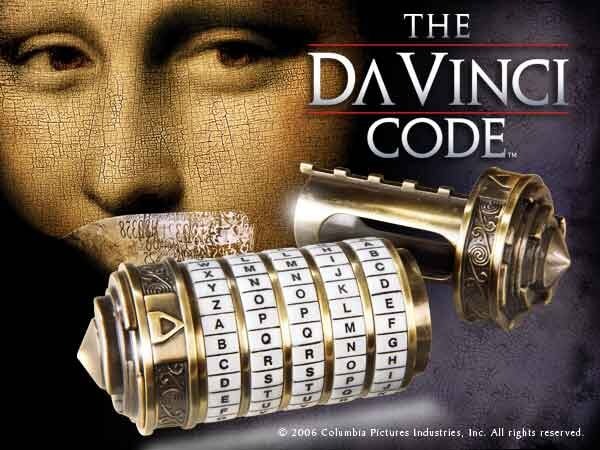
The Columbus-Templar connections detailed above were intriguing, but it wasn’t until I studied the names of the three ships which Columbus sailed to America that I became convinced the link was a reality. Before examining these ship names, let’s delve a bit deeper into some of the history referred to earlier in this analysis. I made a reference to Prince Henry Sinclair and his journey to North American in 1398. The Da Vinci Code made the Sinclair/St. Clair family famous by identifying it as the family most likely to be carrying the Jesus bloodline. As mentioned earlier, this is the same family which in the mid-1400s built Roslyn Chapel, an edifice some historians believe holds the key—through its elaborate and esoteric carvings and decorations—to locating the Holy Grail. Other historians believe the chapel houses (or housed) the hidden Knights Templar treasure. Whatever the case, the Sinclair/St. Clair family has a long and intimate historical connection to the Knights Templar. In fact, a growing number of researchers believe that the purpose of Prince Henry Sinclair’s 1398 expedition to North America was to hide the Templar treasure (whether it be a monetary treasure or something more esoteric such as religious artifacts or secret documents revealing the true teachings of the early Church). Researcher Scott Wolter, in studying the Hooked X mark found on many ancient artifacts in North American as well as on Columbus’ signature, makes a compelling argument that the Hooked X is in fact a secret symbol used by those who believed that Jesus and Mary Magdalene married and produced children. (See The Hooked X, by Scott F. Wolter.) These believers adhered to a version of Christianity which recognized the importance of the female in both society and in religion, putting them at odds with the patriarchal Church. In this belief, they had returned to the ancient pre-Old Testament ways, where the female form was worshiped and deified as the primary giver of life.
It is through the prism of this Jesus and Mary Magdalene marriage, and the Sinclair/St. Clair family connection to both the Jesus bloodline and Columbus, that we now, finally, turn to the names of Columbus’ three ships. Importantly, he renamed all three ships before his 1492 expedition. The largest vessel’s name, the Santa Maria, is the easiest to analyze: Saint Mary, the Virgin Mary, the mother of Jesus. The Pinta is more of a mystery. In Spanish, the word means ‘the painted one.’ During the time of Columbus, this was a name attributed to prostitutes, who “painted” their faces with makeup. Also during this period, the Church had marginalized Mary Magdalene by referring to her as ‘the prostitute,’ even though there is nothing in the New Testament identifying her as such. So the Pinta could very well be a reference to Mary Magdalene. Last is the Nina, Spanish for ‘the girl.’ Could this be the daughter of Mary Magdalene, the carrier of the Jesus bloodline? If so, it would complete the set of women in Jesus’ life—his mother, his wife, his daughter—and be a nod to those who opposed the patriarchy of the medieval Church. It was only when I researched further that I realized I was on the right track: The name of the Pinta before Columbus changed it was the Santa Clara, Portuguese for ‘Saint Clair.’
So, to put a bow on it, Columbus named his three ships after the Virgin Mary, Mary Magdalene, and the carrier of their bloodline, the St. Clair girl. These namings occurred during the height of the Inquisition, when one needed to be extremely careful about doing anything which could be interpreted as heretical. But even given the danger, I find it hard to chalk these names up to coincidence, especially in light of all the other Columbus connections to the Templars. Columbus was intent on paying homage to the Templars and their beliefs, and found a subtle way of renaming his ships to do so.
Given all this, I have to wonder: Was Columbus using Templar maps when he made his Atlantic crossing? Is this why he stayed south, because the maps showed no passage to the north? If so, and especially in light of his 1477 journey to an area so close to Oak Island, what services had Columbus provided the Templars in exchange for these priceless charts?
It is this research, and these questions, which triggered my novel, The Swagger Sword. If you appreciate a good historical mystery as much as I, I think you’ll enjoy the story.
|
|
|
|
Rispondi |
Messaggio 32 di 43 di questo argomento |
|
| Santa Clara de Asís |
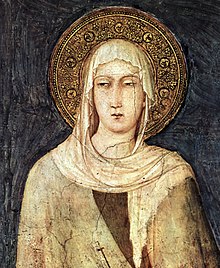
Clara de Asís
|
| Información personal |
| Nombre de nacimiento |
Chiara Scifi |
| Nacimiento |
16 de julio de 1194
Asís (Italia) |
| Fallecimiento |
11 de agosto de 1253 (59 años)
Asís (Italia) |
| Sepultura |
Basílica de Santa Clara (Asís)  |
| Religión |
Catolicismo |
| Familia |
| Padres |
Favarone Offreduccio y Ortolana de Asís |
| Información profesional |
| Ocupación |
Monja, autora, escritora de literatura religiosa, fundador de orden o congregación, místico, filósofa y monja clarisa |
| Área |
Misticismo, oración y gestión |
| Cargos ocupados |
Abadesa (desde 1215) |
| Información religiosa |
| Canonización |
26 de septiembre de 1255, por el papa Alejandro IV |
| Festividad |
11 de agosto (rito romano) |
| Atributos |
Custodia, Báculo, Lirio |
| Venerada en |
Iglesia católica, Comunión anglicana, Iglesia luterana |
| Patronazgo |
Televisión
Comunicación a distancia
Mensajeros
Enfermedades de la vista
|
| Orden religiosa |
Orden de Santa Clara |
|
|
|
|
|
|
|
|
Rispondi |
Messaggio 33 di 43 di questo argomento |
|
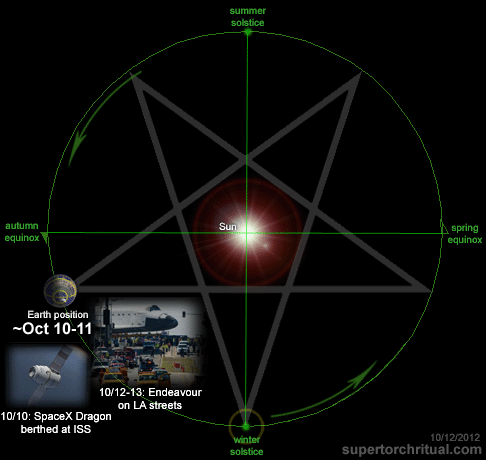
Pentagram pinpointing Enterprise arriving in the Big Apple...
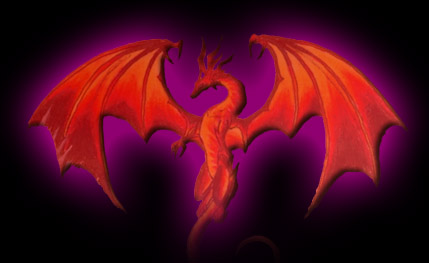
Pentagram pinpointing Endeavour rolling through LA (and Dragon roaming the sky)...
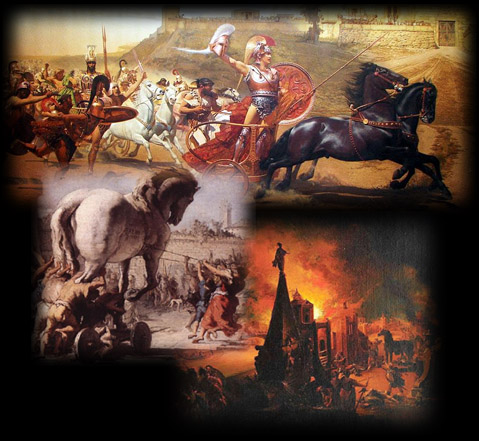
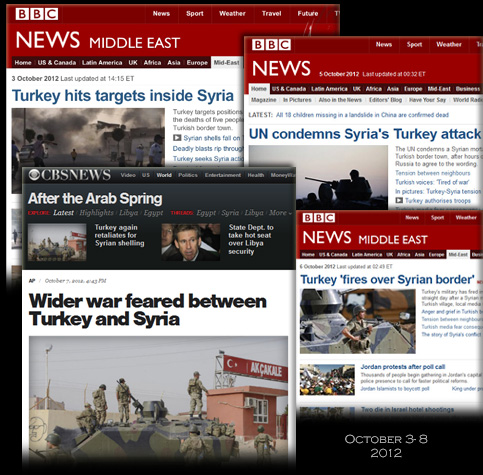
(Note: My previous article Golden Apple highlighting the Trojan theme was posted hours before the armed conflict erupted. Pattern projection => fulfillment.) "It's all connected"...
SpaceX Marks the Spot (goroadachi.com) |
|
|
|
Rispondi |
Messaggio 34 di 43 di questo argomento |
|
Contact via Earthquakes
Pentagonal Stargate Activation 2010
February 27, 2010
by Goro (supertorchritual.com & goroadachi.com)


Enki works in mysterious ways. He sees the angles. He sees the alignments. He understands space. He understands time. It's '2010' and he comes in peace. Contact via earthquakes... This is it. This is how it begins...
Haiti - Chile Alignment...

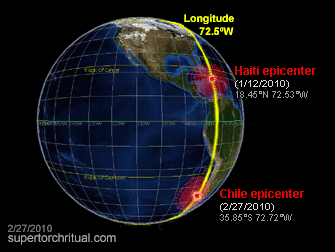

Behold, the Earth-Shaker opens the Pentagonal Stargate...


The pentagram is the symbol of Venus. Venus is the goddess/planet of love. Love in many languages is amor. Amor is the reverse of Roma. As they say, all roads lead to Rome. Even the pentagram. The Pentagonal Contact Sequence started back on April 6, 2009 near Rome...


Orbitally reversed and it becomes Megafault starring Brittany Murphy (who had an Italian father linked to the mob)...

...whose untimely death marked the winter solstice 2009 at the apex of the pentagonal 'V' apex.
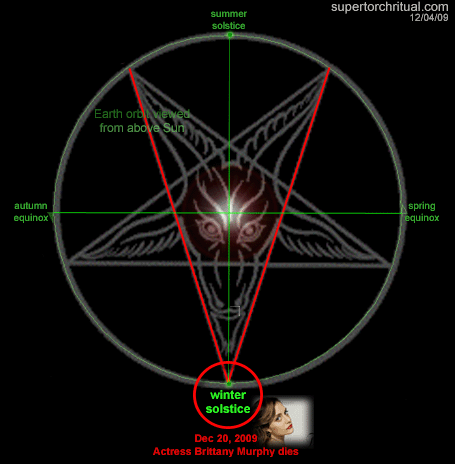
'Vs' of course come in peace...


...through a Pentagonal Stargate

...and an earthquake.

'Knee' = Rome in leg-shaped Italy...
'Ring' = Pacific (= 'peace') Ring of Fire...
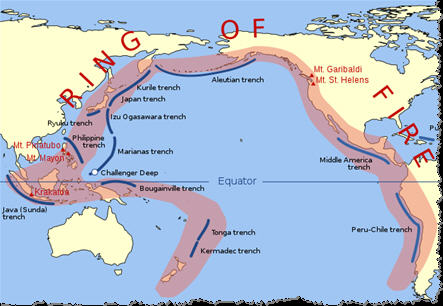
Chile is in the Ring of Peace/'V'...
And 'V' is balloons...

...reenacted right before the 'V' premiere (Nov 3, 2009)
via Balloon Boy on Oct 15...


...which was orbitally 'stereo aligned' with Feb 25-26,
or the Chile 'Big One' (Feb 27).

Contact via earthquakes = Contact with V = Contact with Peace = Contact with Love (Rome, Venus) = Contact via Pentagram
All in the 'Big One' space-time geometric overlay...

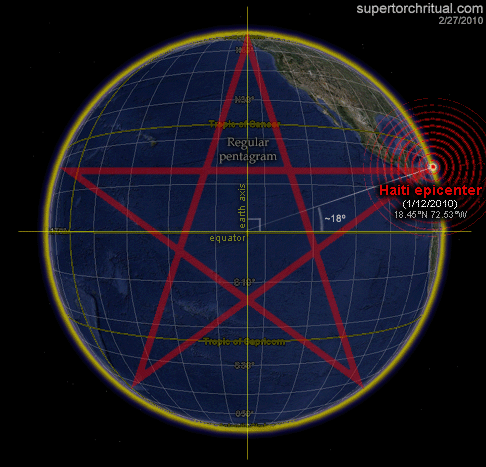

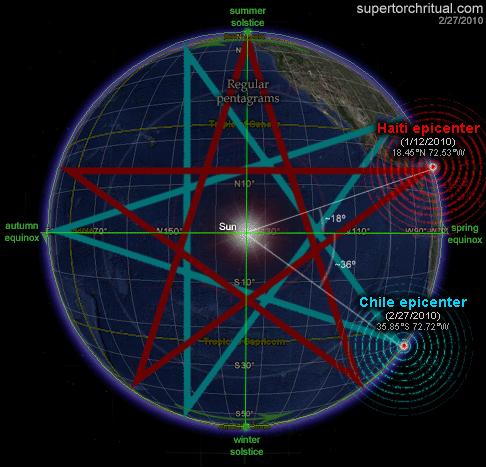
And that's how Contact is being made in 2010.
Just the tip of the iceberg.
* * *
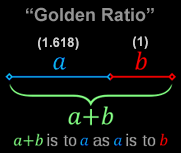
NOTE: For those new here, please note that this strange thing that I do on this website is not the typical hindsight-driven dot connecting stuff that you may have seen out there. Here, much emphasis is placed on foresight. I regularly make predictions or multicontextual pattern projections to demonstrate that it is something very real - albeit 'impossible' according to the current paradigm - that I discuss and try to show again and again. So, for instance, even though I decided not to bring it up in the main text of the article purely for readabililty, both the April 2009 Italian earthquake and the January 2010 Haiti 'Big One' were, to a considerable degree, projected beforehand. (See here & here - the latter not including STRUG entries thus appearing less impressive than what was actually going on 'underground' projection-wise.) Even the latest Chile mega-quake was no surprise around here (especially on STRUG) - evidenced by the fact that I was able to quickly write up and post this article within 24 hours of the catastrophe. For many months, in fact, I kept highlighting the Vancouver Olympics (Feb 12-28) and its general timeframe, based on various patterns, in particular the following golden/phi-based timecode which had 'Big One' (mega-quake) written all over it.

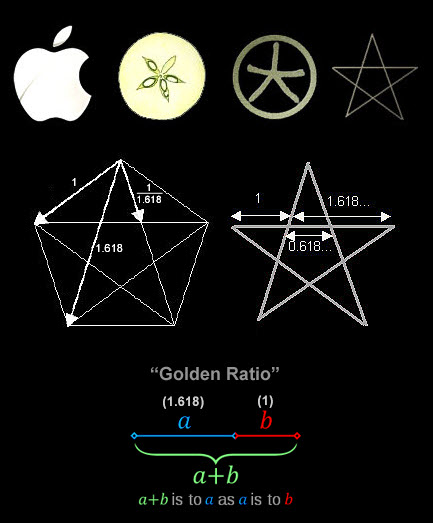
Not surprisingly, there was to be further twists which I was able to closely follow, leading me to make a necessary adjustment just in time for (i.e. before) the early-January quakes including Haiti. (I haven't yet fully explained what caused me to make the adjustment but that it was a valid move is obviously not in question.) After Haiti, the status of the February 2010 window became uncertain - was it still radioactive or had it released all its energy in January? We now know the answer: Another small time shift, another 'Big One' (this time in Chile), coming the day before the closing ceremony of the 'V Olympics' instead of the opening ceremony. And it was decidedly pentagonal in nature. This is important because in addition to what's already been discussed the pentagram is nearly synonymous with (i.e. found encoded in its geometry) the golden ratio, i.e. '1 : 1.618', therefore linking back to the phi-based timecode above.

* * *
To be continued...
https://www.goroadachi.com/etemenanki/contact-penta-quakes.htm
|
|
|
|
Rispondi |
Messaggio 35 di 43 di questo argomento |
|
|
|
|
Rispondi |
Messaggio 36 di 43 di questo argomento |
|
|
|
|
Rispondi |
Messaggio 37 di 43 di questo argomento |
|
|
|
|
Rispondi |
Messaggio 38 di 43 di questo argomento |
|
|
|
|
Rispondi |
Messaggio 39 di 43 di questo argomento |
|
|
|
|
Rispondi |
Messaggio 40 di 43 di questo argomento |
|
|
|
|
Rispondi |
Messaggio 41 di 43 di questo argomento |
|
El clan Sinclair ( en gaélico escocés : Clann na Ceàrda [ˈkʰl̪ˠãũn̪ˠ nə ˈkʲaːrˠt̪ə] ) es un clan de las Tierras Altas de Escocia que posee las tierras de Caithness , las Islas Orcadas y los Lothians . Los jefes del clan fueron los barones de Roslin y, posteriormente, los condes de Orcadas y de Caithness .
Se cree que los Sinclair llegaron de Normandía a Inglaterra durante la conquista normanda de Inglaterra , antes de llegar a Escocia en el siglo XI. Los Sinclair apoyaron a la Corona escocesa durante la Guerra Escocesa-Noruega y las Guerras de Independencia de Escocia .
Los jefes fueron originalmente barones de Roslin, Midlothian , y William Sinclair, primer conde de Caithness y barón de Roslin, fundó la famosa capilla de Rosslyn en el siglo XV. Dividió las tierras familiares, desheredando a su hijo mayor de su primer matrimonio, William ("el Derrochador") , quien heredó el título de Lord Sinclair [ nota 1 ], y en su lugar entregó las tierras de Caithness a su segundo hijo de su segundo matrimonio, William Sinclair, segundo conde de Caithness , en 1476, y las tierras de Roslin a su hijo mayor de su segundo matrimonio, Sir Oliver Sinclair .
En el siglo XVI, los Sinclair lucharon contra Inglaterra durante las Guerras Anglo-Escocesas y también se enfrentaron con sus vecinos, el Clan Sutherland . Durante el levantamiento jacobita de 1715, los Sinclair apoyaron la causa jacobita, pero durante el levantamiento jacobita de 1745 , si bien el clan simpatizaba mayoritariamente con los jacobitas, su jefe, el Conde de Caithness, apoyó al gobierno británico-hannoveriano.
El jefe actual es Malcolm Sinclair, vigésimo conde de Caithness .
El apellido de Sinclair en francés es "de Sancto Claro" y en latín, "Sanctus Clarus", que significa Luz Sagrada. El nombre deriva del eremita Santa Clara y de Saint-Clair-sur-Epte, un pueblo cercano a París, próximo al lugar donde fue martirizado el eremita Santa Clara.
No existe un registro certero, pero es probable que los Sinclair fueran originarios de Saint-Clair, en Normandía . [ 11 ] Los Saint-Clair fueron primero a Inglaterra (antes de llegar a Escocia) con Guillermo el Conquistador durante su invasión de Inglaterra. [ 12 ] El nombre original era "Saint-Clair", que era un topónimo. [ 12 ] Ricardo de Saint-Clair y Brittel de Saint-Clair se mencionan en el Libro Domesday . [ 12 ] Guillermo de Saint-Clair acompañó a Santa Margarita de Escocia , hija de Eduardo el Exiliado, a Escocia en 1068, donde finalmente se casó con Malcolm III de Escocia . A cambio de sus esfuerzos, el rey supuestamente le otorgó a Sinclair la baronía de Roslin , Escocia, "en herencia libre". [ 12 ]
Uno de los primeros Sinclair registrados en Escocia fue Enrique de Saint-Clair/Sinclair , quien obtuvo una carta para las tierras de Herdmanston en Haddingtonshire en 1160. [ 12 ]
Los jefes del clan Sinclair, los condes de Caithness, descienden de William St. Clair , quien fue sheriff de Edimburgo y a quien se le concedió la baronía de Roslin (Rosslyn) en 1280. [ 11 ]
|
|
|
|
Rispondi |
Messaggio 42 di 43 di questo argomento |
|
The Saint-Clair Family
Origins
The Saint-Clair family rose to prominence during the 10th century in Normandy, France. They were among the aristocratic families who supported the early Catholic Church’s efforts to unify Europe under Christian rule. Their name, derived from the Latin Sanctus Clarus (“Holy Bright”), reflects their roots.
In the early 10th century, when Normandy was still a wild and dangerous land claimed by Viking raiders and newly converted Christians, the Saint-Clairs were a small but noble family, devoutly Catholic and known for their loyalty to the Church. Their ancestral stronghold, Saint-Clair-sur-Epte, stood near the banks of the River Epte, a major tributary of the Seine, close to where a treaty had been signed to establish Normandy under Duke Rollo, a Viking chieftain turned Christian lord.
Their early prominence as military leaders and landowners in Normandy ensured their ties to the Church. It was in this context that the Saint-Clairs first became aware of the Atharim. The family’s strength, wealth, and faith aligned them naturally with the Atharim’s mission.
This was a time of fragile peace, where old gods still lingered in the shadows of pagan groves, and monstrous beings were said to roam the forests, preying on isolated villages. The local people of Normandy whispered of creatures born of darkness, remnants of the old, wild world that refused to bow to the light of the Cross.

The demon in the woods
The legend begins with a series of strange disappearances in the forests near Saint-Clair-sur-Epte. Villagers would enter the woods to gather firewood or hunt, only to vanish without a trace. Those who survived to tell the tale spoke of a beast with glowing eyes and a hide like iron. Some said it was a wolf the size of a horse, others a demon wearing the form of an animal, while others insisted it was a punishment sent by the old gods.
The Church dismissed these tales as superstitions, but the disappearances continued. Then, one night, the beast came to the gates of the Saint-Clair castle itself. The monster slaughtered the livestock, terrorized the estate, and left claw marks gouged deep into the walls of the family chapel. The family patriarch at the time, Jean de Saint-Clair, believed the creature to be demonic and swore before the altar that he would end the creature’s reign of terror, even if it cost him his life.
-Jean de Saint-Clair
Determined to confront the beast, Jean assembled his household knights and set out into the forest. For weeks, they hunted the creature to no avail, suffering attacks in the night and enduring strange visions that filled their hearts with fear. Just as Jean began to despair, a mysterious man arrived at Saint-Clair-sur-Epte, seeking shelter.
This man, known as Benedictus, claimed to be a wandering monk. However, he carried no cross and wore no priest’s robes. Instead, he bore weapons unlike anything Jean had seen before—silver-tipped spears, daggers etched with runes, and a book written in a language that seemed to twist and shimmer on the page. Benedictus later told Jean that he was part of a secretive order, one that had fought creatures like this for centuries.
He warned Jean that the beast was no ordinary wolf—it was a Loup Garou, a shapeshifter cursed to stalk the night and feast on human flesh. Such creatures, Benedictus explained, were drawn to chaos and despair, and they would not rest until they had utterly consumed the land.
Desperate, Jean asked Benedictus for his aid. The monk agreed, but on one condition: Jean must swear an oath to Benedictus’ order, a sacred vow to hunt the unnatural wherever it appeared and to protect mankind from the hidden evils of the world, and to keep the secrets of the Atharim so to not inspire panic among the people. Jean, seeing no other choice, swore the oath. It was the night the Saint-Clair family became Atharim.
With Benedictus’s guidance, Jean and his knights lured the beast into a trap. They consecrated a grove in the forest, turning it into holy ground, and baited the creature with blood. When the Loup Garou appeared, it was more horrifying than anyone had imagined—a hulking wolf-like figure with glowing red eyes, its body twisting unnaturally as it shifted between man and beast.
The battle was brutal, and many of Jean’s knights were killed. Benedictus’s weapons, forged from silver and blessed by ancient rites, were the only things capable of wounding the beast. In the end, Jean delivered the killing blow, plunging a silver-tipped spear into the creature’s heart. As the Loup Garou died, it let out an unearthly scream, and the forest seemed to sigh with relief.
Afterward, Benedictus gathered the remains of the beast and burned them, chanting rites that Jean could not understand. He warned Jean that creatures like the Loup Garou were not isolated—they were part of a larger, darker world, one that humanity barely understood. He urged Jean to prepare his family and his descendants for the coming battles.
As a final act of trust, Benedictus left Jean with one of his weapons—a silver dagger inscribed with Atharim runes. It became the first of the Saint-Clair relics, a sacred symbol of their oath. Over time, this dagger would be passed down through the generations, used in countless hunts and battles against the unnatural.
To commemorate their victory and their new purpose, Jean had the family chapel rebuilt, and at its center he placed a stained-glass window depicting Saint Michael the Archangel slaying a wolf-like demon. This image became the family’s symbol, a reminder of their sacred mission.
After this event, the Saint-Clair family formally became members of the Atharim. They offered their resources, knights, and knowledge to the secretive order, forging a bond that would endure for centuries. Their connection to the Atharim deepened dramatically during the Crusades, when they worked alongside Templar knights to combat not only human enemies but also supernatural threats in the Holy Land.
The family earned a reputation as hunters of the monstrous and collector-guardians of dangerous relics. Their ancestral estate at Saint-Clair-sur-Epte became both a fortress and a library, filled with weapons, books, and artifacts collected by the Atharim. It is said that deep beneath the estate lay a hidden dungeon where some of their most dangerous secrets are kept.
The legend of Jean de Saint-Clair and the Loup Garou became a cornerstone of the family’s identity. It is told to every new generation of Saint-Clairs as a reminder of their sacred duty. The family motto, “Lux et Umbra” (“Light and Shadow”), was adopted in honor of their dual existence: defenders of humanity who operate in the shadows, fighting the monsters that most will never know exist in order to maintain the light.
To this day, the Saint-Clairs hold their oath sacred. Though their methods have modernized, their mission remains the same: to hunt the supernatural, to protect humanity, and to uphold the traditions of the Atharim. The silver dagger of Benedictus still resides in their possession, a relic of their first hunt and a symbol of their unbroken vow.
The Knights Templar
By the late 11th century, the Saint-Clairs were deeply involved in the Crusades, particularly the First Crusade (1096–1099). Members of the family were among the founding knights of the Knights Templar, the Catholic military order created to protect pilgrims traveling to the Holy Land. The first grandmaster and founder of the Knights was Atharim warrior, Hugues de Payens, who recruited the Saint-Clair family to join him as one of the original nine templar knights.
The Templars’ public mission to protect the faithful masked a darker and more dangerous secret: they were also hunting monsters, supernatural entities, and threats that emerged during the chaos of warring within the Holy Land. The Saint-Clairs leveraged their wealth and influence to arm and train hunters under the guise of Templar recruits. They provided access to rare scrolls, relics, and tools that the Atharim needed to fight against the supernatural.
Many of the Templars’ secretive rituals and symbols—including the association with the Holy Grail—were influenced by Saint-Clair family lore and Atharim doctrines. Legends of the Templars guarding sacred knowledge and powerful artifacts originated from their work with the Atharim to suppress the resurgence of dangerous relics and entities. It is rumored that the Saint-Clairs Knights retrieved many such artifacts and weapons from the Holy Lands, many deemed too powerful to see the light of day.
In 1307, the Templar Order was disbanded under pressure from King Philip IV of France and Pope Clement V. Many Templars were arrested, tortured, and executed, but the Saint-Clairs avoided this fate. Their deep ties to the Atharim gave them forewarning of the purge, allowing them to protect many Templar treasures and records related to the Atharim’s mission. A prominent collection was moved to Rosslyn Chapel, built by a Scottish branch of the family. While some ships departed for Scotland, raids by King Philip IV halted additional departures from Le Havre, and others were transported to remote strongholds in other parts of Europe. These caches preserved the Atharim’s secrecy and treasures during the chaos of the 14th century.
The Renaissance
During the Renaissance, the Saint-Clair family became known for their intellectual pursuits, serving as patrons of the arts, science, and religious scholarship. While their public image was one of piety and refinement, they continued to operate as loyal members of the Atharim. They sponsored expeditions to uncover and neutralize threats tied to the supernatural in Africa, the Americas, and Asia, using their wealth to fund hunters and secure dangerous relics.
The Napoleonic Wars
By the 19th century, the Saint-Clair family had fractured into several branches. While their French estate remained their ancestral stronghold, other branches had settled in Scotland (as the Sinclairs) and other parts of Europe. The industrial age posed challenges for the family: modernization, industrialization, and secularization weakened the power of the Church and, by extension, the influence of the Atharim.
During the Napoleonic Wars, the Saint-Clairs were nearly destroyed when French forces ransacked their ancestral estate at Saint-Clair-sur-Epte, believing it to be a hotbed of royalist resistance and commandeering the family wealth to fund the war effort. The family fled to England and Scotland, with many of their holdings in Normandy destroyed.
Modernity
By the late 19th century, the Saint-Clairs experienced a resurgence. They rebuilt their French estate, reestablishing their influence within the Atharim. This period also saw them amass significant wealth through shrewd business ventures. Celebrated unions of the family have taken place with other ancient families dedicated to the cause, such as the Lagueux family of Baccarat Crystal, various children of the Atalanta line, and the Sebastian Family. These unions not only strengthened the bonds between Atharim bloodlines but also ensured their influence remained deeply intertwined with aristocratic traditions and wealth.
In the 20th and 21st centuries, the Saint-Clair family remain an important pillar of the Atharim, particularly in Europe, maintaining strongholds in France, Scotland, and Switzerland. The family is known for their secret archives of Atharim knowledge, including Templar-era documents, relics from the crusades, sponsorship of new Atharim hunters, and ties to high-ranking clergy.
To the outside world, the Saint-Clairs are an old, aristocratic French family, known for their wealth, philanthropy, and connections to the Catholic Church. The family’s motto, “Lux et Umbra” (“Light and Shadow”), reflects their dual existence: shining a light of protection over the world while operating from the shadows.
https://thefirstage.org/wiki/the-saint-clair-family/ |
|
|
|
Rispondi |
Messaggio 43 di 43 di questo argomento |
|
|
|
 Primo
Precedente
29 a 43 de 43
Successivo Primo
Precedente
29 a 43 de 43
Successivo
 Ultimo
|