Pàgina principal  |  Contacte  

Correu electrònic:

Contrasenya:

Inscriviu-vos ara!

Heu oblidat la vostra contrasenya?

DESENMASCARANDO LAS FALSAS DOCTRINAS
 
Novetats
  Afegeix-te ara
  Plafó de missatges 
  Galeria d’imatges 
 Arxius i documents 
 Enquestes i Tests 
  Llistat de Participants
 YHWH (DIOS PADRE) EL UNICO DIOS 
 JESUCRISTO NUESTRO MESIAS JUDIO 
 LOS DIEZ MANDAMIENTOS DE LA BIBLIA 
 MEJORE SU CARACTER Y SU VIDA 
 YOU TUBE-MAOR BA OLAM-LINKS 
 YOU TUBE-MAOR BA OLAM-LINKS II 
 BIBLIAS/CONCORDANCIA/LIBROS 
 MAYOR ENEMIGO DEL HOMBRE ES UNO MISMO 
 ¿LA TORA ES MACHISTA? -MENSAJE ESOTERICO Y EXOTERICO 
 ¿ES INMORTAL EL ALMA?- FALACIA DE LA ENCARNACION Y REENCARNACION 
 EL ISLAM TIENE ORIGEN UNITARIO ADOPCIONISTA 
 ANTIGUO TESTAMENTO-ESTUDIO POR VERSICULOS 
 NUEVO TESTAMENTO-ESTUDIOS POR VERSICULOS 
 NUEVO TESTAMENTO II-ESTUDIOS POR VERSICULOS 
 NUEVO TESTAMENTO III-ESTUDIOS POR VERSICULOS 
 CRISTO NO TUVO PREEXISTENCIA 
 ¿QUE ES EL ESPIRITU SANTO? 
 
 
  Eines
 
General: CUPERTINO-SANTA CLARA-SILICON VALLEY (ESTADOS UNIDOS)
Triar un altre plafó de missatges
Tema anterior  Tema següent
Resposta  Missatge 1 de 78 del tema 
De: BARILOCHENSE6999  (Missatge original) Enviat: 22/12/2018 17:32

Resultado de imagen para TOWER APPLE

Cupertino (California)

Ir a la navegaciónIr a la búsqueda
Cupertino
Ciudad
Cali-mill-pano.jpg
Flag of Cupertino, California.svg
Bandera

Santa Clara County California Incorporated and Unincorporated areas Cupertino Highlighted.svg
Ubicación en el condado de Santa Clara y en el estado de California 
Map of USA CA.svg
Ubicación de California en EE. UU.
Coordenadas 37°19′03″N 122°02′31″OCoordenadas: 37°19′03″N 122°02′31″O (mapa)
Entidad Ciudad
 • País Bandera de Estados Unidos Estados Unidos
 • Estado Flag of California.svg California
 • Condado Santa Clara
Superficie  
 • Total 28 km²
Altitud  
 • Media 10 m s. n. m.
Población (2010)  
 • Total 58 302 hab.
 • Densidad 1989,93 hab/km²
Gentilicio Cupertinos
Huso horario UTC−8
Código ZIP 034001
Código de área 408
Sitio web oficial

Cupertino es una ciudad del condado de Santa Clara, en el estado de California (Estados Unidos). Según el censo de 2000 tenía una población de 50.546, y en 2005 contaba con 52.171 habitantes.2

Cupertino está en la zona conocida como Silicon Valley, que se encuentra al sur de la región de la bahía de San Francisco. En Cupertino se encuentran las sedes de Alphabet (Google), Netflix, Facebook, Apple Inc.Apple Park e Intel, entre otras compañias tecnológicas e informáticas.

Demografía[editar]

Evolución demográfica de Cupertino
200020012002200320042005
52 565 52 390 51 589 52 186 51 892 52 171
(Fuente: [cita requerida])


Primer  Anterior  64 a 78 de 78  Següent   Darrer  
Resposta  Missatge 64 de 78 del tema 
De: BARILOCHENSE6999 Enviat: 28/03/2025 22:02
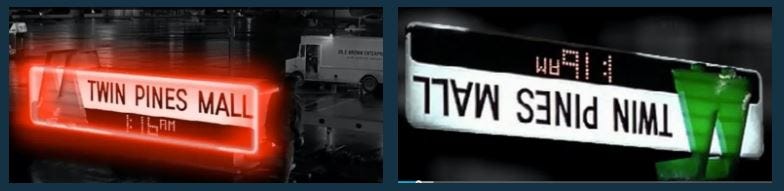
The Movie Series, “Back To The Future”, Predicted 911 | by Think On Your  Own | Medium
 
August 11: Saint Clare of Assisi - Catholic Telegraph
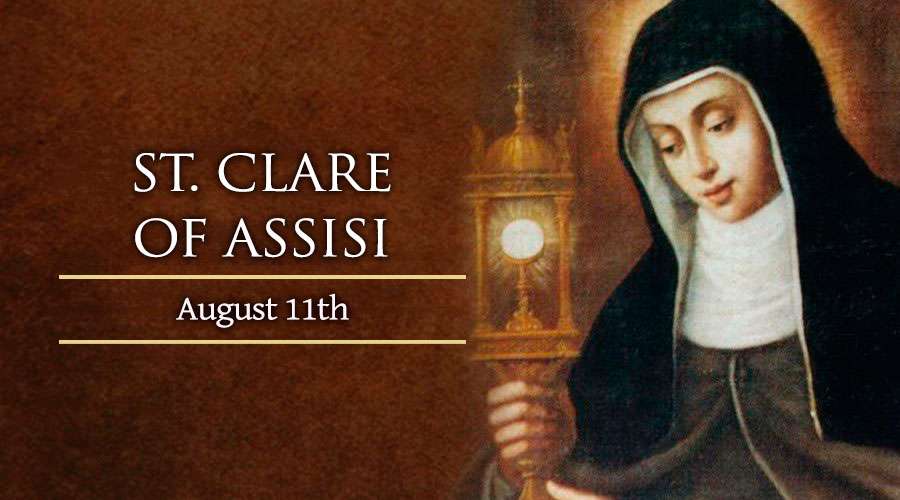
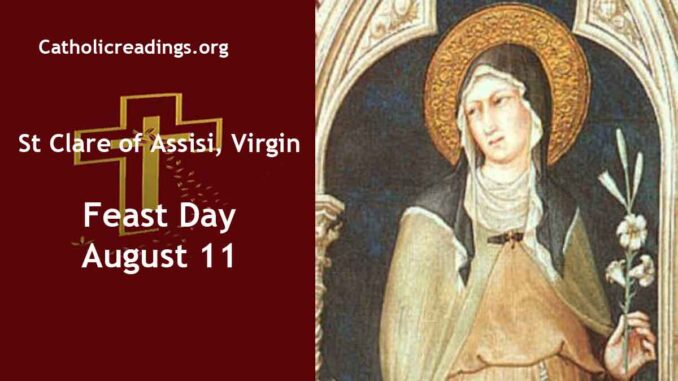
St Clare of Assisi, Virgin - Feast Day - August 11 2024 - Catholic Saint of  the Day
 
 
11/6=august 11th = august (sixth month)
 
The Movie Series, “Back To The Future”, Predicted 911 | by Think On Your  Own | Medium
 
Was Back To The Future a coded warning about the 9/11 attacks? - AV Club

Resposta  Missatge 65 de 78 del tema 
De: BARILOCHENSE6999 Enviat: 05/04/2025 20:51

Resposta  Missatge 66 de 78 del tema 
De: BARILOCHENSE6999 Enviat: 26/04/2025 16:24

AUGUST 11TH=ST. CLARE OF ASSISI

August 11: Saint Clare of Assisi - Catholic Telegraph


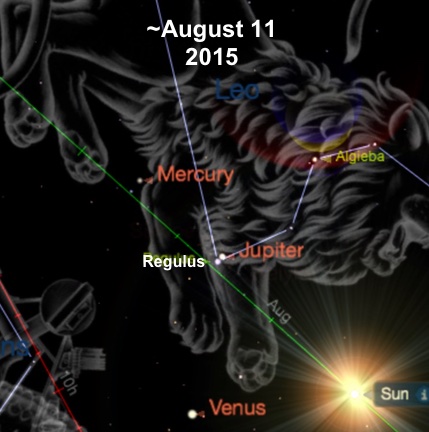
Regulus is one of the brightest stars in the night sky, which is not only the "heart of the lion" but also "prince" (or "little king") as well as "the King", just as Jupiter is named after the king of the gods. It is highly significant therefore that Regulus and Jupiter will be in "royal" conjunction on ~August 11.


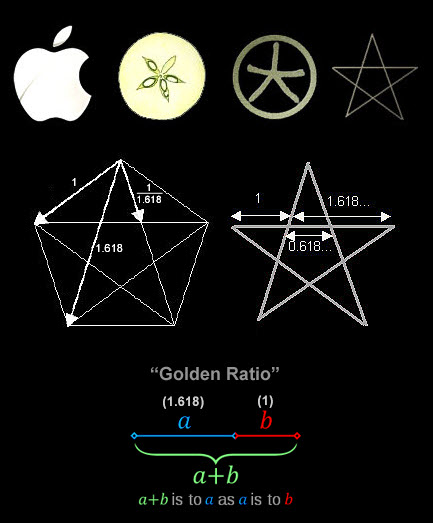
Remarkably ~August 11, 2015 is also pinpointed by a "Mayan financial crisis" time code I started highlighting back in February (STRUG) which is based on the Golden Ratio ("phi") and at least three major dates/events: 1) Transit of Venus (2004), 2) the day the US financial system almost came crashing down (9/14/2008), and 3) the "end" of the Mayan calendar (12/21/2012):


[Transit of Venus - June 8, 2004 & June 6, 2012 -
rare phenomenon of Venus passing in front of the Sun]

Sep 14, 2008 Lehman Files for Bankruptcy; Merrill Is Sold
Sep 15, 2008 Crisis on Wall Street as Lehman Totters, Merrill Is Sold, AIG Seeks to Raise Cash
[Wikipedia - Global financial crisis in September 2008]
["Inside the Meltdown" (PBS) video]

The financial crisis theme is underscored by an additional equidistant Mayan timeline coming from the May 6, 2010 "Flash Crash" (Dow Jones) pinpointing August 8, 2015, just 3 days before August 11:


[May 06, 2010 Dow freefalls almost 1,000 points, pulls back]

The point is not necessarily that we will have another such literal financial crisis in August 2015. But that we will have some notable event(s) heavily resonating with these things.

~~ UPDATE ~~

The pattern has been confirmed, as China's surprise move to devalue
its currency on August 11, 2015 destabilized global markets...


~~ END UPDATE ~~

[Original article resuming...]

On to the next set of time codes, with a temporal focus more on the latter half of August...

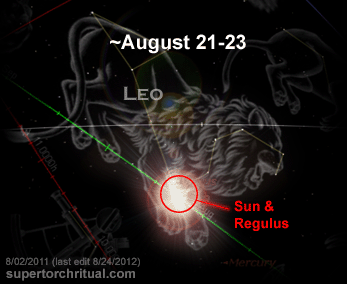
As I've noted many times in the past, Regulus is annually illuminated by the Sun on ~August 21–23


And it just so happens that it coincides with the heliacal rising of Sirius specifically at the latitude of Paris (~August 22)! But that's not all...

This year it will also coincide with Venus's rebirth as the Morning Star around August 21. (Until mid August before its inferior conjunction Venus is in its Evening Star phase.) This of course connects right back to the Transit of Venus which is a very precise form of the Venus inferior conjunction (= Earth-Venus-Sun alignment) that always immediately precedes the birth of the Morning Star.

This is very important because "Morning Star" is the original meaning of the term/name "Lucifer". And it just so happens that in the movie Lucy released in July 2014 we see Lucy's driver's license expiring specifically on "August 24, 2015".


What's more, August 24 will be the anniversary of last year's big earthquake (8/24/2014) in the "phoenix city" San Francisco

[Aug 24, 2014 Strongest quake in 25 years strikes San Francisco]


[San Francisco flag]

https://www.goroadachi.com/etemenanki/dogdays_prophecy.html

Resposta  Missatge 67 de 78 del tema 
De: BARILOCHENSE6999 Enviat: 28/05/2025 20:42
File:Ramadan100years1938-2037.png - Wikimedia Commons
 
 
SANTA CLARA (AUGUST 11TH)=RAMADAN 2010

Resposta  Missatge 68 de 78 del tema 
De: BARILOCHENSE6999 Enviat: 30/06/2025 18:07


Resposta  Missatge 69 de 78 del tema 
De: BARILOCHENSE6999 Enviat: 06/07/2025 15:48


Resposta  Missatge 70 de 78 del tema 
De: BARILOCHENSE6999 Enviat: 11/08/2025 10:37


Resposta  Missatge 71 de 78 del tema 
De: BARILOCHENSE6999 Enviat: 12/08/2025 11:05


Resposta  Missatge 72 de 78 del tema 
De: BARILOCHENSE6999 Enviat: 11/09/2025 12:35


Resposta  Missatge 73 de 78 del tema 
De: BARILOCHENSE6999 Enviat: 01/01/2026 21:22


Resposta  Missatge 74 de 78 del tema 
De: BARILOCHENSE6999 Enviat: 02/02/2026 15:04


Resposta  Missatge 75 de 78 del tema 
De: BARILOCHENSE6999 Enviat: 02/02/2026 16:42

Clan Sinclair
Clann na Ceàrda o Clan na Ceàrdaich [ 1 ]
Cresta : Un gallo rampante
Lema Encomienda tu obra a Dios [ 2 ]
Eslogan ¡Girnigoe! ¡Girnigoe! [ 3 ]
Perfil
Región Tierras altas
Distrito Caithness
Insignia de planta Quejido [ 2 ]
Música de gaitas "La Marcha de Sinclair" (también conocida como La Cinta Roja)
Jefe
El Muy Honorable Conde de Caithness
El vigésimo conde de Caithness [ 2 ]
Sede histórica Castillo Sinclair Girnigoe [ 4 ]
Septos del Clan Sinclair
Ramas del clan


Clanes aliados
Clanes rivales


El clan Sinclair ( en gaélico escocés : Clann na Ceàrda [ˈkʰl̪ˠãũn̪ˠ nə ˈkʲaːrˠt̪ə] ) es un clan de las Tierras Altas de Escocia que posee las tierras de Caithness , las Islas Orcadas y los Lothians . Los jefes del clan fueron los barones de Roslin y, posteriormente, los condes de Orcadas y de Caithness .

Se cree que los Sinclair llegaron de Normandía a Inglaterra durante la conquista normanda de Inglaterra , antes de llegar a Escocia en el siglo XI. Los Sinclair apoyaron a la Corona escocesa durante la Guerra Escocesa-Noruega y las Guerras de Independencia de Escocia .

Los jefes fueron originalmente barones de Roslin, Midlothian , y William Sinclair, primer conde de Caithness y barón de Roslin, fundó la famosa capilla de Rosslyn en el siglo XV. Dividió las tierras familiares, desheredando a su hijo mayor de su primer matrimonio, William ("el Derrochador") , quien heredó el título de Lord Sinclair [ nota 1 ], y en su lugar entregó las tierras de Caithness a su segundo hijo de su segundo matrimonio, William Sinclair, segundo conde de Caithness , en 1476, y las tierras de Roslin a su hijo mayor de su segundo matrimonio, Sir Oliver Sinclair .

En el siglo XVI, los Sinclair lucharon contra Inglaterra durante las Guerras Anglo-Escocesas y también se enfrentaron con sus vecinos, el Clan Sutherland . Durante el levantamiento jacobita de 1715, los Sinclair apoyaron la causa jacobita, pero durante el levantamiento jacobita de 1745 , si bien el clan simpatizaba mayoritariamente con los jacobitas, su jefe, el Conde de Caithness, apoyó al gobierno británico-hannoveriano.

El jefe actual es Malcolm Sinclair, vigésimo conde de Caithness .

Orígenes

editar ]

El apellido de Sinclair en francés es "de Sancto Claro" y en latín, "Sanctus Clarus", que significa Luz Sagrada. El nombre deriva del eremita Santa Clara y de Saint-Clair-sur-Epte, un pueblo cercano a París, próximo al lugar donde fue martirizado el eremita Santa Clara.

No existe un registro certero, pero es probable que los Sinclair fueran originarios de Saint-Clair, en Normandía . [ 11 ] Los Saint-Clair fueron primero a Inglaterra (antes de llegar a Escocia) con Guillermo el Conquistador durante su invasión de Inglaterra. [ 12 ] El nombre original era "Saint-Clair", que era un topónimo. [ 12 ] Ricardo de Saint-Clair y Brittel de Saint-Clair se mencionan en el Libro Domesday . [ 12 ] Guillermo de Saint-Clair acompañó a Santa Margarita de Escocia , hija de Eduardo el Exiliado, a Escocia en 1068, donde finalmente se casó con Malcolm III de Escocia . A cambio de sus esfuerzos, el rey supuestamente le otorgó a Sinclair la baronía de Roslin , Escocia, "en herencia libre". [ 12 ]

Uno de los primeros Sinclair registrados en Escocia fue Enrique de Saint-Clair/Sinclair , quien obtuvo una carta para las tierras de Herdmanston en Haddingtonshire en 1160. [ 12 ]

Los jefes del clan Sinclair, los condes de Caithness, descienden de William St. Clair , quien fue sheriff de Edimburgo y a quien se le concedió la baronía de Roslin (Rosslyn) en 1280. [ 11 ]


Resposta  Missatge 76 de 78 del tema 
De: BARILOCHENSE6999 Enviat: 02/02/2026 16:59

The Saint-Clair Family

Origins

The Saint-Clair family rose to prominence during the 10th century in Normandy, France. They were among the aristocratic families who supported the early Catholic Church’s efforts to unify Europe under Christian rule. Their name, derived from the Latin Sanctus Clarus (“Holy Bright”), reflects their roots.

In the early 10th century, when Normandy was still a wild and dangerous land claimed by Viking raiders and newly converted Christians, the Saint-Clairs were a small but noble family, devoutly Catholic and known for their loyalty to the Church. Their ancestral stronghold, Saint-Clair-sur-Epte, stood near the banks of the River Epte, a major tributary of the Seine, close to where a treaty had been signed to establish Normandy under Duke Rollo, a Viking chieftain turned Christian lord.  

Their early prominence as military leaders and landowners in Normandy ensured their ties to the Church. It was in this context that the Saint-Clairs first became aware of the Atharim. The family’s strength, wealth, and faith aligned them naturally with the Atharim’s mission.

This was a time of fragile peace, where old gods still lingered in the shadows of pagan groves, and monstrous beings were said to roam the forests, preying on isolated villages. The local people of Normandy whispered of creatures born of darkness, remnants of the old, wild world that refused to bow to the light of the Cross.  


The demon in the woods

The legend begins with a series of strange disappearances in the forests near Saint-Clair-sur-Epte. Villagers would enter the woods to gather firewood or hunt, only to vanish without a trace. Those who survived to tell the tale spoke of a beast with glowing eyes and a hide like iron. Some said it was a wolf the size of a horse, others a demon wearing the form of an animal, while others insisted it was a punishment sent by the old gods.  

The Church dismissed these tales as superstitions, but the disappearances continued. Then, one night, the beast came to the gates of the Saint-Clair castle itself. The monster slaughtered the livestock, terrorized the estate, and left claw marks gouged deep into the walls of the family chapel. The family patriarch at the time, Jean de Saint-Clair, believed the creature to be demonic and swore before the altar that he would end the creature’s reign of terror, even if it cost him his life.  


Determined to confront the beast, Jean assembled his household knights and set out into the forest. For weeks, they hunted the creature to no avail, suffering attacks in the night and enduring strange visions that filled their hearts with fear. Just as Jean began to despair, a mysterious man arrived at Saint-Clair-sur-Epte, seeking shelter.  

This man, known as Benedictus, claimed to be a wandering monk. However, he carried no cross and wore no priest’s robes. Instead, he bore weapons unlike anything Jean had seen before—silver-tipped spears, daggers etched with runes, and a book written in a language that seemed to twist and shimmer on the page. Benedictus later told Jean that he was part of a secretive order, one that had fought creatures like this for centuries.  

He warned Jean that the beast was no ordinary wolf—it was a Loup Garou, a shapeshifter cursed to stalk the night and feast on human flesh. Such creatures, Benedictus explained, were drawn to chaos and despair, and they would not rest until they had utterly consumed the land.  

Desperate, Jean asked Benedictus for his aid. The monk agreed, but on one condition: Jean must swear an oath to Benedictus’ order, a sacred vow to hunt the unnatural wherever it appeared and to protect mankind from the hidden evils of the world, and to keep the secrets of the Atharim so to not inspire panic among the people. Jean, seeing no other choice, swore the oath. It was the night the Saint-Clair family became Atharim.  

With Benedictus’s guidance, Jean and his knights lured the beast into a trap. They consecrated a grove in the forest, turning it into holy ground, and baited the creature with blood. When the Loup Garou appeared, it was more horrifying than anyone had imagined—a hulking wolf-like figure with glowing red eyes, its body twisting unnaturally as it shifted between man and beast.  

The battle was brutal, and many of Jean’s knights were killed. Benedictus’s weapons, forged from silver and blessed by ancient rites, were the only things capable of wounding the beast. In the end, Jean delivered the killing blow, plunging a silver-tipped spear into the creature’s heart. As the Loup Garou died, it let out an unearthly scream, and the forest seemed to sigh with relief.  

Afterward, Benedictus gathered the remains of the beast and burned them, chanting rites that Jean could not understand. He warned Jean that creatures like the Loup Garou were not isolated—they were part of a larger, darker world, one that humanity barely understood. He urged Jean to prepare his family and his descendants for the coming battles.  

As a final act of trust, Benedictus left Jean with one of his weapons—a silver dagger inscribed with Atharim runes. It became the first of the Saint-Clair relics, a sacred symbol of their oath. Over time, this dagger would be passed down through the generations, used in countless hunts and battles against the unnatural.  

To commemorate their victory and their new purpose, Jean had the family chapel rebuilt, and at its center he placed a stained-glass window depicting Saint Michael the Archangel slaying a wolf-like demon. This image became the family’s symbol, a reminder of their sacred mission.  

After this event, the Saint-Clair family formally became members of the Atharim. They offered their resources, knights, and knowledge to the secretive order, forging a bond that would endure for centuries. Their connection to the Atharim deepened dramatically during the Crusades, when they worked alongside Templar knights to combat not only human enemies but also supernatural threats in the Holy Land.  

The family earned a reputation as hunters of the monstrous and collector-guardians of dangerous relics. Their ancestral estate at Saint-Clair-sur-Epte became both a fortress and a library, filled with weapons, books, and artifacts collected by the Atharim. It is said that deep beneath the estate lay a hidden dungeon where some of their most dangerous secrets are kept.  

The legend of Jean de Saint-Clair and the Loup Garou became a cornerstone of the family’s identity. It is told to every new generation of Saint-Clairs as a reminder of their sacred duty. The family motto, “Lux et Umbra” (“Light and Shadow”), was adopted in honor of their dual existence: defenders of humanity who operate in the shadows, fighting the monsters that most will never know exist in order to maintain the light.

To this day, the Saint-Clairs hold their oath sacred. Though their methods have modernized, their mission remains the same: to hunt the supernatural, to protect humanity, and to uphold the traditions of the Atharim. The silver dagger of Benedictus still resides in their possession, a relic of their first hunt and a symbol of their unbroken vow.  

The Knights Templar

By the late 11th century, the Saint-Clairs were deeply involved in the Crusades, particularly the First Crusade (1096–1099). Members of the family were among the founding knights of the Knights Templar, the Catholic military order created to protect pilgrims traveling to the Holy Land. The first grandmaster and founder of the Knights was Atharim warrior, Hugues de Payens, who recruited the Saint-Clair family to join him as one of the original nine templar knights.

The Templars’ public mission to protect the faithful masked a darker and more dangerous secret: they were also hunting monsters, supernatural entities, and threats that emerged during the chaos of warring within the Holy Land. The Saint-Clairs leveraged their wealth and influence to arm and train hunters under the guise of Templar recruits. They provided access to rare scrolls, relics, and tools that the Atharim needed to fight against the supernatural.

Many of the Templars’ secretive rituals and symbols—including the association with the Holy Grail—were influenced by Saint-Clair family lore and Atharim doctrines. Legends of the Templars guarding sacred knowledge and powerful artifacts originated from their work with the Atharim to suppress the resurgence of dangerous relics and entities. It is rumored that the Saint-Clairs Knights retrieved many such artifacts and weapons from the Holy Lands, many deemed too powerful to see the light of day. 

In 1307, the Templar Order was disbanded under pressure from King Philip IV of France and Pope Clement V. Many Templars were arrested, tortured, and executed, but the Saint-Clairs avoided this fate. Their deep ties to the Atharim gave them forewarning of the purge, allowing them to protect many Templar treasures and records related to the Atharim’s mission. A prominent collection was moved to Rosslyn Chapel, built by a Scottish branch of the family. While some ships departed for Scotland, raids by King Philip IV halted additional departures from Le Havre, and others were transported to remote strongholds in other parts of Europe. These caches preserved the Atharim’s secrecy and treasures during the chaos of the 14th century. 

The Renaissance

During the Renaissance, the Saint-Clair family became known for their intellectual pursuits, serving as patrons of the arts, science, and religious scholarship. While their public image was one of piety and refinement, they continued to operate as loyal members of the Atharim. They sponsored expeditions to uncover and neutralize threats tied to the supernatural in Africa, the Americas, and Asia, using their wealth to fund hunters and secure dangerous relics. 

The Napoleonic Wars

By the 19th century, the Saint-Clair family had fractured into several branches. While their French estate remained their ancestral stronghold, other branches had settled in Scotland (as the Sinclairs) and other parts of Europe. The industrial age posed challenges for the family: modernization, industrialization, and secularization weakened the power of the Church and, by extension, the influence of the Atharim.

During the Napoleonic Wars, the Saint-Clairs were nearly destroyed when French forces ransacked their ancestral estate at Saint-Clair-sur-Epte, believing it to be a hotbed of royalist resistance and commandeering the family wealth to fund the war effort. The family fled to England and Scotland, with many of their holdings in Normandy destroyed. 

Modernity

By the late 19th century, the Saint-Clairs experienced a resurgence. They rebuilt their French estate, reestablishing their influence within the Atharim. This period also saw them amass significant wealth through shrewd business ventures. Celebrated unions of the family have taken place with other ancient families dedicated to the cause, such as the Lagueux family of Baccarat Crystal, various children of the Atalanta line, and the Sebastian Family. These unions not only strengthened the bonds between Atharim bloodlines but also ensured their influence remained deeply intertwined with aristocratic traditions and wealth.

In the 20th and 21st centuries, the Saint-Clair family remain an important pillar of the Atharim, particularly in Europe, maintaining strongholds in France, Scotland, and Switzerland. The family is known for their secret archives of Atharim knowledge, including Templar-era documents, relics from the crusades, sponsorship of new Atharim hunters, and ties to high-ranking clergy.

To the outside world, the Saint-Clairs are an old, aristocratic French family, known for their wealth, philanthropy, and connections to the Catholic Church. The family’s motto, “Lux et Umbra” (“Light and Shadow”), reflects their dual existence: shining a light of protection over the world while operating from the shadows.

https://thefirstage.org/wiki/the-saint-clair-family/

Resposta  Missatge 77 de 78 del tema 
De: BARILOCHENSE6999 Enviat: 02/02/2026 17:06

Tratado de Saint-Clair-sur-Epte


Apariencia
 
Texto
  •  
     
     
Anchura
  •  
     
Color (beta)
  •  


Tratado de Saint-Clair-sur-Epte

Carlos III dona la mano de su hija Gisèle al caudillo vikingo Rollón.
Tipo de tratado Tratado de alianza
Firmado Saint-Clair-sur-Epte (hoy Valle del OiseBandera de Isla de Francia Isla de Francia)
Sellado 11 de julio de 911
Firmantes Carlos III de Francia y Rollón (en representación de los vikingos)
Partes Francia Occidental y vikingos
Idioma Latín
El ducado de Normandía entre 911 y 1050. Rayados, los territorios originales concedidos a Rollón.

El tratado de Saint-Clair-sur-Epte fue un tratado de alianza suscrito el 25 de julio de 911 por el rey Carlos III de Francia y el caudillo vikingo Rollón. Por él se autorizaba el establecimiento de los normandos en Neustria con el fin de proteger el reino de Carlos III de otras posibles invasiones vikingas.

No se sabe de ninguna copia de este tratado por el que se creó lo que en el futuro sería el ducado de Normandía.

En virtud de este tratado, Carlos III entregó a Rollón la región comprendida entre los ríos Epte y Oise, exceptuando el Vexin Français, es decir, los condados o abadías de RuanÉvreux y Lisieux lo que correspondería a las actuales regiones francesas de Alta Normandía y Pays d'Auge. A cambio, Rollón se comprometía a abrazar la fe cristiana, a casarse con Giselle, hija ilegítima de Carlos III, a rendir vasallaje al rey y defender Normandía contra los ataques piratas de otros vikingos. En relación con este punto, la historia dice que las cosas se complicaron cuando Rollón se negó a arrodillarse ante Carlos III para besarle los pies, como era tradicional durante el acto de vasallaje. Para resolverlo se llegó a una solución de compromiso, así que sería uno de los guerreros de Rollón el que besaría los pies del rey; pero ese guerrero, tan orgulloso como su señor, sin arrodillarse siquiera, agarró el pie del rey y lo elevó tan alto que Carlos III acabó rodando por los suelos.[cita requerida]

La región se convirtió entonces en un ducado llamado Normandía, de Northmanorum o Nortmanni que significa «hombres del norte», nombre con el que se denominaba a los invasores vikingos. Rollón fue nombrado primer duque de Normandía con el nombre de Roberto I.


Resposta  Missatge 78 de 78 del tema 
De: BARILOCHENSE6999 Enviat: 02/02/2026 17:48


Primer  Anterior  64 a 78 de 78  Següent   Darrer  
Tema anterior  Tema següent
 
©2026 - Gabitos - Tots els drets reservats