|
|

tefekkurvesukur.blogsp...
como "en Dios confiamos"
500 × 474 - 75k - jpg |

soysalesianocooperador...
La frase “En Dios confiamos”,
500 × 431 - 201k - jpg |

actualidad.rt.com
La frase "En Dios confiamos",
630 × 354 - 50k - jpg |
pastocity.wordpress.com
frase “En Dios confiamos”,
433 × 182 - 33k - jpg |
| Reply |
Message 203 of 205 on the subject |
|
|
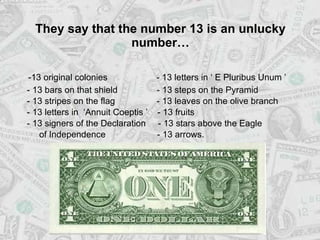
COMPAREN LA PIRAMIDE DE CRISTO CON LA PIRAMIDE DEL DOLAR
INCLUSO LA MISMA EXPRESION QUE APARECE EN EL DOLAR PERO CON REFERENCIA A CRISTO
 JESUS EN TI CONFIO JESUS EN TI CONFIO
Jesus, en ti confiamos, te necesitamos,
protege a los mexicanos y a nuestras familias.
Esta oracion repitela todo el dia y creelo.
PARA DIOS NO HAY NADA IMPOSIBLE
Bendecire a las familias donde se exponga mi IMAGEN, convertire a los pecadores que
ahi habiten; ayudare a los buenos a perfeccionarse, a los tibios a volverse fervorosos.
Bendecire sus intereses; proveere a sus necesidades espirituales y materiales. Tengan fe
y confianza, todo lo que hagan por Mi seran recompensados al centuplo.
Reza la coronilla de la Divina Misericordia
Santiario de Jesus de la Divina Misericordia y de Santa Maria Guadalupe
Av. Rio Blanco No. 1588, Zapopan, Jal. MX. Tel: (33) 3364-7595.
Oficina de 9:00 a 12:00 y de 17:00 a 20:00 hrs.

PUBLIXMAIL
Para contratar este servicio de envio de publicidad por mail. Mas informes al +52 (33)1284-3097.
publixmail.com@gmail.com añadir en Asunto o Subject: Informes
|
|
| Reply |
Message 204 of 205 on the subject |
|
|
|
| Reply |
Message 20 of 20 on the subject |
|
|
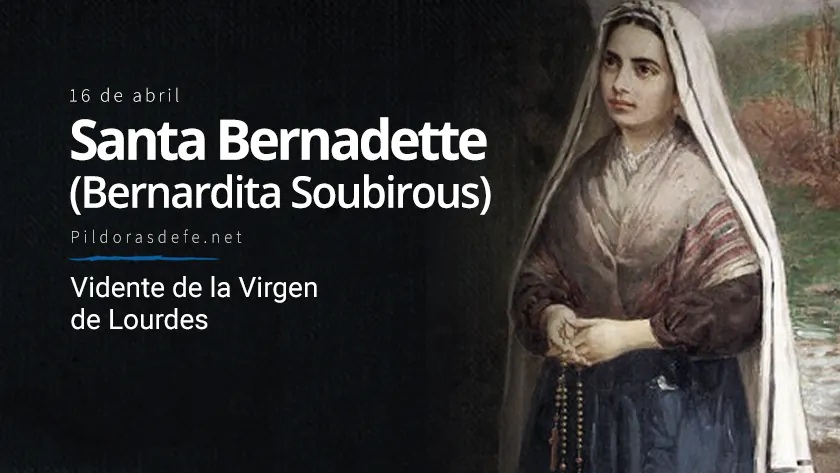
DOLAR="VIRGEN DE LOURDES"=FRANCIA
INCLUSO EN LA PIRAMIDE QUE APARECE BAJO EN LA MANO DE CRISTO TIENE LA BANDERA FRANCESA.
|
|
|
|
|
|
|
Astronomical alignment[edit]
Looking east through nave on 23 June 1976, two days after the summer solstice Mary Magdalene's relics in the crypt
In 1976, Hugues Delautre, one of the Franciscan fathers charged with stewardship of the Vézelay sanctuary, discovered that beyond the customary east-west orientation of the structure, the architecture of La Madeleine incorporates the relative positions of the Earth and the Sun into its design. Every June, just before the feast day of Saint John the Baptist, the astronomical dimensions of the church are revealed as the sun reaches its highest point of the year, at local noon on the summer solstice, when the sunlight coming through the southern clerestory windows casts a series of illuminated spots precisely along the longitudinal center of the nave floor.[13][14][15][16][17]
|
|
|
|
|
| Santa Bernardita Soubirous |
 |
| Información personal |
| Nombre de nacimiento |
Maria-Bernada Sobirós (original en occitano)
Marie-Bernarde Soubirous (en francés)
María Bernarda Soubirous (en español) |
| Nombre en francés |
Bernadette Soubirous ii  |
| Nacimiento |
7 de enero de 1844
 Lourdes, Francia Lourdes, Francia |
| Fallecimiento |
16 de abril de 1879 (35 años)
Nevers, Francia |
| Causa de muerte |
Tuberculosis |
| Sepultura |
Nièvre |
| Nacionalidad |
Francesa |
| Religión |
Iglesia católica |
| Lengua materna |
Occitano |
| Familia |
| Padres |
François Sobirós
Louise Castérot |
| Información profesional |
| Ocupación |
Monja |
| Información religiosa |
| Beatificación |
14 de junio de 1925 |
| Canonización |
8 de diciembre de 1933 |
| Festividad |
16 de abril
18 de febrero (Culto local) |
| Venerada en |
Iglesia católica |
| Patronazgo |
Si bien la Virgen María en su advocación de Nuestra Señora de Lourdes es considerada por la Iglesia católica la principal patrona de los enfermos, se asocia por extensión a Bernadette con la protección de los mismos, como también de personas ridiculizadas por su piedad, de pobres, y de pastoras y pastores |
| Santuario |
Santuario de Lourdes |
| Orden religiosa |
Hijas de la Caridad de Nevers |
|
|
|
|
|
|
|
|
|
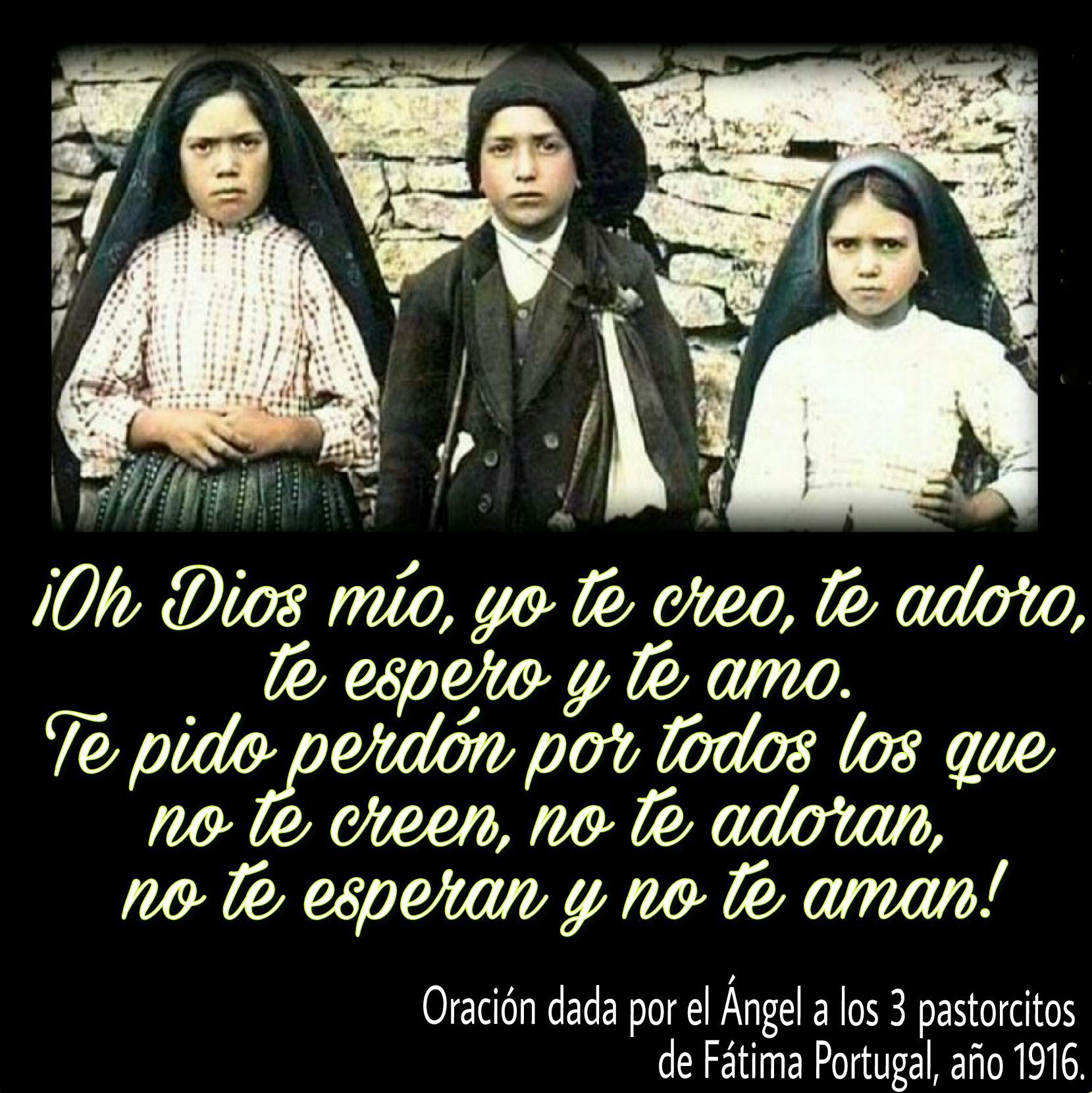
FRANKINCENSE/FATIMA/POPE FRANCIS/FRANCE/DA VINCI CODE/FREEMASONRY

And going into the house, they saw the child with Mary his mother, and they fell down and worshiped him. Then, opening their treasures, they offered him gifts, gold and frankincense and myrrh. (Matthew 2:11, ESV)
|
|
|
|
|
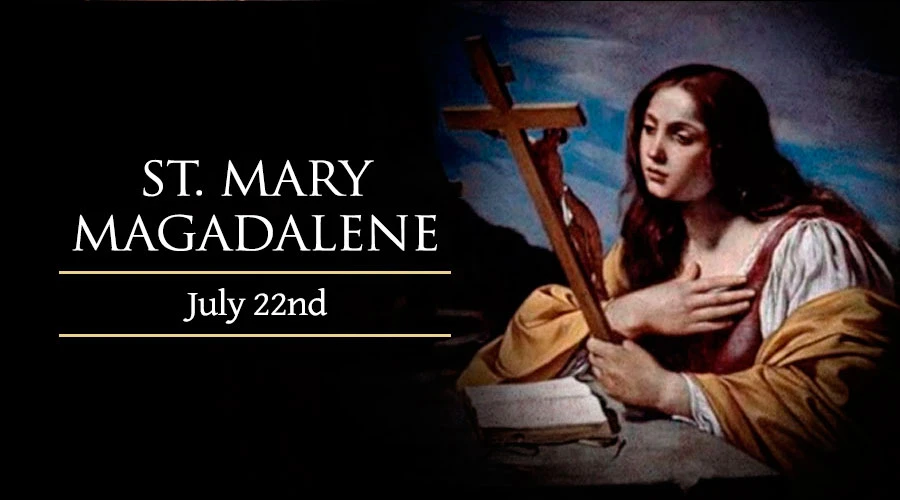
The Nard of Mary-Magdalene
My fools for senses,
Today, we shall be looking for an answer centuries of commentors failed to provide. Following our Review of Irrévérent and its unusual accord of oud and lavender, we decided to ponder awhile on this last ingredient which we thought we knew too well. Most of all, we wanted to envision it with a new eye : that of theology. Of history and literature and cooking and anthropology.
For indeed lavender passed through many cultures and through many readings did we stumble upon a most startling fact : that nard and lavender, in the Bible, are one. Thus, my fools for senses, let us discover today what really hid behind the Nard of Mary-Magdalene.
All good adventure movies start with a writing on a wall or in a book in our case. In the Bible, really. “Mary, having taken an ounce of pure nard anointed with it the feet of Jesus” This moving scene will very lively raise more than one question in the reader's mind : whatever is nard and why use it to anoint the Christ's feet ?
To properly grasp what nard is or was, one must look at its history and all the times it was mentioned. As far as we can tell around the Mediteranean Sea, Dioscorides spoke of nard in De Materia Medica. Of more than one actually. He lists a Syrian nard, an Indian nard and a Celtic nard. According to him, the Syrian nard got its name from the fact that it grows on the western slope of a mountain range -he was probably referring to the Hindu Kush. He also says its sweet aroma is close to that of nard from Cyprus. Indian nard is apparently smoother and more watery considering it grows in the Gange basin. The Celtic nard at last is both sweet and suave. He also mentions a wild nard growing in the mountains known already by the Gauls. As for Pliny the Elder, in his Natural History he lists a numerous variety of nards and one in particular that was so sweet-smelling that it was a most sought-after oil.
Roman literature is also a good resource when it comes to perfumes. In his Odes –the tenth to be more precise- Horace speaks of an « Assyrique nardo », Assyrian nard, whereas Petronius in his Cena Trimalchionis has one of his characters open an « ampullam nardi », a phial of nard, which was then rubbed on al the guests’ noses. Knowing the musty, musky scent of nard, one might be surprised upon reading so many lauds to it and the Roman nobility anointing their noses with it as they end a banquet. However, there happens to be mentions of nard in the Apicius, a Roman cookbook, according to which a few drops of nard might be useful to freshen a stale broth.
This occurrence of nard in a cookbook really raised our eyebrows and convinced us that nard was in fact lavender but how did the Romans end up confusing both ?
One must go back to the origins. Nard was named after the Assyrian city of Nuhadra –in actual Iraq- sitting on the banks of the Tigris river. Probably known for trading precious oils, one might say it was the starting point of spikenard trading routes going west into the Roman Empire although the nard existed way before the Romans. Already is it seen in a recipe for the anointing oil of Parthian kings as well as in Arrian’s Anabasis in a curious tale where the soldiers, as they traverse the desert of Gadrosia, find themselves trampling a « grass of nard » which then exhaled a sweet-smelling aroma. Research has now shown that this so-called nard was in fact…lemongrass.
To establish a link between the freshness of lemongrass and that of lavender isn’t much of a stretch.
Moreover, we looked for answers into the Eastern Orthodox tradition, which has gone uninterrupted since the early years of our era. After having ordered many an incense and nard-scented oils, we realised they were in fact all perfumed with lavender. Thus, we wondered why Mary-Magdalene anointed Jesus’ feet with nard –or lavender.
For so, let us dive into the writings. In the famous passage, St John writes : « nardou pistikes », « pure nard ». Some translated it into « true nard » as opposed to the fake one being lavender however we still think that « pistikes » has nothing to do with botanics. The Peshitta, an Aramaic translation of the Gospels, wrote : « dnardeen reeshaya ». Reeshaya here means « the best », of great quality. The symbolical use of the word reeshaya is most clearly seen in the Gospel of St Mark where Mary-Magdalene breaks « of pure nard. » on Jesus’ « head ». The Peshitta writes : « dnardeen reeshaya (…) al reesheh dyeshoo » a play on the words « reeshaya » which we’d roughly translate to : she poured the best on the Best.
Why pouring nard, though ? Or rather lavender ?
It is now known that myrrh is a symbol for death. It would thus have been very clever of Mary-Magdalene to anoint Jesus’ feet with it as a sign of his upcoming death and burial but she chose lavender. As such, her anointement is nothing short of a prophecy, lending us precious informations on the secret symbolism hidden behind lavender.
We read how the Ancients confused nard with lavender but we must now explain why they did so for they spoke of spikenard and lavender spike. The first bore its name from the fact its root looked like it was spiking out of the stem. The latter bore its name from its resemblance to an ear of wheat and this is precisely where we need investigate for therein lies the key to understanding the real meaning of lavender and solve a millenial controversy.
When Mary Magdalene poured lavender spike on Jesus’ feet, she accomplished a prophetic gesture of which she had probably no knowledge –as most prophecies in the New Testament. Along with St John whose head lies on Jesus’ chest - announcing the theosis- and the Virgin Mary who looked westward as her baby lay in her arms –announcing the Passion- Mary Magdalene announces the Passion and Resurrection. For as she poured the best on the Best, it is precisely the oil of the best ear of wheat which she poured upon He who compared himself to a « kernel of wheat ». This gesture is a clear reference to the words of Jesus saying on the eve of his death : « Unless a kernel of wheat falls to the ground and dies, it remains only a single seed. But if it dies, it produces many seeds »
The anointing of Jesus’ feet in the Gospel of Saint John heralds that of the myrrh-bearers and his Resurrection and of the Holy Spirit as it shone on his head upon his descent in the Hades, to a crown of light inextinguishable alike.
What we must understand is that lavender is akin to the light which shrouded the Christ as he went down into the Hades. Furthermore, mediaeval traditions will swiftly associate lavender to the virtue of keeping evil and dark spirits at bay. Lavender is a twig of life, fortifying the heart of Men ; it is the scent we smell as we leave a heartwarming feast, saying « I only hope it will give me as much pleasure when I'm dead as it does now when I'm alive. » It the the flower of foreseers, of those who see beyond appearances and the simple planes of existence.
The flower of they who want to trample and have trampled down death. The flower of soldiers as they traverse the desert, the flower of queens and kings chasing away all sorrows and withering of the soul.
Even more so than frankincense, lavender and its hues of violets and blues, is the perfect flower to connect us to the ethereal worlds. It clings to our soul and lifts it up and says to all and to us foremost that Love, over death, has won.
Your goodness and nard will follow me,
All the days of my life.
https://www.theperfumechronicles.com/chronicles/nard |
|
|
 Primer
Anterior
13 a 27 de 42
Siguiente Primer
Anterior
13 a 27 de 42
Siguiente Último
|














































![That's one small step..." —Neil Armstrong [1024 x 1333] : r/QuotesPorn](https://i.imgur.com/lfLGX.jpg)









.svg)