|
|
|
|
|
| Hechos 12:12: |
Y habiendo considerado esto, llegó a casa de María la madre de Juan, el que tenía por sobrenombre Marcos, donde muchos estaban reunidos orando. |
| Hechos 12:12: |
Y habiendo considerado esto, llegó a casa de María la madre de Juan, el que tenía por sobrenombre Marcos, donde muchos estaban reunidos orando. |
| Hechos 12:10: |
Habiendo pasado la primera y la segunda guardia, llegaron a la puerta de hierro que daba a la ciudad, la cual se les abrió por sí misma; y salidos, pasaron una calle, y luego el ángel se apartó de él. |
| Apocalipsis 2:27: |
y las regirá con vara de hierro, y serán quebradas como vaso de alfarero; como yo también la he recibido de mi Padre; |
|
| Hechos 12:12: |
Y habiendo considerado esto, llegó a casa de María la madre de Juan, el que tenía por sobrenombre Marcos, donde muchos estaban reunidos orando. |
| Hechos 12:12: |
Y habiendo considerado esto, llegó a casa de María la madre de Juan, el que tenía por sobrenombre Marcos, donde muchos estaban reunidos orando. |
| Hechos 12:10: |
Habiendo pasado la primera y la segunda guardia, llegaron a la puerta de hierro que daba a la ciudad, la cual se les abrió por sí misma; y salidos, pasaron una calle, y luego el ángel se apartó de él. |
| Apocalipsis 2:27: |
y las regirá con vara de hierro, y serán quebradas como vaso de alfarero; como yo también la he recibido de mi Padre; |
|
|
|
|
|
-
- On 19 September 2015 Pope Francis departed aboard an Alitalia Airbus A330 (Shepherd One) from Rome's Fiumicino International Airport, to Havana's José Martí International Airport where he arrived to an official Welcoming Ceremony. The next day, he was the principal celebrant at a Papal Mass at the Plaza de la Revolución in Havana at 9:00, before he paid a courtesy visit to the President of the Council of State and of the Council of Ministers of the Republic at Palacio de la Revolución in Havana. His day ended with celebrations of Vespers with priests, men and women religious, and seminarians, at the Cathedral of Havana, and a greeting to the young people of the "Centro Cultural Padre Félix Varela" in Havana during the early evening.[48]
- On 21 September, he departed by plane from Havana for Holguín, to preside at a Papal Mass at Plaza de la Revolución. Before departing for Santiago de Cuba, he gave a blessing to the city, from Loma de la Cruz, in Holguín. Having arrived in Santiago, he met with the Bishops of Cuba at St Basil the Great Seminary, and say a prayer to the Virgen de la Caridad, with the Bishops and the Papal Entourage, at the Minor Basilica of the Shrine "Virgen de la Caridad del Cobre" in Santiago.
- On 22 September, he celebrated a Papal Mass at the Minor Basilica of the Shrine "Virgen de la Caridad del Cobre" in Santiago in the morning and later had a meeting with families at Our Lady of the Assumption Cathedral in Santiago. After a blessing of the city of Santiago from the square in front of the Cathedral of Santiago, he left with a farewell ceremony from Santiago Airport, en route to Washington, D.C., where he arrived at Joint Base Andrews during the evening of 22 September 2015.
- On Wednesday, 23 September, the pope met with President Barack Obama at the White House. It was the third visit by a pope to the White House, following meetings between Jimmy Carter and Pope John Paul II in October 1979 and George W. Bush and Pope Benedict XVI in April 2008.[49]
- Also that day, Francis took part in a prayer with bishops from the United States at the Cathedral of St. Matthew the Apostle, the seat of Cardinal Donald Wuerl, the archbishop of Washington. Later that day, he celebrated Mass at the Basilica of the National Shrine of the Immaculate Conception, near the Catholic University of America. During the Mass, he canonized (declared to be a Saint) Junípero Serra, a Spanish Franciscan friar who founded a mission in Baja California, and the first nine of 21 Spanish missions in California.
- On Thursday, 24 September, Pope Francis gave an address to a Joint session of the United States Congress, the first Supreme Pontiff to do so. He followed that with a visit to St. Patrick's Church, the oldest parish church in Washington. The church was founded in 1794.[50] He also visited the Washington, D.C. local Catholic Charities office. He then flew from Washington, to New York City. After arriving at New York City's John F. Kennedy International Airport, he took part with New York's Cardinal Timothy Dolan in Evening Vespers (part of the Liturgy of the Hours), at St. Patrick's Cathedral.
- On Friday, 25 September, Pope Francis addressed the United Nations General Assembly. It was the fifth address by a Pope to the U.N. General Assembly, following appearances by Pope Paul VI in October 1965, Pope John Paul II in October 1979 and October 1995, and Pope Benedict XVI in April 2008. Following the address to the U.N., he participated in an ecumenical service at the National September 11 Memorial & Museum, at the former World Trade Center site. In the afternoon, he visited a school in East Harlem, then celebrated a Papal Mass at Madison Square Garden.
- On Saturday, 26 September, Pope Francis traveled from New York to Philadelphia, where he was welcomed by city and state leaders and Philadelphia's Archbishop Charles J. Chaput, O.F.M. Cap. He celebrated a Papal Mass at the Cathedral Basilica of Saints Peter and Paul. He visited Independence Mall in the afternoon, and the Festival of Families of the 2015 World Meeting of Families[51] in the early evening. The Pope's visit concluded on Sunday, 27 September, with a Papal Mass in the afternoon. After a departure ceremony, he departed on a jet for Rome and the Vatican from Philadelphia International Airport.
- In honor of the visit, the Museum of the Bible will sponsor a special exhibition entitled "Verbum Domini II" at the Philadelphia Convention Center, adjacent to the World Meeting.[52] The official schedule of his visit was announced at the end of June.[53]
|
|
|
|
|
11/9/1941-1/1/1942=111 DAYS (PENTAGON FUNDATION SEPTEMBER 11TH 1941)
1/1/1942-21/4/1942=111 DAYS (ROME FUNDATION)
1/1/1942-10/8/1942=222 DAYS (SAINT LAWRENCE)
1/1/1941-10/8/1942=333 DAYS (SAINT LAWRENCE-911)
11/9/1941-9/7/1943=666 DAYS (ARGENTINE INDEPENDENCE)
11/9/1941-16/2/1944= 888 DAYS
11/9/1941-28/10/1943=777 DAYS (PHILADELPHIA EXPERIMENT)
11/9/1941-6/6/1944 (DAY D)=999 DAYS (DAY D)
|
|
|
|
|
|
|
|
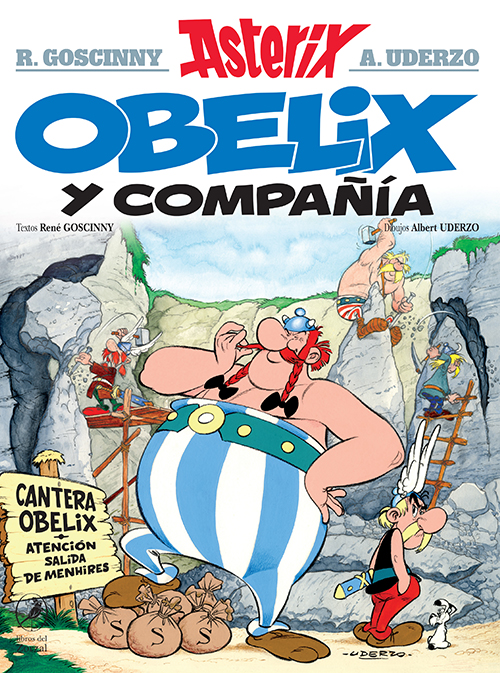
Obelix and Co.
Obelix and Co. is the twenty-third volume of the Asterix comic book series, by René Goscinny (stories) and Albert Uderzo (illustrations).[1] The book's main focus is on the attempts by the Gaul-occupying Romans to corrupt the one remaining village that still holds out against them by instilling capitalism. It is also the penultimate volume written by Goscinny before his death in 1977; his final volume, Asterix in Belgium, was released after his death in 1979.[2]
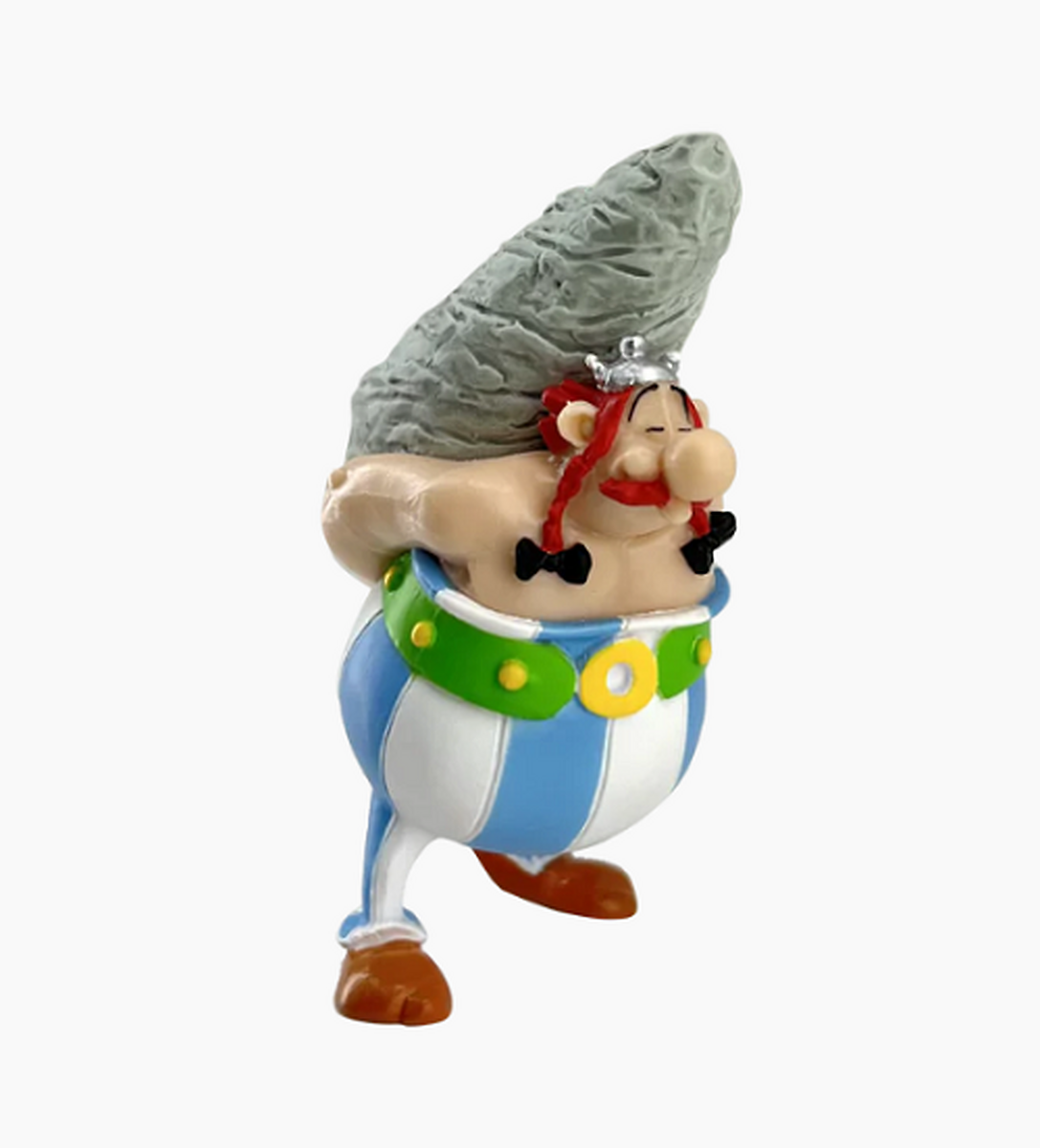
After Obelix single-handedly defeats a newly arrived battalion of Roman soldiers, Julius Caesar ponders over how to defeat the village of rebellious Gauls. A young advisor Preposterus, using his studies in economics, proposes that the Gauls to be integrated into capitalism, pointing out how Caesar's advisors have grown decadent with their wealth. Caesar agrees and sends Preposterus to one of the village's outlying Roman camps. Upon meeting Obelix carrying a menhir through the forest, Preposterus offers to buy the menhir and make Obelix a rich man, on the pretext it will give him influence, by buying every menhir he can make. Obelix agrees and begins making and delivering a single menhir a day to him.
Preposterus raises the demand for menhirs, forcing Obelix to hire villagers – while some aid him, the others hunt boar for himself and his new workers. The resulting workload causes him to neglect his faithful companion Dogmatix, while Asterix refuses to help him, concerned on what this is doing to him. As Obelix grows wealthy and begins wearing ostentatious clothes, many of the village's men are criticised by their wives for not matching his success. In response, many turn to making their own menhirs to sell to the Romans, with Getafix supplying them with magic potion for their work. While everyone (except for Asterix, Getafix, Cacofonix and Vitalstatistix) profits from the growing menhir demand, Asterix believes that this new change will not last.
Preposterus brings the excess stock of menhirs to Caesar, who is upset that Preposterus' plan is placing him in financial debt. Preposterus proposes to sell the menhirs to patricians on the pretext they are a symbol of great wealth and high rank. However, other provinces begin making their own menhirs to sell, creating a growing Menhir crisis that is crippling the Roman economy and threatening a civil conflict from the Empire's workforce. To put a stop to this, Caesar orders Preposterus to cease further trading with Gauls or face being thrown to the lions.
Meanwhile, Obelix becomes miserable from the wealth and power he made, having never understood it all, and how much it has changed other villagers, making him wish to go back to how life was with Asterix and Dogmatix. Asterix offers to go hunting boar with him if he reverts to his old clothes. When Preposterus arrives to announce he will stop buying menhirs, the villagers claim Obelix knew of this in advance and they fight with him. Asterix instead convinces the villagers to attack the Romans, and while Obelix sits out the fight, they wreck the camp and Preposterus. The menhir crisis caused the villagers sestertius to be devalued, and the village holds a traditional banquet to celebrate the return to normality.
- The book is a parody of capitalism:
- While Obelix could hunt boar before, he begins to overwork for the purpose of buying them (and ridiculous clothing). This pointless circle of money is something Obelix never understands in the first place, when all this stress could be prevented by simply hunting and living the simple life like before.
- Capitalism is also looked at as pointless through the fact that the only thing that represents it by being bought serves no practical purpose, as a menhir is simply a large stone.
- When the makers of Roman menhirs are banned from selling their stock, they block the Roman roads in protest at the loss of their jobs.
- The London School of Economics is referred to as the Latin School of Economics, where Preposterus is trained. It is the École Nationale d'Administration (ENA) through the Nouvelle École d'Affranchis (NEA) in the original.
Cultural references
[edit]
- The character of Preposterus is a parody of French politician Jacques Chirac, then Prime Minister under President Valéry Giscard d'Estaing, and himself President of the Republic from 1995 to 2007.
- On page 27, Laurel and Hardy make an appearance as Roman legionaries ordered to unload the menhirs from Obelix's cart.
- When, on page 2, the Romans leave the camp, two of the legionaries are carrying a drunk on a shield. The bearers are Goscinny and Uderzo themselves and the drunk is their friend Pierre Tchernia.
- In this story, camp life for the Roman legionaries is shown as undisciplined and complacent, mostly due to the lack of any conflict with the Gaulish villagers during the Menhir trade. In other Asterix adventures they are usually vigilant, clean-shaven, and well-organized; but here the men's faces are covered in stubble and life is almost anarchic. This laxity is represented in the watchtower guard, who becomes increasingly dishevelled with every appearance.
- Page 36 of this book was the 1000th page of Asterix. It is the page in which Preposterus uses a number of stone tablets in order to explain his strategy of selling menhirs to an increasingly bewildered Caesar. This panel had been hailed as a remarkable explanation of modern commerce and advertising. To mark this special page 36, there is a small panel with the names of the authors, and right under another small panel with the Roman numeral M, meaning 1000th, and below a tiny Latin text saying 'Albo notamba lapillo'. It should read 'Albo notanda lapillo', which means literally "To be noted with a white stone" and has given the well-known French expression "à marquer d'une pierre blanche", meaning in English "to go down as a milestone" (alternatively this expression is used in referring more precisely to a calendar day, probable origin of the expression in the Antiquity : albo notanda lapillo dies, "day to be noted with a white stone", meaning "red letter day"-), but it is here purposely misspelled in Latin : "notamba", a pun in French meaning "note en bas", literally "note at the bottom" or footnote, which is what the panel is.
- Getafix's comment on page 30 "And the funny thing is, we still don't know what menhirs are for!" refers to the fact that modern archeologists and historians are uncertain what purpose they served.
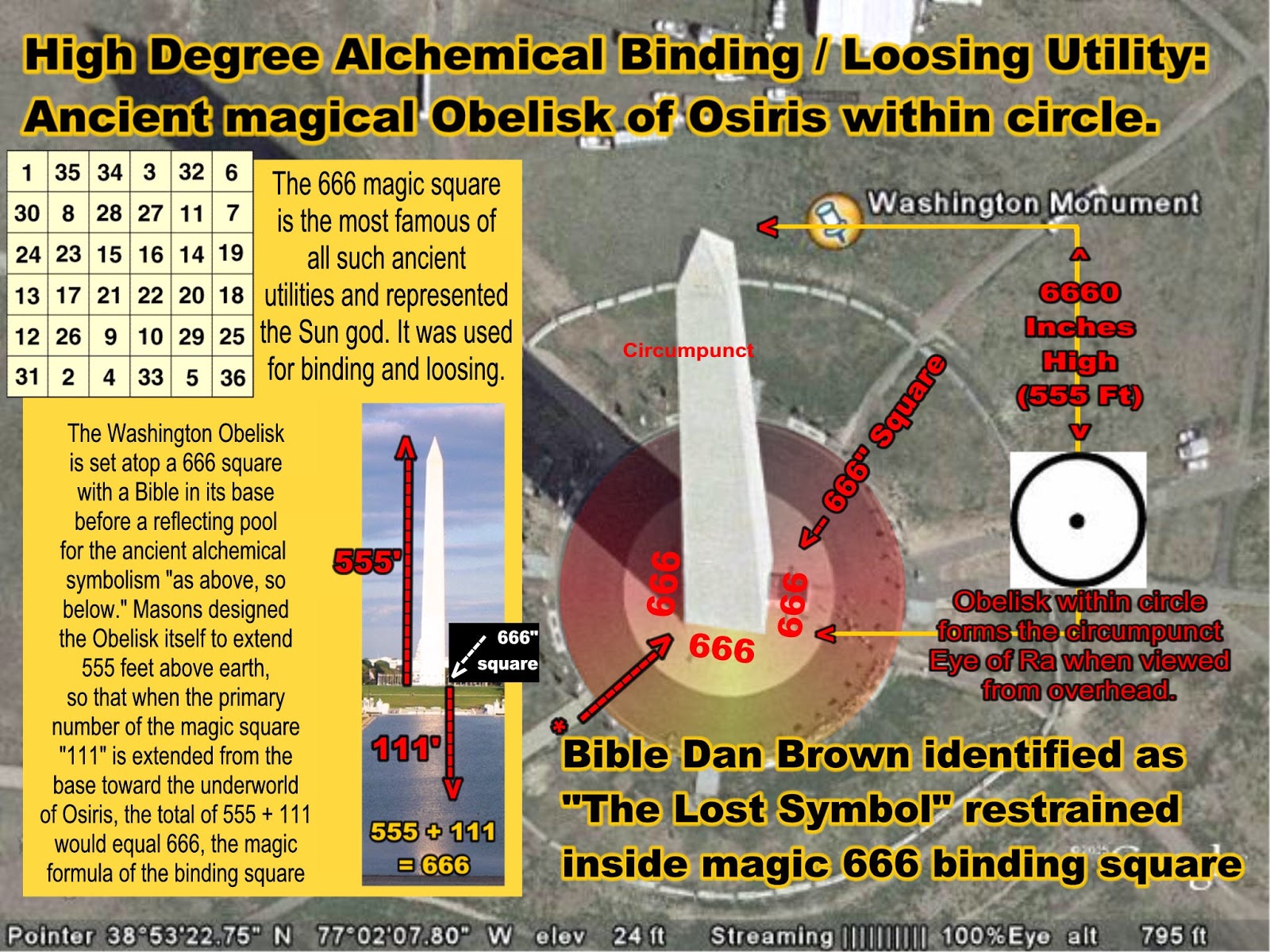
- The "Egyptian menhir" advertised in Rome is an obelisk, similar to Cleopatra's Needle.
In other languages
[edit]
- Catalan: Obèlix i companyia
- Croatian: Obelix d.o.o.
- Czech: Obelix & spol.
- Danish: Obelix & Co. ApS
- Dutch: Obelix & co.
- Estonian: Ärimees Obelix
- Finnish: Obelix ja kumpp.
- German: Obelix GmbH & Co. KG
- Greek: Οβελίξ και Σία
- Hebrew: אובליקס וחבורתו
- Hungarian: Obelix és társa
- Indonesian: Obèlix dan Kawan-kawan
- Italian: Asterix e la Obelix SpA
- Norwegian: Obelix & Co. A/S
- Polish: Obeliks i spółka
- Portuguese: Obélix e Companhia
- Turkish: Oburiks ve Şirketi
- Serbian: Obeliksovo preduzeće
- Spanish: Obélix y compañía
- Swedish: Obelix & Co.
|
|
|
|
|
|
De: khanjee |
Enviat: 16/09/2025 16:19 |
Hey very nice web site!! Man .. Excellent .. Amazing .. I will bookmark your website and take the feeds also…I am happy to find so many useful information here in the post, we need develop more strategies in this regard, thanks for sharing. . . . . . 소액 현금화 |
|
|
 Primer
Anterior
47 a 61 de 61
Següent Primer
Anterior
47 a 61 de 61
Següent
 Darrer
|