Pagina principale  |  Contatto  

Indirizzo e-mail

Password

Registrati ora!

Hai dimenticato la password?

FORO LIBREPENSADOR SIN CENSURA
 
Novità
  Partecipa ora
  Bacheche di messaggi 
  Galleria di immagini 
 File e documenti 
 Sondaggi e test 
  Lista dei Partecipanti
 GENERAL 
 REGLAS DE ESTE FORO LIBRE 
 Panel de quejas 
 CONCORDANCIAS BIBLICAS 
 PANEL DEL ADMINISTRADOR BARILOCHENSE 6999 
 
 
  Strumenti
 
General: EGLISE SAINTE MADELEINE NORMANDIE FRANCE
Scegli un’altra bacheca
Argomento precedente  Argomento successivo
Rispondi  Messaggio 1 di 4 di questo argomento 
Da: BARILOCHENSE6999  (Messaggio originale) Inviato: 19/06/2025 19:39


Primo  Precedente  2 a 4 di 4  Successivo   Ultimo  
Rispondi  Messaggio 2 di 4 di questo argomento 
Da: BARILOCHENSE6999 Inviato: 02/02/2026 16:33

Clan Sinclair
Clann na Ceàrda o Clan na Ceàrdaich [ 1 ]
Cresta : Un gallo rampante
Lema Encomienda tu obra a Dios [ 2 ]
Eslogan ¡Girnigoe! ¡Girnigoe! [ 3 ]
Perfil
Región Tierras altas
Distrito Caithness
Insignia de planta Quejido [ 2 ]
Música de gaitas "La Marcha de Sinclair" (también conocida como La Cinta Roja)
Jefe
El Muy Honorable Conde de Caithness
El vigésimo conde de Caithness [ 2 ]
Sede histórica Castillo Sinclair Girnigoe [ 4 ]
Septos del Clan Sinclair
Ramas del clan


Clanes aliados
Clanes rivales


El clan Sinclair ( en gaélico escocés : Clann na Ceàrda [ˈkʰl̪ˠãũn̪ˠ nə ˈkʲaːrˠt̪ə] ) es un clan de las Tierras Altas de Escocia que posee las tierras de Caithness , las Islas Orcadas y los Lothians . Los jefes del clan fueron los barones de Roslin y, posteriormente, los condes de Orcadas y de Caithness .

Se cree que los Sinclair llegaron de Normandía a Inglaterra durante la conquista normanda de Inglaterra , antes de llegar a Escocia en el siglo XI. Los Sinclair apoyaron a la Corona escocesa durante la Guerra Escocesa-Noruega y las Guerras de Independencia de Escocia .

Los jefes fueron originalmente barones de Roslin, Midlothian , y William Sinclair, primer conde de Caithness y barón de Roslin, fundó la famosa capilla de Rosslyn en el siglo XV. Dividió las tierras familiares, desheredando a su hijo mayor de su primer matrimonio, William ("el Derrochador") , quien heredó el título de Lord Sinclair [ nota 1 ], y en su lugar entregó las tierras de Caithness a su segundo hijo de su segundo matrimonio, William Sinclair, segundo conde de Caithness , en 1476, y las tierras de Roslin a su hijo mayor de su segundo matrimonio, Sir Oliver Sinclair .

En el siglo XVI, los Sinclair lucharon contra Inglaterra durante las Guerras Anglo-Escocesas y también se enfrentaron con sus vecinos, el Clan Sutherland . Durante el levantamiento jacobita de 1715, los Sinclair apoyaron la causa jacobita, pero durante el levantamiento jacobita de 1745 , si bien el clan simpatizaba mayoritariamente con los jacobitas, su jefe, el Conde de Caithness, apoyó al gobierno británico-hannoveriano.

El jefe actual es Malcolm Sinclair, vigésimo conde de Caithness .

Orígenes

editar ]

El apellido de Sinclair en francés es "de Sancto Claro" y en latín, "Sanctus Clarus", que significa Luz Sagrada. El nombre deriva del eremita Santa Clara y de Saint-Clair-sur-Epte, un pueblo cercano a París, próximo al lugar donde fue martirizado el eremita Santa Clara.

No existe un registro certero, pero es probable que los Sinclair fueran originarios de Saint-Clair, en Normandía . [ 11 ] Los Saint-Clair fueron primero a Inglaterra (antes de llegar a Escocia) con Guillermo el Conquistador durante su invasión de Inglaterra. [ 12 ] El nombre original era "Saint-Clair", que era un topónimo. [ 12 ] Ricardo de Saint-Clair y Brittel de Saint-Clair se mencionan en el Libro Domesday . [ 12 ] Guillermo de Saint-Clair acompañó a Santa Margarita de Escocia , hija de Eduardo el Exiliado, a Escocia en 1068, donde finalmente se casó con Malcolm III de Escocia . A cambio de sus esfuerzos, el rey supuestamente le otorgó a Sinclair la baronía de Roslin , Escocia, "en herencia libre". [ 12 ]

Uno de los primeros Sinclair registrados en Escocia fue Enrique de Saint-Clair/Sinclair , quien obtuvo una carta para las tierras de Herdmanston en Haddingtonshire en 1160. [ 12 ]

Los jefes del clan Sinclair, los condes de Caithness, descienden de William St. Clair , quien fue sheriff de Edimburgo y a quien se le concedió la baronía de Roslin (Rosslyn) en 1280. [ 11 ]


Rispondi  Messaggio 3 di 4 di questo argomento 
Da: BARILOCHENSE6999 Inviato: 02/02/2026 17:13

Sainte-Madeleine Church


Previous

Next

Sainte-Madeleine Church
3


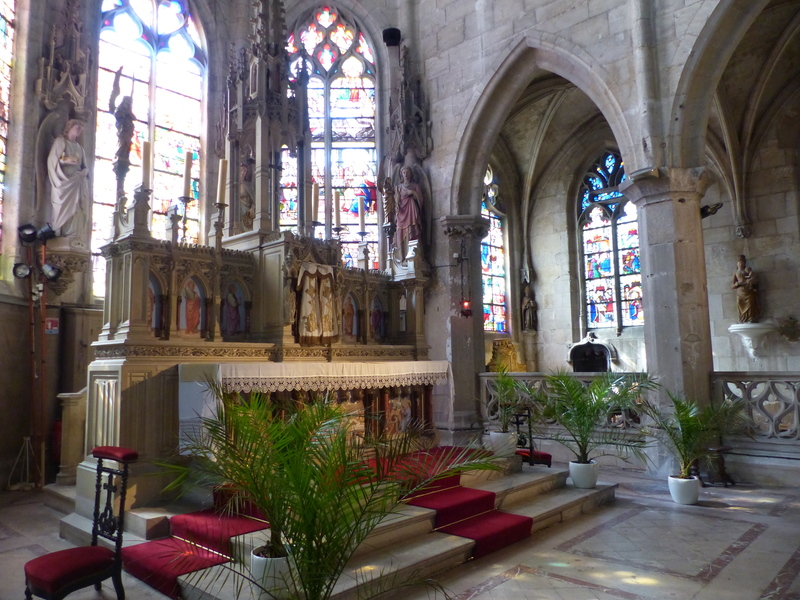
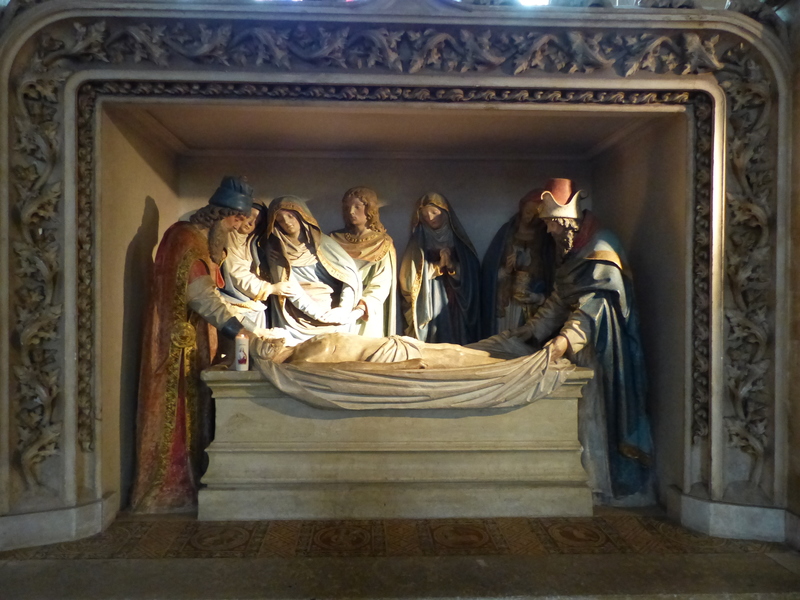
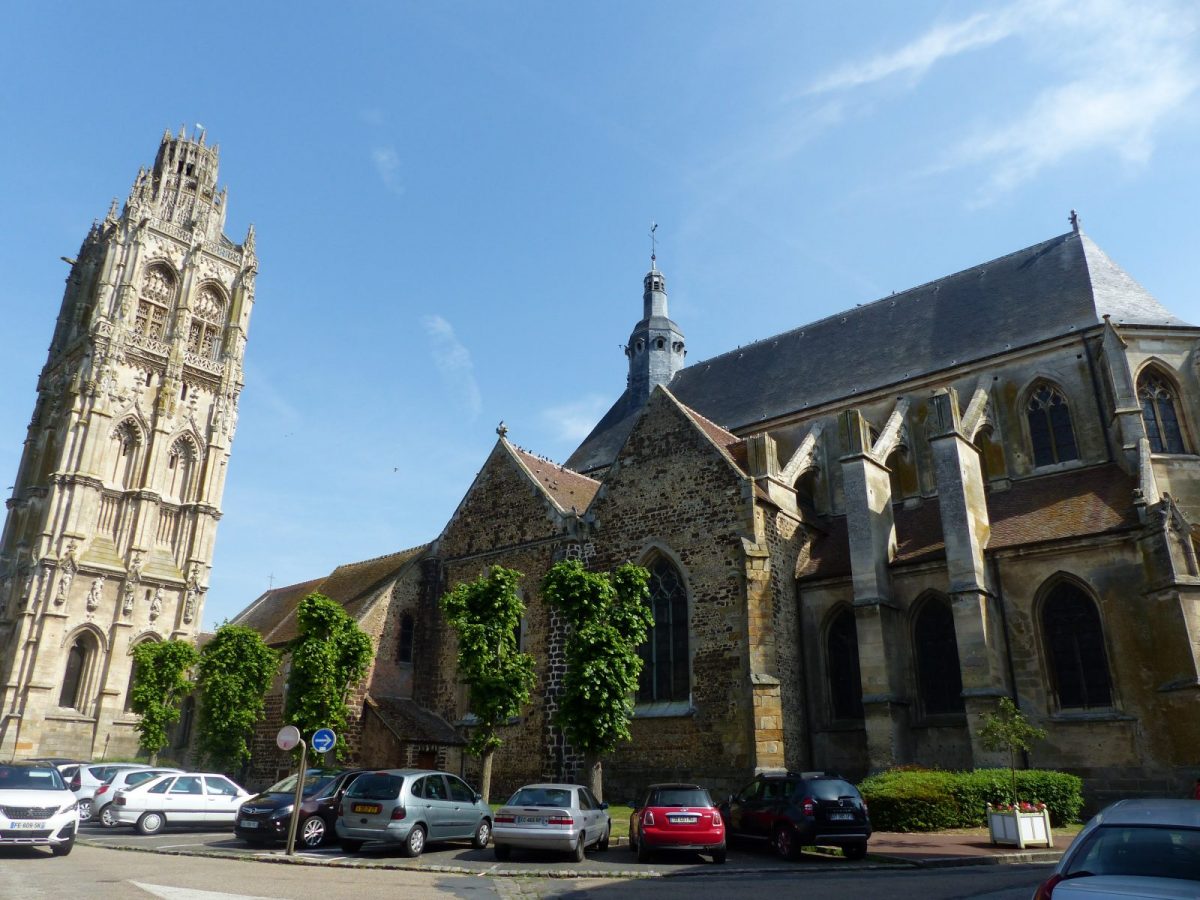
The primitive church, erected in the 56th century, has been constantly embellished over the centuries. Inside, statues and stained glass windows from the XNUMXth and XNUMXth centuries were donated by the wealthy inhabitants and trades of the city of that time. Leaning against the nave, the imposing bell tower, XNUMX m high, is an exceptional building, a true jewel of Flamboyant Gothic style.
The construction of the Madeleine Tower began around 1465 and was not completed until 1526, thanks to donations from the bourgeoisie of the city and those of Artus Fillon, a native of Verneuil, a powerful character, who became canon in Rouen then bishop. from Senlis. The picture artists who executed the sculpted decoration came from Rouen and worked on the cathedral of Rouen. The building, built in limestone with sandstone foundations, is surmounted by two overlapping crowns. The tower is adorned with more than thirty statues arranged on two levels, representing characters from the Old Testament to the first and the New Testament to the second. The Tour de La Madeleine in Verneuil and the Tour de Beurre in Rouen inspired the architects of the Tribune Tower in Chicago, of which there is a real resemblance.

Visits to the Tour de La Madeleine are temporarily stopped.
Free guided tours of the church (outside the tour) are offered every day from 15 p.m. to 18 p.m. (02 32 33 59 51).
An architectural discovery booklet about the church is available for €2 at the Tourist Office (next to the church, Place de la Madeleine). All proceeds go to the parish of Pays de Verneuil. The booklet is available in French and English.

https://www.normandie-sud-tourisme.fr/en/cultural-heritage/saint-madeleine-church/

Rispondi  Messaggio 4 di 4 di questo argomento 
Da: BARILOCHENSE6999 Inviato: 02/02/2026 17:25

Religious buildings

à BAGNOLES DE L'ORNE NORMANDIE

Eglise Sainte-Madeleine

Sainte Madeleine church was built between 1826 and 1828. A priest turned his hand to being an architect and drew up the plans. The local population built their own church, in the evenings after work and on Sundays. It was consecrated in September 1828.
The organ is without doubt the most magnificent thing about the church, with 12 of its stops dating back to the 18th century. The instrument was modified in 1855 so that it could be hidden in a neo-gothic cupboard. It currently has around 25 stops.

https://en.normandie-tourisme.fr/museums-and-heritage-sites/eglise-sainte-madeleine/


Primo  Precedente  2 a 4 de 4  Successivo   Ultimo  
Argomento precedente  Argomento successivo
 
©2026 - Gabitos - Tutti i diritti riservati