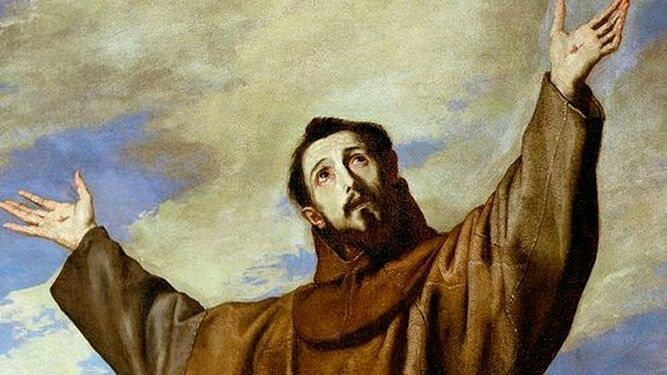
|
|
General: SAINT BERNARD CLAIRVAUX STATUE ON EGLISE DE LA MADELEINE IN PARIS
Choisir un autre rubrique de messages |
|
Réponse |
Message 1 de 30 de ce thème |
|
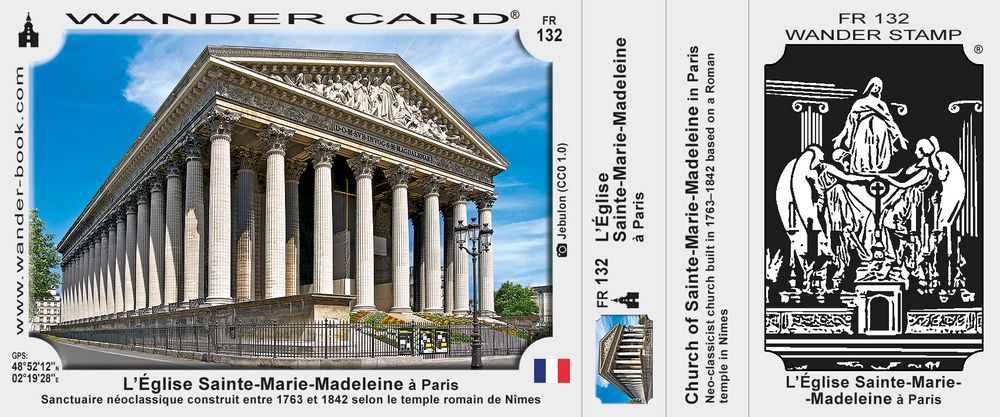
HD photographs of Saint Bernard statue on Eglise de la Madeleine in Paris - Page 1029
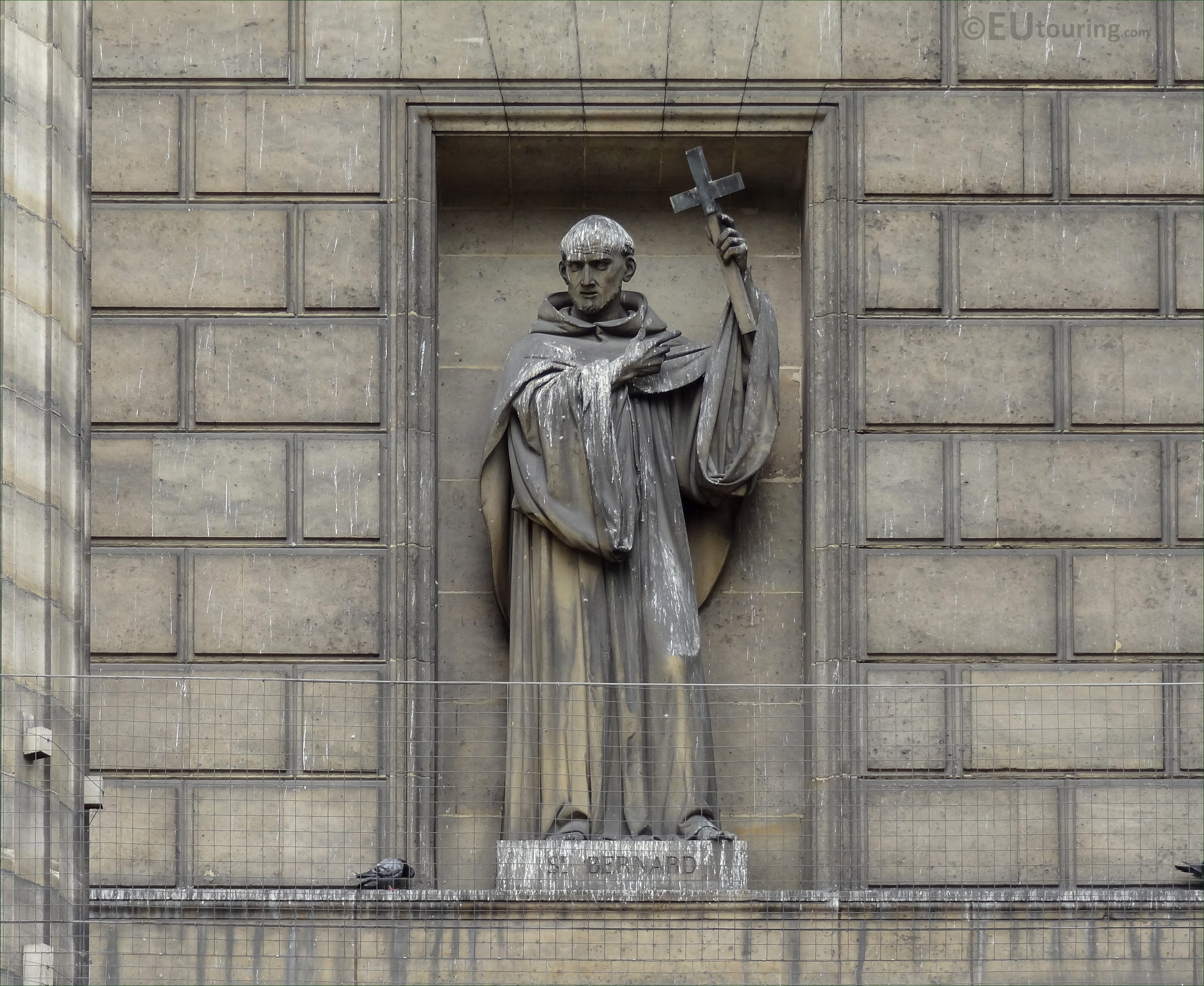
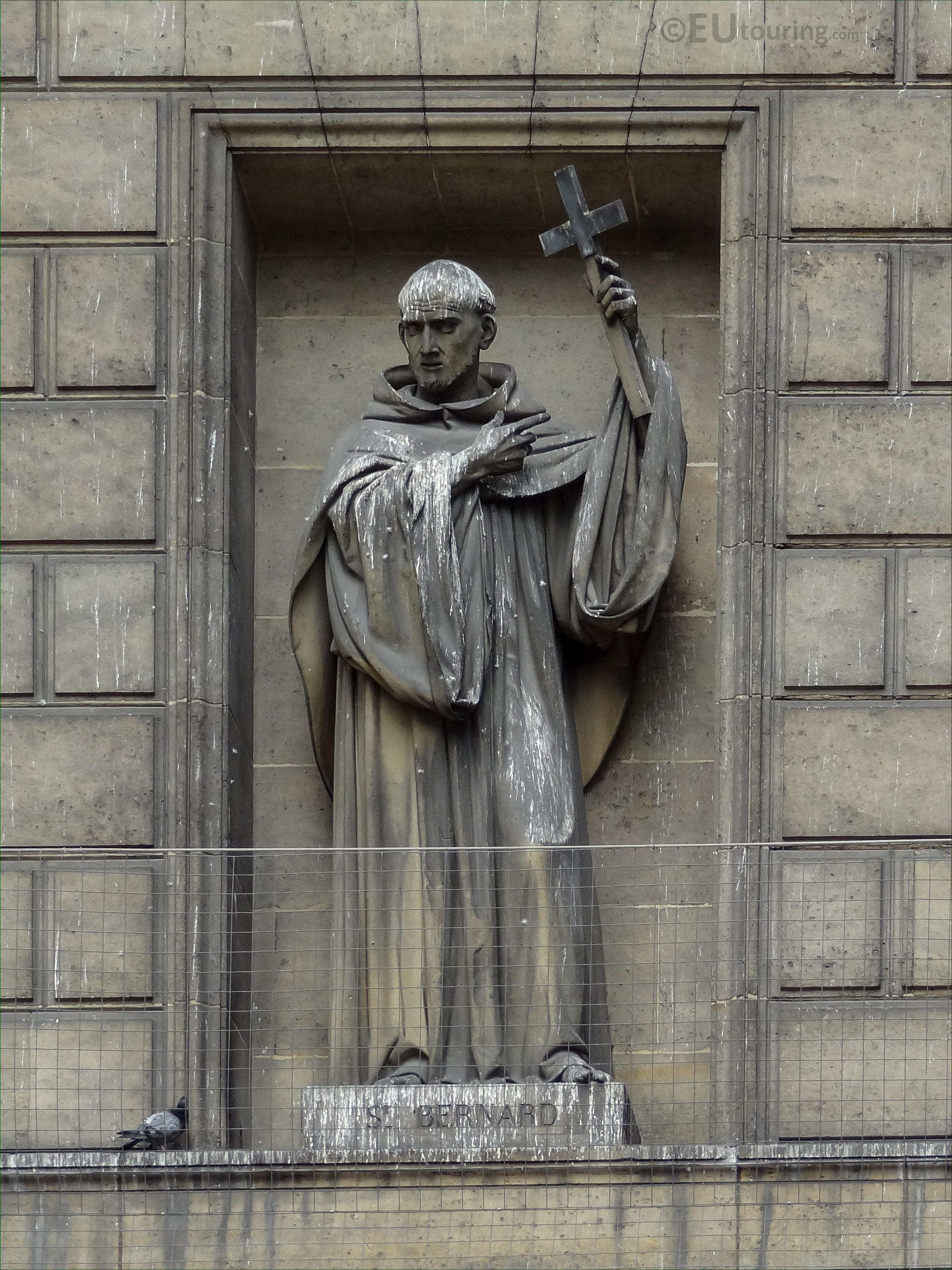
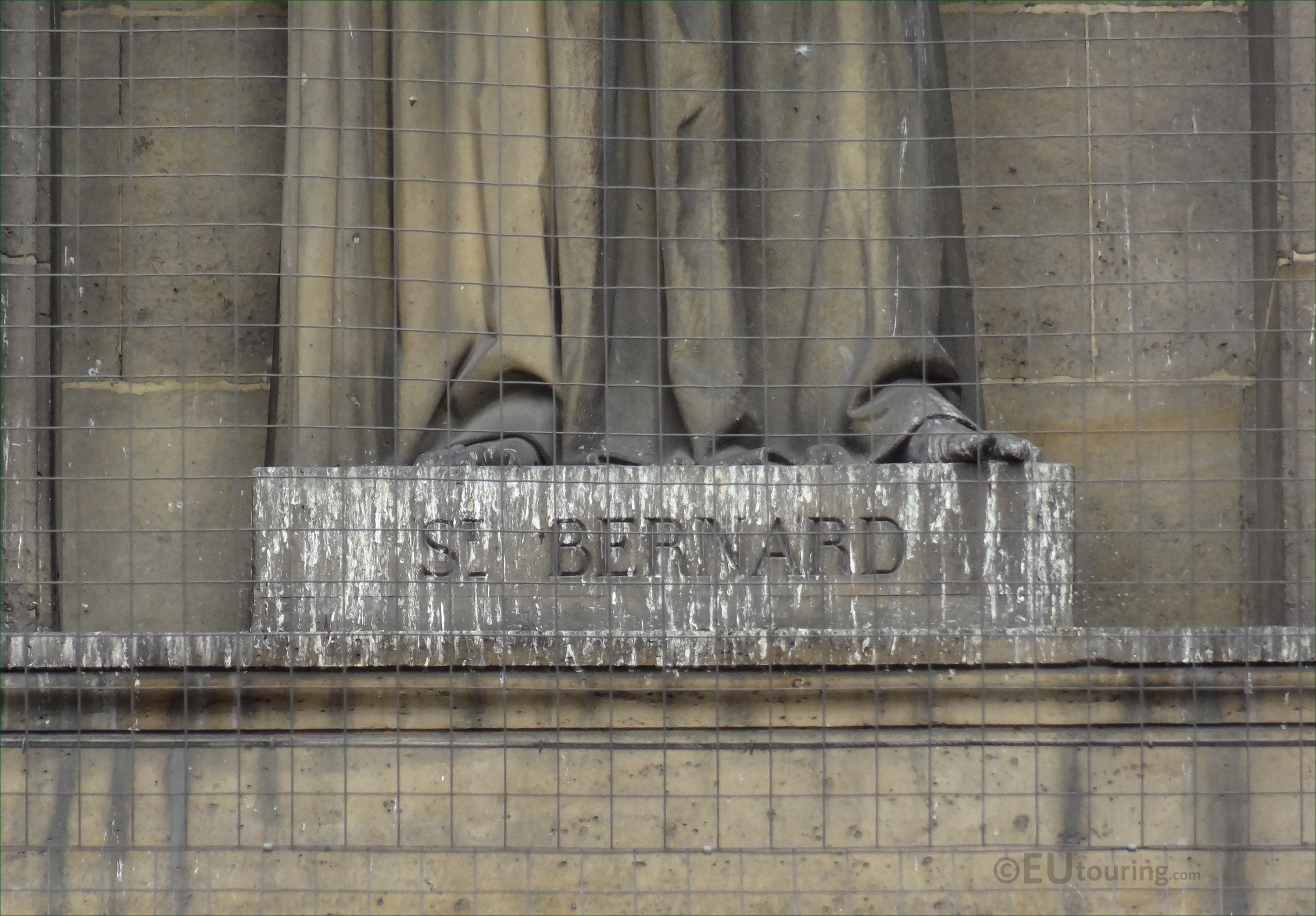
We were in the 8th Arrondissement of Paris at the Eglise de la Madeleine, when we took these high definition photos showing a statue depicting Saint Bernard, which was sculpted by Honore Husson.
Paris Statues
- << Previous 1021 1022 1023 1024 1025 1026 1027 1028 1029 1030 Next >>
This first HD photo shows one of thirty-four different saints that are located on the facades of the Madeleine Church, with this one depicting Saint Bernard, which was instigated by the architect Jacques Marie Huve and commissioned by the French state, it was produced in stone back in 1837 while the edifice was still under construction.
Yet here you can see a close up photograph showing some of the detailing that went into producing this Saint Bernard statue, which was by Honore Jean Aristide Husson who was born in Paris in 1803 and entered the Ecole des Beaux Arts under David d'Angers to become a French sculptor, winning the Prix de Rome in 1830.
Honore Jean Aristide Husson, often just known as Honore Husson, received many different public commissions for statues, three of which are part of the series of famous men depicted on the facades of The Louvre, but he also worked on decorations for different tourist attractions like one of the fountains at the Place de la Concorde and several for different churches including the Eglise de la Madeleine.
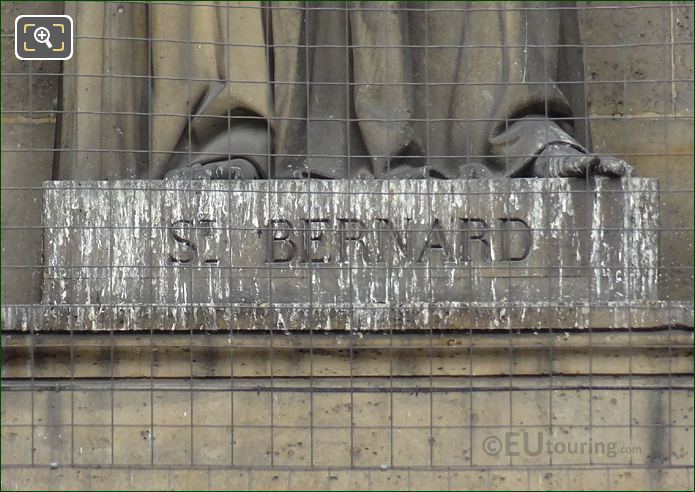 Now Saint Bernard was born to a noble family and studied literature in order that he could study the bible, and becoming a monk, he is also known as Saint Bernard of Clairvaux, due to the fact that he founded a monastery he named Claire Vallee, or Clairvaux, he was pronounced an Abbot by the bishop who was head of theology at the Notre Dame de Paris.
The theology and Mariology of Bernard have continued to be of major importance throughout the centuries and he was the first Cistercian monk to be placed on the Roman calendar of saints when canonized by Pope Alexander III on 18th January 1174, and 800 years after his death Saint Bernard was also given the title of Doctor of the Church by Pope Pius VIII, with his feast day being 20th August, the day Saint Bernard passed away in 1153.
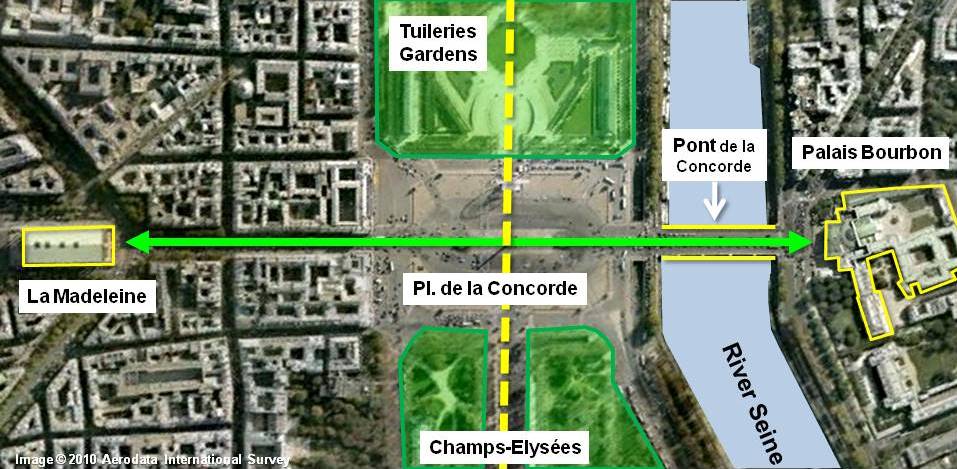
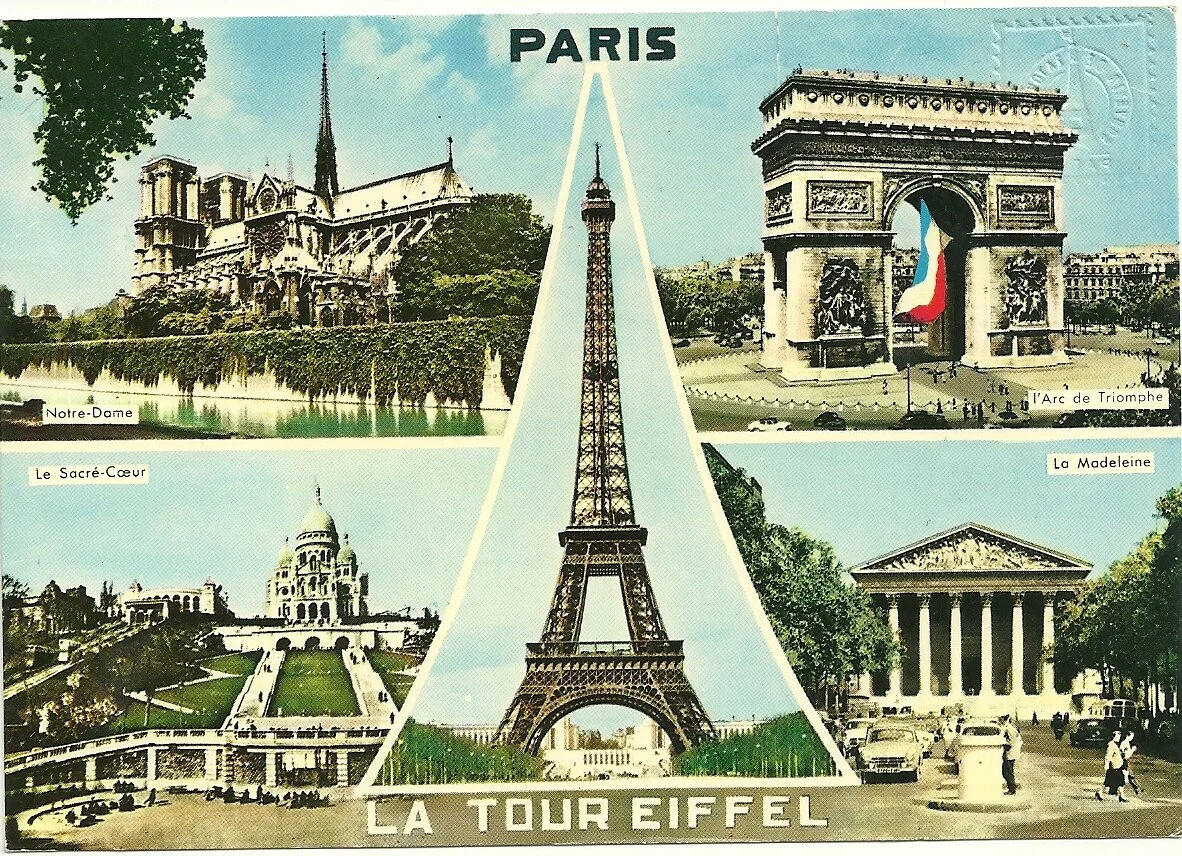
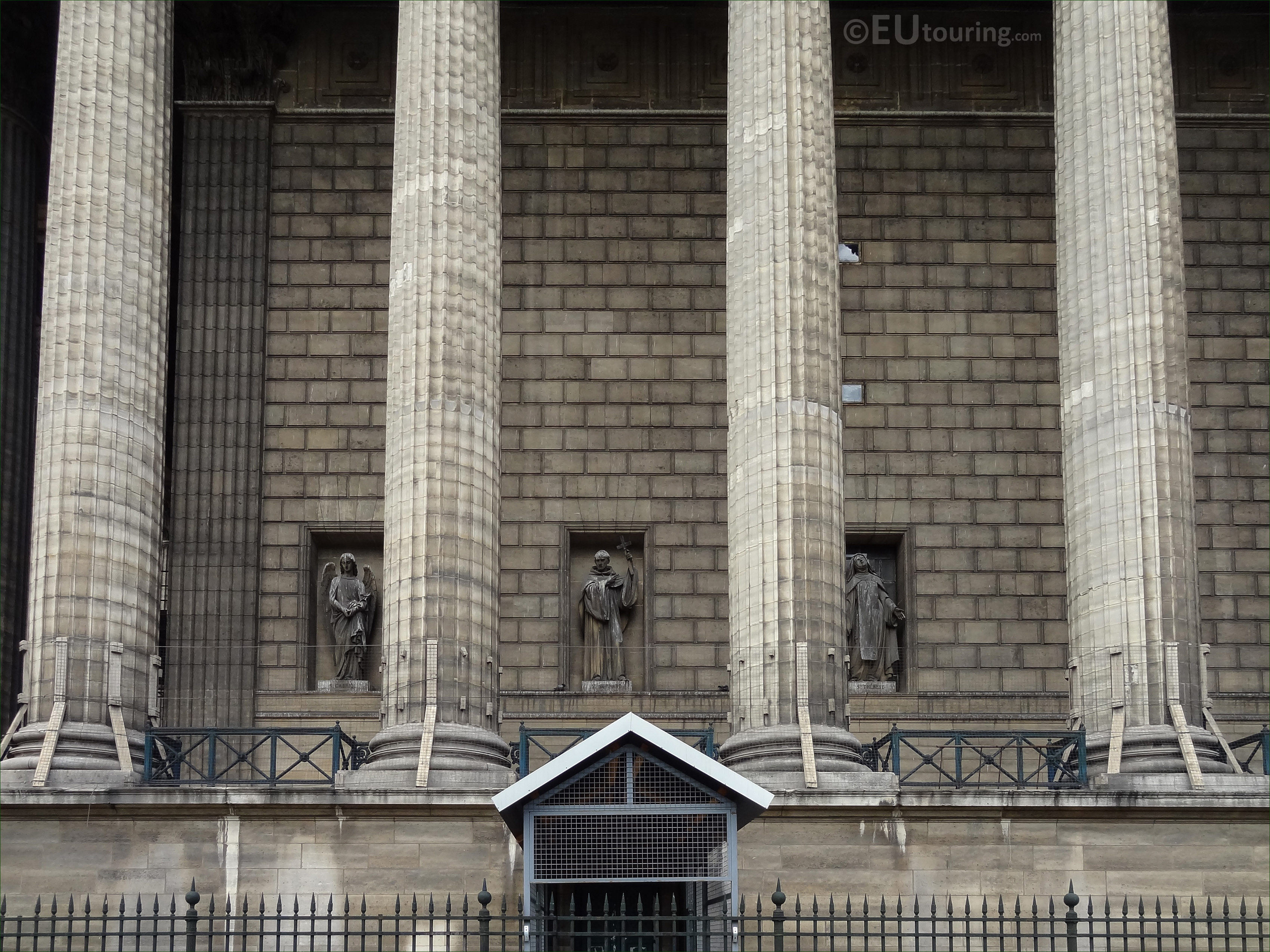
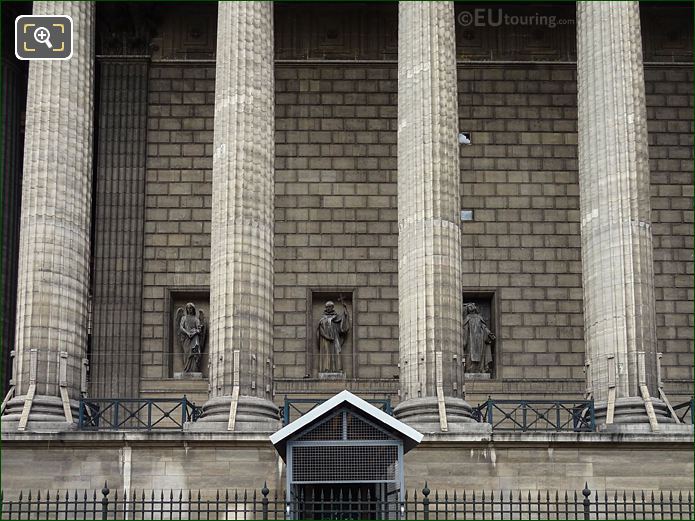 So this image shows the location of the Saint Bernard statue within a niche on the eastern portico facade of the Eglise de la Madeleine, and this can be seen through the well recognisable Corinthian columns from the square named after this famous church, where even the funeral of Chopin took place.
https://www.eutouring.com/images_paris_statues_1029.html |
|
|
|
Réponse |
Message 16 de 30 de ce thème |
|
|
|
|
Réponse |
Message 17 de 30 de ce thème |
|
|
|
|
Réponse |
Message 18 de 30 de ce thème |
|
|
|
|
Réponse |
Message 19 de 30 de ce thème |
|
|
|
|
Réponse |
Message 20 de 30 de ce thème |
|
| Enviado: 21/10/2024 10:30 |
|
|
|
|
|
|
Réponse |
Message 21 de 30 de ce thème |
|
Hugo de Payns o Payens (castillo de Payns, cerca de Troyes, Francia 9 de febrero de 1070-Reino de Jerusalén, 24 de mayo de 1136) fue el fundador y primer maestro de los Caballeros templarios y uno de los primeros nueve caballeros. En asociación con Bernardo de Claraval, creó la Regla latina, el código de conducta de la Orden.
Hijo de Gautier de Montigny y nieto de Hugo I, Señor de Payns, su infancia y su juventud se ven influidas por el ambiente de reforma religiosa que se desarrolla en la Champaña y que dará figuras de la talla de san Roberto de Molesmes, fundador de las abadías de Molesmes y Cîteaux, o la de san Bernardo de Claraval, impulsor de la reforma del cister y mentor eclesiástico de la misma Orden del Temple.
De la ferviente pasión religiosa de Hugo II de Payns es muestra su breve paso como monje por la abadía de Molesmes, tras la muerte de su primera esposa Emelina de Touillon, con la que se había desposado hacia el 1090. Fruto de este matrimonio nació su hija Odelina, futura señora de Ervy.
Vasallo fiel del conde Hugo I de Champaña,1 Hugo II de Payns abandona los hábitos y a partir del año 1100 se integra plenamente como uno de los principales miembros de la Corte champañesa, uniendo en su persona el señorío de Montigny y el de Payns.
Es muy probable que Hugo II de Payns realizara su primer viaje a Tierra Santa junto al conde de Champaña en 1104-1107. Tras regresar de este, y para ayudar a consolidar las pretensiones políticas de su señor, casó en segundas nupcias con Isabel de Chappes (entre 1107 y 1111), perteneciente a una de las familias más importantes del sur de la Champaña. Del matrimonio nacieron cuatro hijos: Teobaldo, futuro Abad de Santa Colombe de Sens; Guido Bordel de Payns, heredero del señorío; Guibuin, vizconde de Payns, y Herberto, llamado el ermitaño. Sin embargo, la pasión religiosa que sentía le llevó a tomar votos de castidad en 1119 y a partir nuevamente a Tierra Santa, donde creó, un año más tarde, la que llegaría a ser la Orden Militar más importante de la Cristiandad: La Orden del Temple.
Se afirma[cita requerida] que los otros caballeros eran Godofredo de Saint-Omer, Payen de Montdidier, Archambaudo de Saint Agnan, Andrés de Montbard (tío materno de San Bernardo de Claraval), Godofredo Bison, y otros dos de los que solo se conoce su nombre, Rolando y Gondamero. Se desconoce el nombre del noveno caballero, aunque hay quien piensa que pudo ser Hugo, conde de Champaña.
En 1127 Hugo II de Payns regresa a Europa acompañado por Godofredo de Saint-Omer, Payen de Montdidier, y dos hermanos más, de nombre Raúl y Juan, con el fin de reclutar nuevos miembros para la Orden, tomar posesión de las numerosas donaciones que habían sido otorgadas a esta y para organizar las primeras encomiendas de la Orden en Occidente (casi todas ellas en la región de la Champaña). Así pues, Hugo inicia un periplo que le lleva por Roma - a fin de solicitar del papa Honorio II un reconocimiento oficial de la Orden y la convocatoria de un concilio que debatiera el asunto - la Champaña (otoño de 1127); Anjou y Poitou (abril y mayo de 1128), Normandia, Inglaterra y Escocia (verano de 1128) y Flandes (otoño de 1128).
Hugo y sus compañeros regresan en enero de 1129 a la Champaña para tomar parte en el Concilio de Troyes, un concilio de la Iglesia católica, que se convocó en la ciudad francesa el 13 de enero de 1129, con el principal objeto de reconocer oficialmente a la Orden del Temple. En dicho concilio estuvieron presentes: el cardenal Mateo de Albano (representante del Papa); el arzobispo de Reims y el de Sens; diez obispos; ocho abades cistercienses de las abadías de Vézelay, Cîteaux, Clairvaux (que en este caso no era otro sino San Bernardo), Pontigny, Troisfontaines y Molesmes; y algunos laicos entre los que destacan Teobaldo II de Champaña, el conde de Campaña, André de Baudemont, el senescal de Champaña, el conde de Nevers y un cruzado de la campaña de 1095.
Hugo de Payns relató en este concilio los humildes comienzos de su obra, que en ese momento solo contaba con nueve caballeros, y puso de manifiesto la urgente necesidad de crear una milicia capaz de proteger a los cruzados y, sobre todo, a los peregrinos a Tierra Santa, y solicitó que el concilio deliberara sobre la constitución que habría que dar a dicha Orden.
Se encargó a San Bernardo, abad de Claraval, y a un clérigo llamado Jean Michel la redacción de una regla durante la sesión, que fue leída y aprobada por los miembros del concilio.
Tras el concilio de Troyes, Hugo II de Payns nombró a Payen de Montdidier Maestre Provincial de las encomiendas sitas en territorio francés y en flandes, y a Hugo de Rigaud Maestre Provincial para los territorios del Languedoc, la Provenza y los reinos cristianos hispánicos y tras ello, regresó a Jerusalén dirigiendo la Orden que el mismo había creado durante casi veinte años hasta su muerte en el año 1136 (el 24 de mayo según el obituario del templo de Reims), haciendo de ella una influyente institución militar y financiera internacional.
Un cronista del siglo XVI escribió que fue enterrado en la Iglesia de San Jaime de Ferrara.2
No hay un retrato contemporáneo de él.
|
|
|
|
Réponse |
Message 22 de 30 de ce thème |
|
|
|
|
Réponse |
Message 23 de 30 de ce thème |
|
|
|
|
Réponse |
Message 24 de 30 de ce thème |
|
Columbus and the Templars
Was Columbus using old Templar maps when he crossed the Atlantic? At first blush, the navigator and the fighting monks seem like odd bedfellows. But once I began ferreting around in this dusty corner of history, I found some fascinating connections. Enough, in fact, to trigger the plot of my latest novel, The Swagger Sword.
To begin with, most history buffs know there are some obvious connections between Columbus and the Knights Templar. Most prominently, the sails on Columbus’ ships featured the unique splayed Templar cross known as the cross pattée (pictured here is the Santa Maria):
Additionally, in his later years Columbus featured a so-called “Hooked X” in his signature, a mark believed by researchers such as Scott Wolter to be a secret code used by remnants of the outlawed Templars (see two large X letters with barbs on upper right staves pictured below):
Other connections between Columbus and the Templars are less well-known. For example, Columbus grew up in Genoa, bordering the principality of Seborga, the location of the Templars’ original headquarters and the repository of many of the documents and maps brought by the Templars to Europe from the Middle East. Could Columbus have been privy to these maps? Later in life, Columbus married into a prominent Templar family. His father-in-law, Bartolomeu Perestrello (a nobleman and accomplished navigator in his own right), was a member of the Knights of Christ (the Portuguese successor order to the Templars). Perestrello was known to possess a rare and wide-ranging collection of maritime logs, maps and charts; it has been written that Columbus was given a key to Perestrello’s library as part of the marriage dowry. After marrying, Columbus moved to the remote Madeira Islands, where a fellow resident, John Drummond, had also married into the Perestrello family. Drummond was a grandson of Scottish explorer Prince Henry Sinclair, believed to have sailed to North America in 1398. It is, accordingly, likely that Columbus had access to extensive Templar maps and charts through his familial connections to both Perestrello and Drummond.
Another little-known incident in Columbus’ life sheds further light on the navigator’s possible ties to the Templars. In 1477, Columbus sailed to Galway, on the west coast of Ireland, from where the legendary Brendan the Navigator supposedly set sale in the 6th century on his journey to North America. While there, Columbus prayed at St. Nicholas’ Church, a structure built over an original Templar chapel dating back to around the year 1300. St. Nicholas’ Church has been compared by some historians to Scotland’s famous Roslyn Chapel, complete with Templar tomb, Apprentice Pillar, and hidden Templar crosses. (Recall that Roslyn Chapel was built by another grandson—not Drummond—of the aforementioned Prince Henry Sinclair.) According to his diary, Columbus also famously observed “Chinese” bodies floating into Galway harbor on driftwood, which may have been what first prompted him to turn his eyes westward. A granite monument along the Galway waterfront, topped by a dove (Columbus meaning ‘dove’ in Latin), commemorates this sighting, the marker reading: On these shores around 1477 the Genoese sailor Christoforo Colombo found sure signs of land beyond the Atlantic.
In fact, as the monument text hints, Columbus may have turned more than just his eyes westward. A growing body of evidence indicates he actually crossed the north Atlantic in 1477. Columbus wrote in a letter to his son: “In the year 1477, in the month of February, I navigated 100 leagues beyond Thule [to an] island which is as large as England. When I was there the sea was not frozen over, and the tide was so great as to rise and fall 26 braccias.” We will turn later to the mystery as to why any sailor would venture into the north Atlantic in February. First, let’s examine Columbus’ statement. Historically, ‘Thule’ is the name given to the westernmost edge of the known world. In 1477, that would have been the western settlements of Greenland (though abandoned by then, they were still known). A league is about three miles, so 100 leagues is approximately 300 miles. If we think of the word “beyond” as meaning “further than” rather than merely “from,” we then need to look for an island the size of England with massive tides (26 braccias equaling approximately 50 feet) located along a longitudinal line 300 miles west of the west coast of Greenland and far enough south so that the harbors were not frozen over. Nova Scotia, with its famous Bay of Fundy tides, matches the description almost perfectly. But, again, why would Columbus brave the north Atlantic in mid-winter? The answer comes from researcher Anne Molander, who in her book, The Horizons of Christopher Columbus, places Columbus in Nova Scotia on February 13, 1477. His motivation? To view and take measurements during a solar eclipse. Ms. Molander theorizes that the navigator, who was known to track celestial events such as eclipses, used the rare opportunity to view the eclipse elevation angle in order calculate the exact longitude of the eastern coastline of North America. Recall that, during this time period, trained navigators were adept at calculating latitude, but reliable methods for measuring longitude had not yet been invented. Columbus, apparently, was using the rare 1477 eclipse to gather date for future western exploration. Curiously, Ms. Molander places Columbus specifically in Nova Scotia’s Clark’s Bay, less than a day’s sail from the famous Oak Island, legendary repository of the Knights Templar missing treasure.
The Columbus-Templar connections detailed above were intriguing, but it wasn’t until I studied the names of the three ships which Columbus sailed to America that I became convinced the link was a reality. Before examining these ship names, let’s delve a bit deeper into some of the history referred to earlier in this analysis. I made a reference to Prince Henry Sinclair and his journey to North American in 1398. The Da Vinci Code made the Sinclair/St. Clair family famous by identifying it as the family most likely to be carrying the Jesus bloodline. As mentioned earlier, this is the same family which in the mid-1400s built Roslyn Chapel, an edifice some historians believe holds the key—through its elaborate and esoteric carvings and decorations—to locating the Holy Grail. Other historians believe the chapel houses (or housed) the hidden Knights Templar treasure. Whatever the case, the Sinclair/St. Clair family has a long and intimate historical connection to the Knights Templar. In fact, a growing number of researchers believe that the purpose of Prince Henry Sinclair’s 1398 expedition to North America was to hide the Templar treasure (whether it be a monetary treasure or something more esoteric such as religious artifacts or secret documents revealing the true teachings of the early Church). Researcher Scott Wolter, in studying the Hooked X mark found on many ancient artifacts in North American as well as on Columbus’ signature, makes a compelling argument that the Hooked X is in fact a secret symbol used by those who believed that Jesus and Mary Magdalene married and produced children. (See The Hooked X, by Scott F. Wolter.) These believers adhered to a version of Christianity which recognized the importance of the female in both society and in religion, putting them at odds with the patriarchal Church. In this belief, they had returned to the ancient pre-Old Testament ways, where the female form was worshiped and deified as the primary giver of life.
It is through the prism of this Jesus and Mary Magdalene marriage, and the Sinclair/St. Clair family connection to both the Jesus bloodline and Columbus, that we now, finally, turn to the names of Columbus’ three ships. Importantly, he renamed all three ships before his 1492 expedition. The largest vessel’s name, the Santa Maria, is the easiest to analyze: Saint Mary, the Virgin Mary, the mother of Jesus. The Pinta is more of a mystery. In Spanish, the word means ‘the painted one.’ During the time of Columbus, this was a name attributed to prostitutes, who “painted” their faces with makeup. Also during this period, the Church had marginalized Mary Magdalene by referring to her as ‘the prostitute,’ even though there is nothing in the New Testament identifying her as such. So the Pinta could very well be a reference to Mary Magdalene. Last is the Nina, Spanish for ‘the girl.’ Could this be the daughter of Mary Magdalene, the carrier of the Jesus bloodline? If so, it would complete the set of women in Jesus’ life—his mother, his wife, his daughter—and be a nod to those who opposed the patriarchy of the medieval Church. It was only when I researched further that I realized I was on the right track: The name of the Pinta before Columbus changed it was the Santa Clara, Portuguese for ‘Saint Clair.’
So, to put a bow on it, Columbus named his three ships after the Virgin Mary, Mary Magdalene, and the carrier of their bloodline, the St. Clair girl. These namings occurred during the height of the Inquisition, when one needed to be extremely careful about doing anything which could be interpreted as heretical. But even given the danger, I find it hard to chalk these names up to coincidence, especially in light of all the other Columbus connections to the Templars. Columbus was intent on paying homage to the Templars and their beliefs, and found a subtle way of renaming his ships to do so.
Given all this, I have to wonder: Was Columbus using Templar maps when he made his Atlantic crossing? Is this why he stayed south, because the maps showed no passage to the north? If so, and especially in light of his 1477 journey to an area so close to Oak Island, what services had Columbus provided the Templars in exchange for these priceless charts?
It is this research, and these questions, which triggered my novel, The Swagger Sword. If you appreciate a good historical mystery as much as I, I think you’ll enjoy the story.
|
|
|
|
Réponse |
Message 25 de 30 de ce thème |
|
Columbus and the Templars
Was Columbus using old Templar maps when he crossed the Atlantic? At first blush, the navigator and the fighting monks seem like odd bedfellows. But once I began ferreting around in this dusty corner of history, I found some fascinating connections. Enough, in fact, to trigger the plot of my latest novel, The Swagger Sword.
To begin with, most history buffs know there are some obvious connections between Columbus and the Knights Templar. Most prominently, the sails on Columbus’ ships featured the unique splayed Templar cross known as the cross pattée (pictured here is the Santa Maria):
Additionally, in his later years Columbus featured a so-called “Hooked X” in his signature, a mark believed by researchers such as Scott Wolter to be a secret code used by remnants of the outlawed Templars (see two large X letters with barbs on upper right staves pictured below):
Other connections between Columbus and the Templars are less well-known. For example, Columbus grew up in Genoa, bordering the principality of Seborga, the location of the Templars’ original headquarters and the repository of many of the documents and maps brought by the Templars to Europe from the Middle East. Could Columbus have been privy to these maps? Later in life, Columbus married into a prominent Templar family. His father-in-law, Bartolomeu Perestrello (a nobleman and accomplished navigator in his own right), was a member of the Knights of Christ (the Portuguese successor order to the Templars). Perestrello was known to possess a rare and wide-ranging collection of maritime logs, maps and charts; it has been written that Columbus was given a key to Perestrello’s library as part of the marriage dowry. After marrying, Columbus moved to the remote Madeira Islands, where a fellow resident, John Drummond, had also married into the Perestrello family. Drummond was a grandson of Scottish explorer Prince Henry Sinclair, believed to have sailed to North America in 1398. It is, accordingly, likely that Columbus had access to extensive Templar maps and charts through his familial connections to both Perestrello and Drummond.
Another little-known incident in Columbus’ life sheds further light on the navigator’s possible ties to the Templars. In 1477, Columbus sailed to Galway, on the west coast of Ireland, from where the legendary Brendan the Navigator supposedly set sale in the 6th century on his journey to North America. While there, Columbus prayed at St. Nicholas’ Church, a structure built over an original Templar chapel dating back to around the year 1300. St. Nicholas’ Church has been compared by some historians to Scotland’s famous Roslyn Chapel, complete with Templar tomb, Apprentice Pillar, and hidden Templar crosses. (Recall that Roslyn Chapel was built by another grandson—not Drummond—of the aforementioned Prince Henry Sinclair.) According to his diary, Columbus also famously observed “Chinese” bodies floating into Galway harbor on driftwood, which may have been what first prompted him to turn his eyes westward. A granite monument along the Galway waterfront, topped by a dove (Columbus meaning ‘dove’ in Latin), commemorates this sighting, the marker reading: On these shores around 1477 the Genoese sailor Christoforo Colombo found sure signs of land beyond the Atlantic.
In fact, as the monument text hints, Columbus may have turned more than just his eyes westward. A growing body of evidence indicates he actually crossed the north Atlantic in 1477. Columbus wrote in a letter to his son: “In the year 1477, in the month of February, I navigated 100 leagues beyond Thule [to an] island which is as large as England. When I was there the sea was not frozen over, and the tide was so great as to rise and fall 26 braccias.” We will turn later to the mystery as to why any sailor would venture into the north Atlantic in February. First, let’s examine Columbus’ statement. Historically, ‘Thule’ is the name given to the westernmost edge of the known world. In 1477, that would have been the western settlements of Greenland (though abandoned by then, they were still known). A league is about three miles, so 100 leagues is approximately 300 miles. If we think of the word “beyond” as meaning “further than” rather than merely “from,” we then need to look for an island the size of England with massive tides (26 braccias equaling approximately 50 feet) located along a longitudinal line 300 miles west of the west coast of Greenland and far enough south so that the harbors were not frozen over. Nova Scotia, with its famous Bay of Fundy tides, matches the description almost perfectly. But, again, why would Columbus brave the north Atlantic in mid-winter? The answer comes from researcher Anne Molander, who in her book, The Horizons of Christopher Columbus, places Columbus in Nova Scotia on February 13, 1477. His motivation? To view and take measurements during a solar eclipse. Ms. Molander theorizes that the navigator, who was known to track celestial events such as eclipses, used the rare opportunity to view the eclipse elevation angle in order calculate the exact longitude of the eastern coastline of North America. Recall that, during this time period, trained navigators were adept at calculating latitude, but reliable methods for measuring longitude had not yet been invented. Columbus, apparently, was using the rare 1477 eclipse to gather date for future western exploration. Curiously, Ms. Molander places Columbus specifically in Nova Scotia’s Clark’s Bay, less than a day’s sail from the famous Oak Island, legendary repository of the Knights Templar missing treasure.
The Columbus-Templar connections detailed above were intriguing, but it wasn’t until I studied the names of the three ships which Columbus sailed to America that I became convinced the link was a reality. Before examining these ship names, let’s delve a bit deeper into some of the history referred to earlier in this analysis. I made a reference to Prince Henry Sinclair and his journey to North American in 1398. The Da Vinci Code made the Sinclair/St. Clair family famous by identifying it as the family most likely to be carrying the Jesus bloodline. As mentioned earlier, this is the same family which in the mid-1400s built Roslyn Chapel, an edifice some historians believe holds the key—through its elaborate and esoteric carvings and decorations—to locating the Holy Grail. Other historians believe the chapel houses (or housed) the hidden Knights Templar treasure. Whatever the case, the Sinclair/St. Clair family has a long and intimate historical connection to the Knights Templar. In fact, a growing number of researchers believe that the purpose of Prince Henry Sinclair’s 1398 expedition to North America was to hide the Templar treasure (whether it be a monetary treasure or something more esoteric such as religious artifacts or secret documents revealing the true teachings of the early Church). Researcher Scott Wolter, in studying the Hooked X mark found on many ancient artifacts in North American as well as on Columbus’ signature, makes a compelling argument that the Hooked X is in fact a secret symbol used by those who believed that Jesus and Mary Magdalene married and produced children. (See The Hooked X, by Scott F. Wolter.) These believers adhered to a version of Christianity which recognized the importance of the female in both society and in religion, putting them at odds with the patriarchal Church. In this belief, they had returned to the ancient pre-Old Testament ways, where the female form was worshiped and deified as the primary giver of life.
It is through the prism of this Jesus and Mary Magdalene marriage, and the Sinclair/St. Clair family connection to both the Jesus bloodline and Columbus, that we now, finally, turn to the names of Columbus’ three ships. Importantly, he renamed all three ships before his 1492 expedition. The largest vessel’s name, the Santa Maria, is the easiest to analyze: Saint Mary, the Virgin Mary, the mother of Jesus. The Pinta is more of a mystery. In Spanish, the word means ‘the painted one.’ During the time of Columbus, this was a name attributed to prostitutes, who “painted” their faces with makeup. Also during this period, the Church had marginalized Mary Magdalene by referring to her as ‘the prostitute,’ even though there is nothing in the New Testament identifying her as such. So the Pinta could very well be a reference to Mary Magdalene. Last is the Nina, Spanish for ‘the girl.’ Could this be the daughter of Mary Magdalene, the carrier of the Jesus bloodline? If so, it would complete the set of women in Jesus’ life—his mother, his wife, his daughter—and be a nod to those who opposed the patriarchy of the medieval Church. It was only when I researched further that I realized I was on the right track: The name of the Pinta before Columbus changed it was the Santa Clara, Portuguese for ‘Saint Clair.’
So, to put a bow on it, Columbus named his three ships after the Virgin Mary, Mary Magdalene, and the carrier of their bloodline, the St. Clair girl. These namings occurred during the height of the Inquisition, when one needed to be extremely careful about doing anything which could be interpreted as heretical. But even given the danger, I find it hard to chalk these names up to coincidence, especially in light of all the other Columbus connections to the Templars. Columbus was intent on paying homage to the Templars and their beliefs, and found a subtle way of renaming his ships to do so.
Given all this, I have to wonder: Was Columbus using Templar maps when he made his Atlantic crossing? Is this why he stayed south, because the maps showed no passage to the north? If so, and especially in light of his 1477 journey to an area so close to Oak Island, what services had Columbus provided the Templars in exchange for these priceless charts?
It is this research, and these questions, which triggered my novel, The Swagger Sword. If you appreciate a good historical mystery as much as I, I think you’ll enjoy the story.
|
|
|
|
Réponse |
Message 26 de 30 de ce thème |
|
https://knightstemplarorder.org/templar-order/survival-lineage/ |
|
|
|
Réponse |
Message 27 de 30 de ce thème |
|
"Quiso desactivar las guerras de religiones respetando la convivencia cívica"J. J. Tamayo: "El Encuentro de Francisco de Asís con el sultán Al Kamil inauguró la cultura del diálogo"
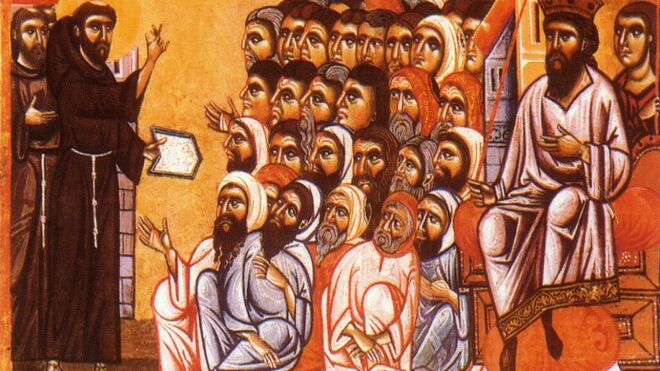
Encuentro de Francisco de Asís y el Sultán, modelo del diálogo interreligioso
https://www.religiondigital.org/vida-religiosa/Tamayo-Encuentro-Francisco-Asis-Kamil-islam-sultan_0_2163383655.html |
|
|
|
Réponse |
Message 28 de 30 de ce thème |
|
|
|
|
Réponse |
Message 29 de 30 de ce thème |
|
|
|
|
Réponse |
Message 30 de 30 de ce thème |
|
|
|
 Premier
Précédent
16 a 30 de 30
Suivant Premier
Précédent
16 a 30 de 30
Suivant
 Dernier
|
|
| |
|
|
©2025 - Gabitos - Tous droits réservés | |
|
|




![Regreso Al Fururo III (Back To The Future III) [1990] –, 40% OFF](https://m.media-amazon.com/images/M/MV5BYzgzMDc2YjQtOWM1OS00ZjhhLWJiNjQtMzE3ZTY4MTZiY2ViXkEyXkFqcGdeQXVyNDQ0MTYzMDA@._V1_.jpg)