|
|
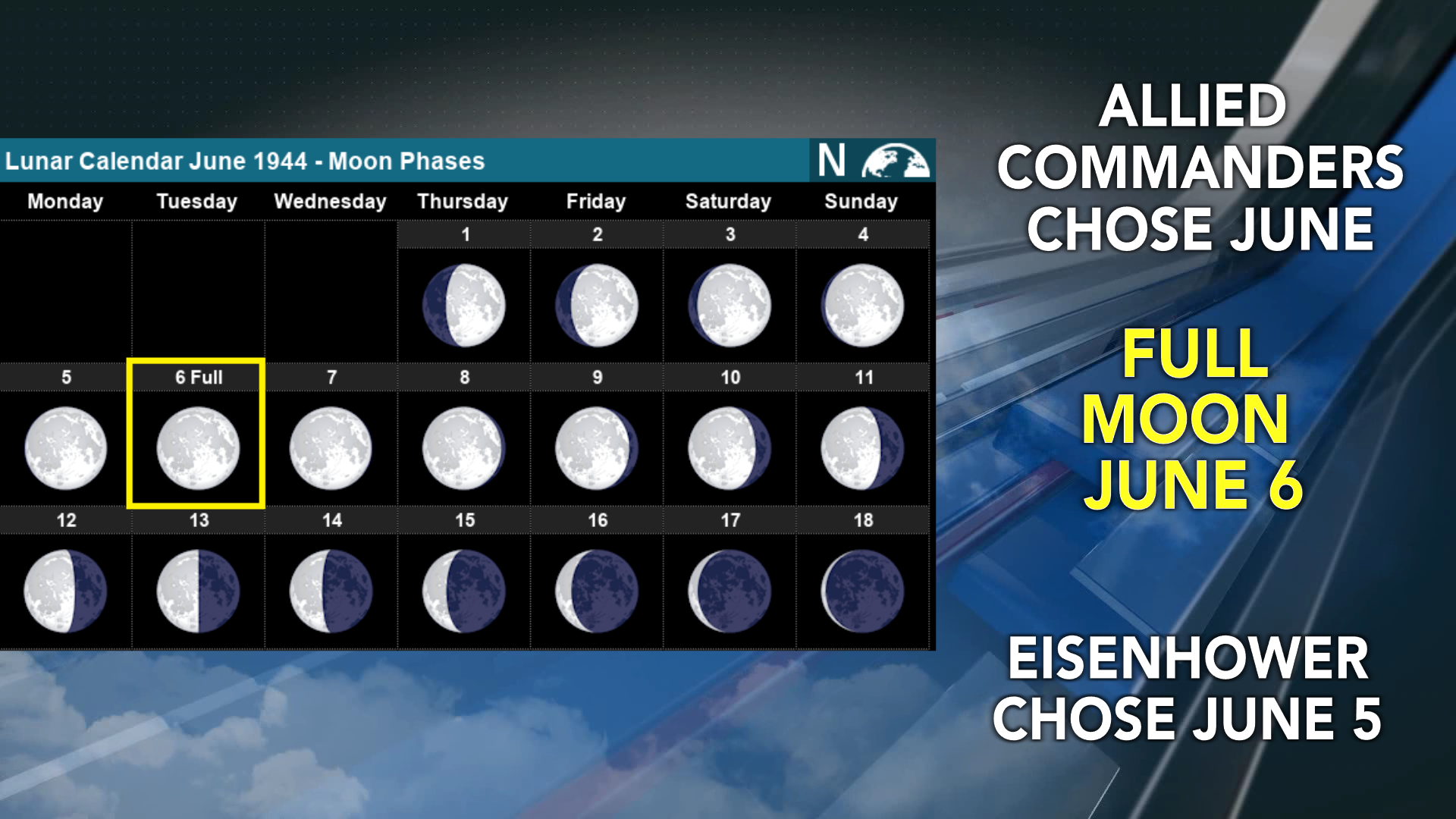
General: MOON PHASE TUESDAY JUN 6TH 1944 FULL MOON SAGITARIUS DAY D MADELEINE NORMANDY FR
Scegli un’altra bacheca |
|
Rispondi |
Messaggio 1 di 25 di questo argomento |
|
Moon Phase for Tuesday Jun 6th, 1944
The current moon phase for June 6th, 1944 is the Full Moon phase.
On this day, the moon is 14.73 days old and 99.14% illuminated with a tilt of 96.301°. The approximate distance from Earth to the moon is 383,189.81 km and the moon sign is Sagittarius.
The Moon phase for June 6th, 1944 is the Full Moon phase. In this phase, the moon is 100% illuminated when seen from Earth (hence the name Full Moon).
The Full Moon happens when the moon is on the opposite side of the Earth from the Sun. The sunlight fully illuminated the moon, and this is what we call being "full". The moon will be visible throughout the night sky as it rises at sunset in the east, transits the meridian at midnight, before setting at sunrise in the west.
The specific point at which the Full Moon occurs can be measured down to a fraction of a second. The time that passes between full moons is called the Synodic month and is 29.530587981 days long.
Fun fact: lunar eclipses can only happen within a few days of the Full Moon, but they don't happen for every Full Moon because the moon's orbit has a 5.1° tilt around the Earth compared to Earth's orbit around the Sun. Only when the intersection of these two orbits is pointing towards the centre of the Moon do we get a lunar eclipse.
|
|
|
|
Rispondi |
Messaggio 2 di 25 di questo argomento |
|
| Date |
Moon Phase
(Lunar Phase) |
Moon Sign |
Chart |
June 6, 1944
|
Waxing Gibbous |
 Sagittarius Sagittarius |
11°59’ |
(chart) |
Moon in Sagittarius:
The greatest need is to always search for something. In order to feel safe you might find that you need to have a goal, mission or philosophy that gives your life meaning. With Moon in Sagittarius you have an optimistic approach to life and you believe that things will get better even if you get into trouble.
Calculate your personal birth Moon Phase & Moon Sign
Organs influenced by Sagittarius Moon Sign:
Organs: Liver, sacrum, thigh bone, tail bone, hip muscles, hip joint, lumbar vertebra, lumbar muscle.
These organs are now more sensitive so provide them with extra care.
Surgical operations:
Surgical operations are not recommended during the Waxing Moon.
|
|
|
|
Rispondi |
Messaggio 3 di 25 di questo argomento |
|
D-DAY 1944 AND A FULL MOON.
D-Day June 6, 1944 was very carefully timed to coincide with the moment of June’s Full Moon. It was reaching the highest point in the sky at 1:19 a.m. and just as the American airborne operations began. There was a Full Moon shining all night long in Normandy.
Why D-Day required a Full Moon.
As well as moonlight throughout the night, the tides were crucial, and that’s where a Full Moon really comes in. The Allies were able to use a low tide at 5:23 a.m. on D-Day to destroy the Germans’ underwater defenses at Omaha Beach.
But they also wanted rising water so that they could beach a craft and not get stranded.
If you want to have an insight into the conditions of the Normandy landings, 76 years ago, you could visit the invasion beaches of Normandy, France on June 5 and 6, when June’s Full Moon will shine all night long.
For those not able to be at the Normandy Beaches, you could experience an eerie feeling tonight, June 6, 2020 on our own beaches, when JUNE’s FULL MOON will SHINE ALL NIGHT LONG…….. REMEMBER D-DAY.
|
|
|
|
Rispondi |
Messaggio 4 di 25 di questo argomento |
|
|
|
|
Rispondi |
Messaggio 5 di 25 di questo argomento |
|
Earth from Space – Arc de Triomphe, Paris
Status Report
May 13, 2022

Arc de Triomphe, Paris.
ESA
This striking, high-resolution image of the Arc de Triomphe, in Paris, was captured by Planet SkySat – a fleet of satellites that have just joined ESA’s Third Party Mission Programme in April 2022.
The Arc de Triomphe, or in full Arc de Triomphe de l’Étoile, is an iconic symbol of France and one of the world’s best-known commemorative monuments. The triumphal arch was commissioned by Napoleon I in 1806 to celebrate the military achievements of the French armies. Construction of the arch began the following year, on 15 August (Napoleon’s birthday).
The arch stands at the centre of the Place Charles de Gaulle, the meeting point of 12 grand avenues which form a star (or étoile), which is why it is also referred to as the Arch of Triumph of the Star. The arch is 50 m high and 45 m wide.
The names of all French victories and generals are inscribed on the arch’s inner and outer surfaces, while the Tomb of the Unknown Soldier from World War I lies beneath its vault. The tomb’s flame is rekindled every evening as a symbol of the enduring nature of the commemoration and respect shown to those who have fallen in the name of France.
The Arc de Triomphe’s location at the Place Charles de Gaulle places it at the heart of the capital and the western terminus of the Avenue des Champs-Élysées (visible in the bottom-right of the image). Often referred to as the ‘most beautiful avenue in the world’, the Champs-Élysées is known for its theatres, cafés and luxury shops, as the finish of the Tour de France cycling race, as well as for its annual Bastille Day military parade.
This image, captured on 9 April 2022, was provided by Planet SkySat – a fleet of 21 very high-resolution satellites capable of collecting images multiple times during the day. SkySat’s satellite imagery, with 50 cm spatial resolution, is high enough to focus on areas of great interest, identifying objects such as vehicles and shipping containers.
SkySat data, along with PlanetScope (both owned and operated by Planet Labs), serve numerous commercial and governmental applications. These data are now available through ESA’s Third Party Mission programme – enabling researchers, scientists and companies from around the world the ability to access Planet’s high-frequency, high-resolution satellite data for non-commercial use.
Within this programme, Planet joins more than 50 other missions to add near-daily PlanetScope imagery, 50 cm SkySat imagery, and RapidEye archive data to this global network.
Peggy Fischer, Mission Manager for ESA’s Third Party Missions, commented, “We are very pleased to welcome PlanetScope and SkySat to ESA’s Third Party Missions portfolio and to begin the distribution of the Planet data through the ESA Earthnet Programme.
“The high-resolution and high-frequency imagery from these satellite constellations will provide an invaluable resource for the European R&D and applications community, greatly benefiting research and business opportunities across a wide range of sectors.”
To find out more on how to apply to the Earthnet Programme and get started with Planet data, click here.
– Download the full high-resolution image.
|
|
|
|
Rispondi |
Messaggio 6 di 25 di questo argomento |
|
|
|
|
Rispondi |
Messaggio 7 di 25 di questo argomento |
|
|
|
|
Rispondi |
Messaggio 8 di 25 di questo argomento |
|
|
|
|
Rispondi |
Messaggio 9 di 25 di questo argomento |
|
|
|
|
Rispondi |
Messaggio 10 di 25 di questo argomento |
|
THE NAZI HUNT FOR HOLY TREASURE FROM THOR'S HAMMER TO THE HOLY GRAIL
Heinrich Himmler was infected by a virulent strain of spiritualism which fed into his racist, supremacist world view and drove him to search for holy relics.
The Holy Grail depicted on a stained glass window at Quimper Cathedral | CC BY-SA 3.0)
Lost Relics of the Knights Templar sees treasure hunters Carl Cookson and Hamilton White embark on a global odyssey. Their objective: to trace the past of a hoard of artefacts which may have once belonged to the Templars. One of their destinations is Wewelsburg, the imposing German castle which served as the spiritual sanctum for Heinrich Himmler and the SS.
Today, the castle is a looming reminder of how so many members of the Third Reich were beguiled by ancient myths, old orders of chivalry, and the occult. We all know the pantomime villain Nazis of the Indiana Jones films, desperate to dig up the Ark of the Covenant and the Holy Grail. But the fact is, many real-life Nazis were just as obsessed as their cackling silver screen counterparts.
Himmler in particular was infected by a virulent strain of spiritualism which fed into his racist, supremacist world view. For him, establishing a new Aryan empire meant resurrecting ancient Germanic myths and iconography. He believed the war against the lesser races required the overturning of traditional Christian morality, replacing it with a new kind of pseudo-religion that drew on chivalry and mysticism.
The now-notorious insignia of the SS, resembling two lightning bolts, was based on runes devised by an Austrian occultist and pagan called Guido von List. The SS itself was, in Himmler’s mind, an elite organisation in the tradition of the Teutonic Knights – an order which, like the Templars, came into existence during the Crusades. Himmler’s grand scheme was to establish Wewelsburg Castle as the Camelot of his modern-day knights. One of the rooms was even named after King Arthur, while another was designated the ‘Grail Room’.
Despite his aversion to conventional Christianity, Himmler was fascinated by the legend of the Grail, perhaps seeing it as a source of immense power. After all, he believed that another fabled artefact – Thor’s hammer – could be requisitioned as a weapon by the Third Reich. In an outlandish letter to the Ahnenerbe, a think tank set up to give academic backing to Nazi racial ideology, Himmler stated his belief that Thor’s hammer was ‘an early, highly developed war weapon of our forefathers’. For this reason, Himmler demanded that Ahnenerbe’s team should ‘find all places in the northern Germanic Aryan cultural world where an understanding of the lightning bolt, the thunderbolt, Thor's hammer, or the flying or thrown hammer exists’.
Himmler personally embarked on a failed mission to find the Holy Grail in 1940, visiting an abbey perched within the Montserrat mountain range in Catalonia. He was presumably led there by the belief that Montserrat was the real-life ‘Montsalvat’, location of the Grail in an Arthurian opera by Hitler’s favourite composer, Richard Wagner. This opera, Parsifal, was based on a medieval German poem called Parzival, written by a knight named Wolfram von Eschenbach. And this poem had already been an inspiration to another Grail hunter in the Nazi regime: Otto Rahn.
Rahn was a somewhat eccentric medievalist who believed there was a link between the story of Parzival and Catharism – a movement that flourished in medieval Europe, particularly in France. Condemned as heretics by the Catholic Church, the Cathars revived old Gnostic concepts that radically overturned traditional Christian thinking. They believed, for example, that the God of the New Testament and the God of the Old Testament were separate entities – the latter sinful, and the former good. Such ideas led to a crusade against the Cathars, and their wholesale slaughter.
A major Cathar stronghold was Montségur, a remote fortress in southwestern France. This became the site of a dramatic confrontation between the Cathars and French royal forces in 1243. Thousands of French troops besieged the fortress for nine long and gruelling months before the people inside eventually surrendered. Hundreds of Cathars were burnt alive in a bonfire after refusing to renounce their blasphemous beliefs. However, it’s believed that a number of Cathars managed to smuggle themselves out of the fortress, undetected, before their brethren surrendered.
It’s been speculated that these survivors of the siege took some kind of treasure with them. Gold, perhaps. Or maybe even the Holy Grail itself, brought back to Europe from the Holy Land, by the Templars or other Crusaders. Otto Rahn, prompted by previous occultists and mystics, identified Montségur with the ‘Montsalvat’ Grail castle of Parzival. His ideas appealed greatly to Himmler, and Rahn eventually joined the SS himself.
The extent of Rahn’s own Nazi beliefs have been a subject of debate. He himself apparently said, ‘A man has to eat. What was I supposed to do? Turn Himmler down?’ But having such powerful patronage certainly spurred him on to publish more about the Grail, with the SS brazenly inserting anti-Semitic passages into his romantic, mystical prose. Rahn eventually resigned from the SS and died of exposure on a mountain in 1939 – allegedly suicide, though the details have never been confirmed.
Colourful theories regarding the Cathars, the Grail and the potential involvement of Crusader warriors have persisted in the decades after the fall of the Third Reich. Most famously, in The Holy Blood and the Holy Grail, which theorised that the Cathars knew the secret of the Holy Grail – namely, that it was the bloodline of Christ, from the marriage of Jesus and Mary Magdalene. This concept fuelled the plot of Dan Brown’s bestseller The Da Vinci Code, which also portrays the Templars as guardians of this earth-shaking secret.
Carl Cookson and Hamilton White may not have a fabled holy relic in their hoard, but their quest may well bring new insights into the Templars and their religious treasure hunts in the Holy Land, which has fascinated everyone from eccentric occultists to high-ranking Nazis to serious historians today.
https://www.history.co.uk/shows/lost-relics-of-the-knights-templar/the-nazi-hunt-for-holy-treasure-from-thor-s-hammer-to-the-holy-grail |
|
|
 Primo
Precedente
2 a 10 de 25
Successivo
Primo
Precedente
2 a 10 de 25
Successivo Ultimo
|
|
| |
|
|
©2026 - Gabitos - Tutti i diritti riservati | |
|
|

 Argomento precedente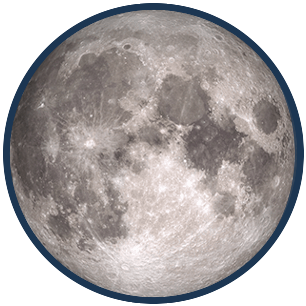

' xlink:href='%23b'/%3e%3cuse fill='black' filter='url(%23c)' xlink:href='%23b'/%3e%3cpath fill='white' d='M12.162 7.338c.176.123.338.245.338.674 0 .43-.229.604-.474.725a.73.73 0 01.089.546c-.077.344-.392.611-.672.69.121.194.159.385.015.62-.185.295-.346.407-1.058.407H7.5c-.988 0-1.5-.546-1.5-1V7.665c0-1.23 1.467-2.275 1.467-3.13L7.361 3.47c-.005-.065.008-.224.058-.27.08-.079.301-.2.635-.2.218 0 .363.041.534.123.581.277.732.978.732 1.542 0 .271-.414 1.083-.47 1.364 0 0 .867-.192 1.879-.199 1.061-.006 1.749.19 1.749.842 0 .261-.219.523-.316.666zM3.6 7h.8a.6.6 0 01.6.6v3.8a.6.6 0 01-.6.6h-.8a.6.6 0 01-.6-.6V7.6a.6.6 0 01.6-.6z'/%3e%3c/g%3e%3c/svg%3e)
' xlink:href='%23b'/%3e%3cuse fill='black' filter='url(%23c)' xlink:href='%23b'/%3e%3cpath fill='white' d='M10.473 4C8.275 4 8 5.824 8 5.824S7.726 4 5.528 4c-2.114 0-2.73 2.222-2.472 3.41C3.736 10.55 8 12.75 8 12.75s4.265-2.2 4.945-5.34c.257-1.188-.36-3.41-2.472-3.41'/%3e%3c/g%3e%3c/svg%3e)