Página principal  |  Contacto  

Correo electrónico:

Contraseña:

Registrarse ahora!

¿Has olvidado tu contraseña?

Secreto Masonico
 
Novedades
  Únete ahora
  Panel de mensajes 
  Galería de imágenes 
 Archivos y documentos 
 Encuestas y Test 
  Lista de Participantes
 EL SECRETO DE LA INICIACIÓN 
 Procesos Secretos del Alma 
 Estructura Secreta del Ritual Masónico 
 Los extraños Ritos de Sangre 
 Cámara de Reflexiones 
 
 
  Herramientas
 
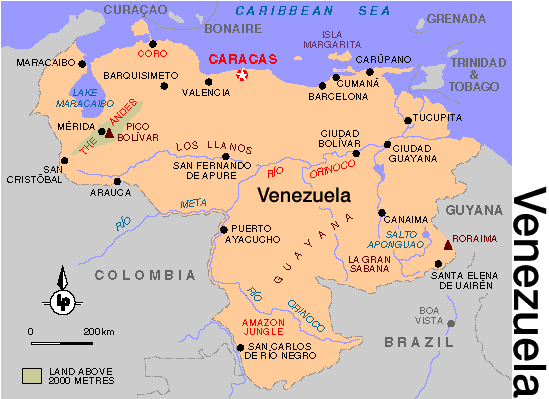
General: VENEZUELA/ORINOCO/ORION/ISHTAR/STAR/SANTO GRIAL
Elegir otro panel de mensajes
Tema anterior  Tema siguiente
Respuesta  Mensaje 1 de 146 en el tema 
De: BARILOCHENSE6999  (Mensaje original) Enviado: 09/11/2012 15:08
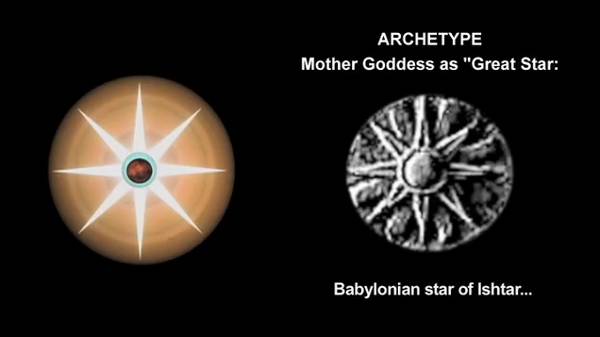
LA ESTRELLA DE ISTAR, OSEA LA MISMA BANDERA DE INGLATERRA
YHWH SE RIE DE LOS FANATICOS
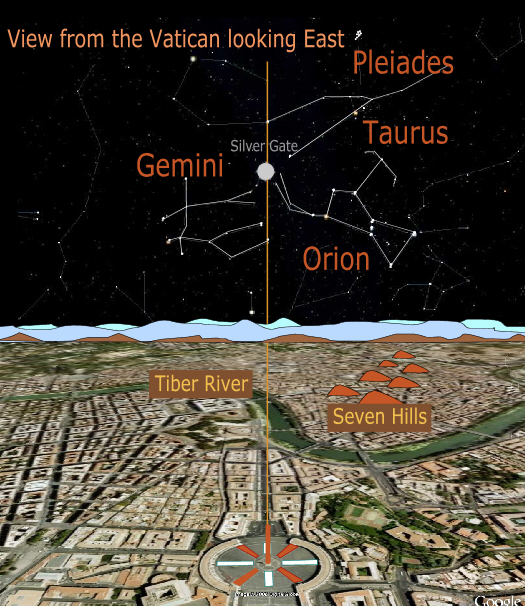
ESTRELLA DE 8 PUNTAS (PLAZA DE SAN PEDRO) EN CONTEXTO A LA LLAVE (DISEÑO DEL VATICANO)-THE LOST SYMBOL (BANDERA DE INGLATERRA/ ESTRELLA DE OCHO PUNTAS/ORION)
OBSERVEN EL NUMERO 8 (PLAZA DEL VATICANO/ORION) Y LA ESTRELLA DE 5 PUNTAS EN CASTILLO SAN ANGELO
ESTA TODO CODIFICADO AMIGOS, PAREMOS DE DEMONIZAR AL OTRO MIRANDO LA PAJA QUE TIENE EN EL OJO Y NO VIENDO LA VIGA QUE TENEMOS EN EL NUESTRO POR EL AMOR DE DIOS. DIOS ES AMOR
 
Eje galáctico entre el Centro galáctico y Betelegeuse: en medio, el Sol, y la Tierra el 19 de diciembre
 
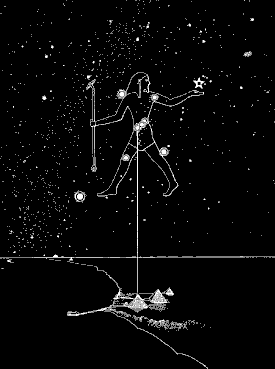
RIO ORINOCO/ORIN/ORION/CONSTELACION ECUATORIAL
El Sol sobre Orión a las 12 del solsticio del 21 de junio
12 horas del mediodía del Solsticio del 21 de junio. Hemisferio norte. Orión portando la luz. Imágenes obtenidas con stellarium.org
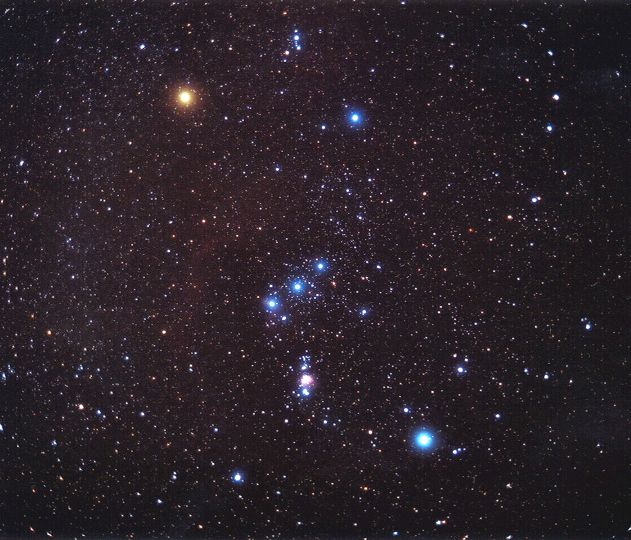
ORIONtación del ecuador del Planeta Agua Constelación de Orión
Simple geometría estelar. De cintura a Cinturón: una romántica relación


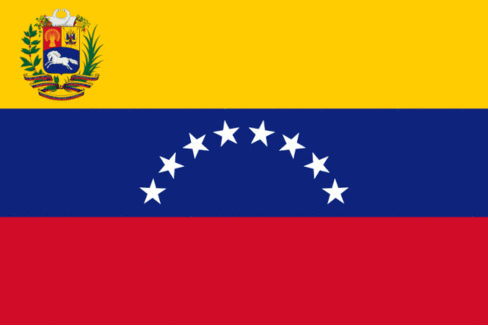
8 ESTRELLAS Y ENCIMA DE 5 PUNTAS.
 
EL MISMO MENSAJE
 
EL GRIAL
OBSERVEN LA SALIDA DEL SOL EN EL HORIZONTE/HORUS/ROJO EN EL CONTEXTO AL SOL AMARILLO Y EL MAR
 
8 PUNTAS (PIRAMIDAL DESDE LA PARTE SUPERIOR/NUMERO PI=3.14)
LA LETRA H ES LA OCTAVA LETRA DEL ABECEDARIO INGLES. ¿CASUALIDAD O CAUSALIDAD? ¿USTED DEMONIZANDO CON ODIO PUEDE VER ESTOS MENSAJES ESPIRITUALES?  CLARO QUE NO.
LA LETRA H TIENE LA MISMA FORMA QUE LA CONSTELACION DE ORION
 
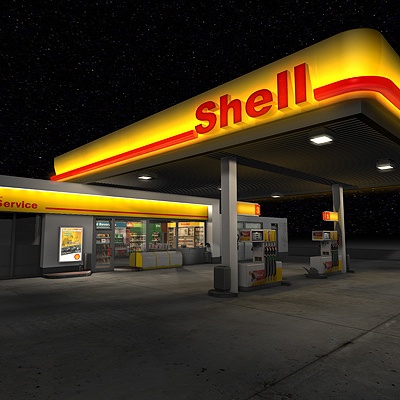
shell/sol naciente/ocho puntas


Primer  Anterior  27 a 41 de 146  Siguiente   Último 
Respuesta  Mensaje 27 de 146 en el tema 
De: BARILOCHENSE6999 Enviado: 15/12/2014 01:46

Respuesta  Mensaje 28 de 146 en el tema 
De: BARILOCHENSE6999 Enviado: 15/12/2014 01:47

Respuesta  Mensaje 29 de 146 en el tema 
De: BARILOCHENSE6999 Enviado: 15/12/2014 01:47

Respuesta  Mensaje 30 de 146 en el tema 
De: BARILOCHENSE6999 Enviado: 15/12/2014 01:48

Respuesta  Mensaje 31 de 146 en el tema 
De: BARILOCHENSE6999 Enviado: 15/12/2014 01:48

Respuesta  Mensaje 32 de 146 en el tema 
De: BARILOCHENSE6999 Enviado: 15/12/2014 01:48

Respuesta  Mensaje 33 de 146 en el tema 
De: BARILOCHENSE6999 Enviado: 15/12/2014 01:48

Respuesta  Mensaje 34 de 146 en el tema 
De: BARILOCHENSE6999 Enviado: 15/12/2014 01:49

Respuesta  Mensaje 35 de 146 en el tema 
De: BARILOCHENSE6999 Enviado: 15/12/2014 01:49

Respuesta  Mensaje 36 de 146 en el tema 
De: BARILOCHENSE6999 Enviado: 15/12/2014 01:50

Respuesta  Mensaje 37 de 146 en el tema 
De: BARILOCHENSE6999 Enviado: 15/12/2014 01:50


2. El templo de Isis.

La estrella del Este, Sirio, el cinturón de Orión, el sistema de Draco y las Pleyades.

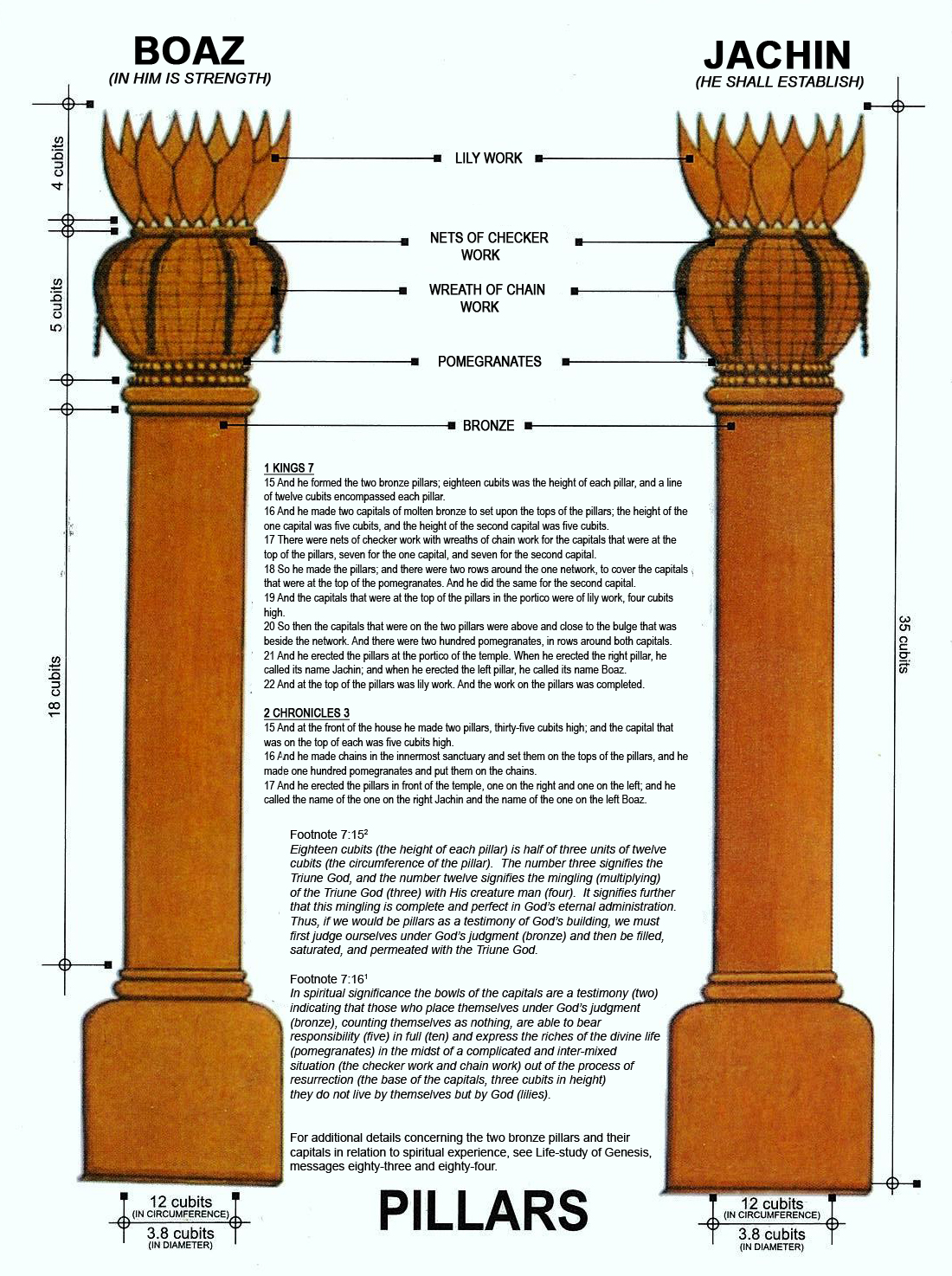
3. Jachin y Boaz.

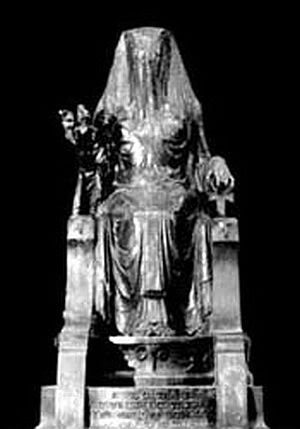
Estructuras gemelas, portal a otros mundos, piso cuadriculado y velo de Isis.

4. El pasaje del velo de Isis.

Ritual de sintonización a frecuencias mas altas. Portal estelar.

5. El piso cuadriculado.

Energía positiva y negativa, bien y mal, luz y obscuridad, elemento Agua (portal estelar), Veves (invocación espíritus y criaturas).

6. La antimateria.

Colisionador Cern, Portal Estelar.

7. El Nexus.

Corredor de puertas y consciencia como llave.

8. Merkaba.

Vehículo dimensional, seres azules metamórficos, significado de la G masónica (proximamente Todo Está Relacionado les mostrará el verdadero significado).

DAVID
VIDEOS MUSICALES
VID/VINO/GRIAL
VIDA
GATE/PUERTA/NUMERO 33
1232. Salmos 128:3: Tu mujer será como VID que lleva fruto a los lados de tu casa;
Tus hijos como plantas de olivo alrededor de tu mesa.
BOLIVIA= OLIVO=SANTO GRIAL
SI-MON B-OLIVA-R (COLUMBIA)
COLUMBA=COLUMBIA= PALOMA=SEÑAL DE JONAS (PALOMA)=RIO MAGDALENA
ULTRA MASONERIA PARA GLORIA DEL ARQUITECTO Y CONSTRUCTOR DEL UNIVERSO (HEBREOS 11:10)

Respuesta  Mensaje 38 de 146 en el tema 
De: BARILOCHENSE6999 Enviado: 15/12/2014 01:51

Respuesta  Mensaje 39 de 146 en el tema 
De: BARILOCHENSE6999 Enviado: 21/12/2014 02:39
 

Trip to Italy and France

My wife, son, and I recently returned from a 3 week trip to Italy and France and we are continuing to digest the experience. International travel can shift one’s perspective and I no longer see myself or the familiar surroundings of home quite the same. It is much harder to articulate exactly what this shift consists of.

In Italy we first visited Venice and Bologna, then rented a car and explored the Umbrian towns of Perugia, Spello, Assisi, and Bevagna.

In Venice there must have been 20,000 people in St. Mark’s square on a rainy day! We were there right before Pascua and that is probably why there were so many Italian tourists in Venice. Here is a detail from Venice’s Church of the Maddalena (Magdaline).

Venice Maddalena detail
 

The most notable feature is the portal, with masonic symbols over the door (probably connected to the Balbo’s membership in the Knights Templar). The interior has hexagonal plan with four side chapels and a presbytery. Source

Sapientia Aedificavit Sibi Domum is Latin for “Wisdom Has Built Her House.” So much praise for Mary Magdalene. This inscription suggests to me that she was the mother of the bloodline of Jesus rather than the prostitute the church fathers have traditionally made her out to be.

I analyzed the symbols over the door in AutoCAD and amazingly, the area of the triangle precisely equals the area of the circle. So instead of squaring the circle here we see an example of triangulating the circle.

Here is a astronomical clock in Piazza San Marco. There is another 24 hour clock on the other side of the Rialto bridge. See my Volume 2 film for deep connections to the 24 hour day. The Venetians must have understood that the position of the Sun signals more than the time of day. The Earth rotates through the changing influences of the zodiac and don’t forget the Moon’s position in the cycle is noted in the center. Interesting also that the singular massive billboard at the other end of the piazza is for a IWC Schaffhausen watch with a perpetual calendar that also tracks the lunar cycle.

VeniceZodiacalClock

Saturn is the god of time and the masks of Venice’s Saturnalia are world famous. Here I am trying on a Plague Doctor’s mask.

Venice-Mask

After spending a few days in the lovely medieval village of Bevagna, we drove through the countryside exploring Umbria and spent the night in Orvieto. Here is Orvieto’s most impressive Facade of God.

Orvieto

Northern Italy was to me surprisingly lush and densely populated. Italy has about twice as many people as live in all of the vastness of Canada!

I was amazed to see immense fields of solar panels along the highway. We saw this again in France along with large wind turbines.

We dropped off the car in Orvietto and took the high speed train to Rome. Traveling by train is fantastic, especially since so many high speed rail lines have gone in. Trains are much easier than flying and way more convenient. The train drops you off in the city center so you can sometimes walk to your destination whereas the airport must be placed a great distance away, usually necessitating a long taxi or bus ride. There is no security at train stations so the hassle factor is greatly reduced.

Rome was very crowded but I’m told it had nothing like the number of people present a few weeks earlier when the new Pope was selected. Here I am in front of St. Peter’s, standing on the Western wind rose marker. Papa Francesco didn’t come out to meet me.

Scott Onstott in the Vatican

In the porch of the Pantheon I saw this interesting symbol suggesting masonry or sacred geometry.

Pantheon symbol

We flew from Rome to Marseilles, leaving behind the land of delicious pasta and pizza. In France we explored many medieval villages including Lourmarin, Bonnieux, Lacoste, Roussilon, Saignon, Apt, Rustrel, Goult, Menerbes, Senanque, Isle sur la Sorgue, Viens, Buoux, Simiane la Rotonde, and many other villages I forget the name of in the quiet and sparsely populated Luberon. We then drove west and stayed in the more populated Saint Remy de Provence, and explored Eygalieres, Uzes, the Pont du Gard, and Avignon. We took the TGV from Avignon to Paris and stayed in the City of Light for 5 days before returning to quiet Cortes Island, British Columbia, Canada where I live.

After reviewing the close to 3000 pictures we took on our trusty Canon point-and-shoot, I feel that digital photos don’t express emotional content very well. I have pioneered a technique that I discussed in one of my Photoshop User magazine articles (Sept 2012 issue) for turning photos into vibrant paintings. These digital “paintings” seem to me to be more emotive and alive as compared to photos.

Glanum

The above image is of Glanum, the ruins of a Roman village near Saint Remy de Provence. The central part of the Roman town wasn’t discovered when Van Gogh painted these olive trees on site in 1889. The field where the olive trees were was excavated in 1921 and a forgotten town from 2000 years ago was rediscovered.

Olive Trees with the Alpilles in the Background by Van Gogh

Olive Trees with the Alpilles in the Background by Van Gogh

Roman ruins are impressive. Stone is so permanent. Even today, most everything in Italy and France is made of stone or brick. I can’t emphasize enough how significant this is.

Gordes in the Vaucluse

Gordes in the Vaucluse

Stone buildings with slate or tiled roofs last for hundreds if not thousands of years. Consequently the impression I get is that almost all of the housing is already existing. Therefore most of the construction effort in the built environment lays in restoration and renovation. Interiors can be redone and one can have a sleek modern interior inside a medieval stone shell. So people are largely freed up from having to each build their own house every generation like we seem to do in North America. Europeans seem to stay put also and live in the same place most of their lives, or at least that’s my impression. I have lived in almost 2 dozen houses in my life so far.

In Italy and France I had a palpable sense of permanence, continuity with the past, and how everything is already worked out by one’s forebears. This is a beautiful thing.

It was hard to find anything but Italian food in Italy and French food in France outside larger cities. I love both of these cuisines but after a while I was craving Indian, Thai, Japanese, Mexican, Vegan-Raw-Organic, just to name a few. Then it dawned on me that North America is a mashup, a hodgepodge, a mixed bag of many influences. Nothing is very permanent in the US and Canada. We seemingly have many more options but freedom can also be paralyzing. Without a traditional culture’s wisdom to follow, many are lost. But in that chaos there is also opportunity.

We had one of our most memorable dinners in Bonnieux, a village in the Luberon which was once a Templar stronghold. The L’Arome restaurant building dates from the 13th century, around the time the Templars discovered the Americas.

Bonnieux-restaurant

Adjacent to the restaurant is a bar with an highly interesting name. Google tells me le Terrail is the name of the marquisate that Bonnieux probably belonged to long ago.

Bar-Le-Terrail-33

The fact that the bar’s name is “33” is something that I took as a confirmation that I was recognizing another secret in plain sight. Why 33? It is a harmonic of the universe. Do the bar owners know this? Are the owners part of some kind of vast conspiracy going back at least to the Templars? :)

It wasn’t open and I don’t speak French well enough to ask for anything more than a pain au chocolat anyway. And even then people don’t understand me. I have found the words “chocolate croissant” work much more effectively in France as you have to hit the French accent perfectly in order to be understood at all. My wife lived in France for a year and became fluent but still gets this treatment occasionally.

Incidentally Bonnieux’s neighboring village of Lacoste was the domain of the Marquis de Sade, and his chateau has fallen into as much ruin as his “sadistic” reputation. Lacoste is now primarily owned by French fashion designer Pierre Cardin, no connection to the fashion label Lacoste which was named after a French tennis player who invented the tennis or “polo” shirt. Here is the memorial to the Marquis de Sade next to his dungeons in Lacoste.

Marquis de Sade

We went to the Abbaye Notre-Dame de Sénanque, a 12th century Cistercian monastery. On the tour of the abbey I was impressed by how beautiful the simple stonework is and how monks have lived in silence there for 850 years and amazingly a few still do.

Monastery

We attended Vespers and were delighted to hear the monks sing gregorian chant, one of the only exceptions allowed in their vows of silence. Chanting really sacralizes the space and makes you feel the architecture and devotion to God like nothing else.

On a guided tour of monastery I came across this measuring instrument that reveals the units the Cistercians were using before the metric system. It says Coudée 52.36, Pied 32.36, Empan 20?, ?lme 12.56 [a 3 is written over the 5 as a correction so maybe this is supposed to be 12.36], and Paume 7.64. Is this the key to medieval measure? This will require further analysis.

CistercianMeasure

To North American eyes, the cars in Europe are beyond tiny. In Bologna where we were staying with friends we crammed 5 people into a 1980’s Fiat 127, no problem other than the loading and unloading process which is similar to how it was in my well loved 1967 VW Beetle. Their Fiat has a 900cc engine, smaller than most larger motorcycle engines. But that’s nothing…they have 50cc cars in Italy! Yes you read that right, cars with tiny motorscooter engines are popular because they are exempt from requiring a license to drive (apparently this is a controversial law in Italy). Here is a 50cc car.

50cc car

In France I saw Smart cars parked 90 degrees to how cars parallel park along the road; they just back into the curb and you 2 smart cars can fit in 1 normal parking space. Three wheeled motorscooters were popular in Paris having 2 front wheels in some kind of complicated steering linkage such that the scooter consequently doesn’t need a kickstand and presumably has better traction.

Everything in Europe is compact and efficient. For example, the roads in the Luberon are very narrow. What I would clearly call one single lane hosts 2-way traffic which can be nerve wracking.

Road-Luberon

The Luberon has 2nd gear and sometimes 3rd gear roads meaning they twist and they turn all the time. Everyone there seems to be part-time Formula 1 drivers and they push their cars to the limit. On Sundays dozens of motorcyclists show up racing their bikes for the pleasure of it.

The roads form a sort of neural network between villages so that every village is connected to all those villages surrounding them without having arterials nor freeways.

I really enjoyed feeling the connection with history and those who have come before. This is something that we have very little of in North America. It gives one perspective to consider the past.

GothicRuin


Respuesta  Mensaje 40 de 146 en el tema 
De: BARILOCHENSE6999 Enviado: 18/01/2015 20:04
 
JACOB= SANTIAGO (JACOBO)= ISRAEL= VENUS= VENCEDOR= LUCERO DEL ALBA= VENECIA = SAN MARCOS
 

Génesis 32

1. Jacob siguió su camino, y le salieron al encuentro ángeles de Dios.
2. Y dijo Jacob cuando los vio: Campamento de Dios es este; y llamó el nombre de aquel lugar Mahanaim.
3. Y envió Jacob mensajeros delante de sí a Esaú su hermano, a la tierra de Seir, campo de Edom.
4. Y les mandó diciendo: Así diréis a mi señor Esaú: Así dice tu siervo Jacob: Con Labán he morado, y me he detenido hasta ahora;
5. y tengo vacas, asnos, ovejas, y siervos y siervas; y envío a decirlo a mi señor, para hallar gracia en tus ojos.
6. Y los mensajeros volvieron a Jacob, diciendo: Vinimos a tu hermano Esaú, y él también viene a recibirte, y cuatrocientos hombres con él.
7. Entonces Jacob tuvo gran temor, y se angustió; y distribuyó el pueblo que tenía consigo, y las ovejas y las vacas y los camellos, en dos campamentos.
8. Y dijo: Si viene Esaú contra un campamento y lo ataca, el otro campamento escapará.
9. Y dijo Jacob: Dios de mi padre Abraham, y Dios de mi padre Isaac, Jehová, que me dijiste: Vuélvete a tu tierra y a tu parentela, y yo te haré bien;
10. menor soy que todas las misericordias y que toda la verdad que has usado para con tu siervo; pues con mi cayado pasé este Jordán, y ahora estoy sobre dos campamentos.
11. Líbrame ahora de la mano de mi hermano, de la mano de Esaú, porque le temo; no venga acaso y me hiera la madre con los hijos.
12. Y tú has dicho: Yo te haré bien, y tu descendencia será como la arena del mar, que no se puede contar por la multitud.
13. Y durmió allí aquella noche, y tomó de lo que le vino a la mano un presente para su hermano Esaú:
14. doscientas cabras y veinte machos cabríos, doscientas ovejas y veinte carneros,
15. treinta camellas paridas con sus crías, cuarenta vacas y diez novillos, veinte asnas y diez borricos.
16. Y lo entregó a sus siervos, cada manada de por sí; y dijo a sus siervos: Pasad delante de mí, y poned espacio entre manada y manada.
17. Y mandó al primero, diciendo: Si Esaú mi hermano te encontrare, y te preguntare, diciendo: ¿De quién eres? ¿y adónde vas? ¿y para quién es esto que llevas delante de ti?
18. entonces dirás: Es un presente de tu siervo Jacob, que envía a mi señor Esaú; y he aquí también él viene tras nosotros.
19. Mandó también al segundo, y al tercero, y a todos los que iban tras aquellas manadas, diciendo: Conforme a esto hablaréis a Esaú, cuando le hallareis.
20. Y diréis también: He aquí tu siervo Jacob viene tras nosotros. Porque dijo: Apaciguaré su ira con el presente que va delante de mí, y después veré su rostro; quizá le seré acepto.
21. Pasó, pues, el presente delante de él; y él durmió aquella noche en el campamento.
22. Y se levantó aquella noche, y tomó sus dos mujeres, y sus dos siervas, y sus once hijos, y pasó el vado de Jaboc.
23. Los tomó, pues, e hizo pasar el arroyo a ellos y a todo lo que tenía.
24. Así se quedó Jacob solo; y luchó con él un varón hasta que rayaba el alba.
25. Y cuando el varón vio que no podía con él, tocó en el sitio del encaje de su muslo, y se descoyuntó el muslo de Jacob mientras con él luchaba.
26. Y dijo: Déjame, porque raya el alba. Y Jacob le respondió: No te dejaré, si no me bendices.
27. Y el varón le dijo: ¿Cuál es tu nombre? Y él respondió: Jacob.
28. Y el varón le dijo: No se dirá más tu nombre Jacob, sino Israel; porque has luchado con Dios y con los hombres, y has vencido.
29. Entonces Jacob le preguntó, y dijo: Declárame ahora tu nombre. Y el varón respondió: ¿Por qué me preguntas por mi nombre? Y lo bendijo allí.
30. Y llamó Jacob el nombre de aquel lugar, Peniel; porque dijo: Vi a Dios cara a cara, y fue librada mi alma.
31. Y cuando había pasado Peniel, le salió el sol; y cojeaba de su cadera.
32. Por esto no comen los hijos de Israel, hasta hoy día, del tendón que se contrajo, el cual está en el encaje del muslo; porque tocó a Jacob este sitio de su muslo en el tendón que se contrajo.

Respuesta  Mensaje 41 de 146 en el tema 
De: BARILOCHENSE6999 Enviado: 19/01/2015 23:12


República de Venecia

De Wikipedia, la enciclopedia libre
 
Serenìsima Repùblica Vèneta
Serenissima Repubblica di Venezia
Serenísima República de Venecia

Rotari's Italy.svg

697-1797

Flag of the Habsburg Monarchy.svg

Bandera Escudo
Bandera Escudo
Ubicación de República de Venecia
República de Venecia, 1796
Capital Venecia
Idioma principal véneto y latín
Otros idiomas dalmático, istrorrumano, griego medieval
Religión Católica romana
Gobierno República
Historia  
 • Establecido 697
 • Disolución 17 de abril de 1797

La Serenísima República de Venecia nació como ciudad-estado en el norte de Italia, a orillas del mar Adriático, y luego reunió a todos los vénetos del Triveneto, Istria y Dalmacia. Existió como tal desde el siglo IX hasta 1797. También recibe el nombre de Serenissima Repubblica di San Marco, pues San Marcos es su santo patrono.

La Serenissima se constituyó progresivamente como Estado durante la Edad Media y se convirtió en una de las principales potencias económicas del mundo, ocupando un lugar preponderante en los intercambios comerciales entre el Mediterráneo occidental y oriental. Además, con sus instituciones oligárquicas notablemente estables durante casi un milenio, representó un papel político esencial.

A partir del siglo XVI experimentó una fase de declive político y territorial, eclipsado por un extraordinario desarrollo artístico, hasta que desapareció en 1797, vencida por Napoleón Bonaparte, pasando posteriormente a ser dominada por el Imperio austríaco y el Reino de Italia.


Historia[editar]

Orígenes[editar]

Se tiene como fecha de la fundación de Venecia el año 421, en el cual los habitantes de la región, ante la amenaza de las invasiones de longobardos y hunos que habían destruido la capital, Aquilea, se refugiaron en las marismas de la desembocadura del Po, en la laguna situada en el golfo, entre la península itálica y la balcánica, llamado más tarde precisamente golfo de Venecia. Las construcciones de esta época eran simples edificaciones lacustres, erigidas sobre palafitos. En razón de esta estratégica característica geográfica, Venecia tuvo desde entonces una gran independencia respecto a sus dominadores gracias a la barrera natural de la cadena de islas en una laguna profunda que impedía un ataque de caballería o infantería.

Dependencia del Imperio bizantino[editar]

Cuando el general Belisario conquistó para el Imperio bizantino gran parte de Italia en el siglo VI, Venecia pasó a formar parte del dominio de dicho imperio, dependiendo administrativamente de la ciudad de Rávena, sede del poder imperial en la península itálica, y estando gobernada por un oficial militar, el magister militum,[1] y subordinado a este, estaban los tribunos que ejercían la autoridad política en sus distritos.[2] La historia legendaria establece que para reemplazar a estos tribunos Paolo Lucio Anafesto fue elegido como el primer dux a finales del siglo VII. Sin embargo, el primer dux histórico surge de la revuelta en el exarcado de Rávena contra la iconoclasia del emperador, y contra el magister militum; es elegido el veneciano Orso Ipato como dux. Con la revuelta suprimida, el emperador reconoció al dux y le concedió el título de hypatos (cónsul). No obstante, Venecia siguió siendo una provincia del exarcado de Rávena, y se siguió nombrando al magister militum. No obstante, con la conquista lombarda del exarcado de Rávena, la provincia de Venecia permaneció en solitario bajo el gobierno del dux Orso Ipato, en calidad de gobernante autónomo manteniendo la fidelidad al imperio bizantino.[3]

Independencia y expansión[editar]

Máxima expansión de la República de Venecia; en rojo territorio veneciano (oscuro original, claro temporal)(en italiano).

La decadencia del poder imperial en el siglo IX fue aprovechada por Venecia para actuar de forma independiente con los francos y con los eslavos sin seguir los dictados del Imperio. Con la recuperación de la iniciativa bizantina en Italia en época de Basilio I, este concedió al dux veneciano el título de protospatharios, equiparándolo a la familia imperial.[4]

La ubicación de Venecia en en una laguna natural hacía arriesgado el intento de conquistarla, en tanto el arte naval europeo en la Baja Edad Media estaba muy poco desarrollado. Precisamente, fueron los marinos venecianos quienes colaboraron con el desarrollo de la construcción naval en Europa por razones primordiales de necesidad: Venecia poseía un territorio continental muy pequeño, por lo cual su fuente principal de subsistencia fue el comercio en el Adriático, y ante ello el estímulo a la navegación marítima se había transformado en una necesidad y, a la vez, en fuente de poder político y financiero.

En la Alta Edad Media, Venecia prosperó como nunca antes gracias al control del comercio con Oriente y a los beneficios que esto suponía, expandiéndose por el mar Adriático, aproximadamente desde 991 con el reinado del dux Piero II Orseolo, bajo cuyo régimen empezó la expansión veneciana por las costas de Dalmacia. El hecho que muy pocos estados de la época poseyeran los conocimientos navales de los venecianos favoreció a éstos en el desarrollo de una flota comercial y militar muy extensa para su época, que les sirvió para instalar puestos comerciales en cada rincón del Mediterráneo oriental.

En realidad, como la expansión político-militar del Imperio bizantino se concentraba en las rutas de tierra firme, la corte de Constantinopla dejaba fácilmente las islas mediterráneas a la ambición mercantil de los venecianos, que las aprovechaban como avanzadas comerciales hacia Asia Menor y el norte de África. La expansión territorial veneciana fue tan exitosa al punto que a mediados del siglo XI una bula papal reconoció la soberanía de Venecia sobre toda la costa oriental del Adriático.

La ubicación de Venecia en el medio del mar Mediterráneo le permitía un activo rol mercantil entre Bizancio y el resto de Europa, además su ubicación en el extremo norte del Adriático la defendía de ataques marítimos debido a su dominio militar sobre Dalmacia; tales circunstancias aumentaron el poderío veneciano en una época cuando las flotas comerciales en el Mediterráneo eran raras. No obstante, otras repúblicas marítimas de Italia empezaron a competir abiertamente con Venecia, como fue el caso de Pisa, Amalfi y Génova.

Los venecianos sostuvieron especialmente una fuerte rivalidad comercial y militar con la República de Génova, situada en el extremo noroeste de Italia, y que paulatinamente aumentó su influencia comercial en el Mediterráneo Oriental y en el mar Negro. Pese al aumento del poderío genovés entre los siglos XIV y XV, Venecia pudo mantener su hegemonía comercial sobre Génova a largo plazo.

Otro factor clave del éxtio veneciano fue la tolerancia religiosa y social de la República Veneciana hacia los judíos y musulmanes, de hecho esta tolerancia de los venecianos en materia religiosa les permitió comerciar libremente con los estados islámicos del Norte de África, sirviendo de valiosos intermediarios entre éstos y Europa, sin que las diferencias religiosas fueran obstáculo alguno para las relaciones comerciales.

Paralelamente, una política similar era seguida hacia el judaísmo pues se permitía libremente el asentamiento de comerciantes judíos en territorio veneciano, permitiendo a éstos ejercer el comercio e industria libremente, además de beneficiar a Venecia por darle acceso a las redes de contactos financieros que las comunidades judías de toda Europa habían conseguido preservar.

Del mismo modo, la Reforma Protestante de inicios del siglo XVI no tuvo mayor acogida en Venecia pero ello no impidió que los venecianos mantuvieran excelentes relaciones comerciales con países del Norte de Europa que habían abrazado el protestantismo, pese a las presiones de los Estados Pontificios y de España durante la Contrarreforma. A pesar que desde inicios del siglo XVI el Vaticano había intentado que Venecia implantase en sus dominios el Tribunal de la Inquisición, los gobernantes venecianos rechazaron aplicar en la práctica toda medida que les privase de sus relaciones comerciales con los no católicos.

Apogeo de la República[editar]

República de Venecia (naranja) y sus territorios en los siglos XV y XVI.
Gentile Bellini: Procesión en la PLaza de San Marcos (1496), 367x745  cm, Galleria dell'Accademia, Venecia.

Después del año 1100, Venecia era ya una gran potencia mediterránea en los planos económico, político y militar, al punto que podía ofrecer sus servicios como flota naval al propio Imperio bizantino y ganar gracias a ello privilegios comerciales excepcionales en Constantinopla, el mayor centro comercial de Europa en esos años, empleando para este fin una combinación de diplomacia y poderío mercantil.

El rol intermediario de los venecianos les permitió ejercer un control casi completo sobre los intercambios comerciales europeos con el Oriente Medio, mientras que los reinos musulmanes del Mediterráneo recurrían también a Venecia como intercesor comercial con el resto de Europa. La República Veneciana, más interesada en la preservación del comercio internacional que en la expansión religiosa o militar, aparecía como el intermediario mercantil ideal para los reinos mediterráneos de cualquier religión a partir del siglo XII, lo cual le permitió a Venecia acumular grandes riquezas y ganar ventajas comerciales.

La flota veneciana, por su poderío y gran tamaño, fue determinante para realizar el saqueo de Constantinopla en la Cuarta Cruzada en 1204, acelerando con este hecho la decadencia del Imperio bizantino. Como consecuencia de la severa debilidad bizantina, Venecia logró anexionarse Creta y Eubea a inicios del siglo XIII, expandiendo aún más su poder y riqueza, llegando las flotas comerciales venecianas a instalar bases comerciales inclusive en las orillas del mar Negro, específicamente en la actual costa de Crimea. Esta expansión hacia territorios de la Rus de Kiev le permitió a los comerciantes venecianos instalarse en los puntos más occidentales del comercio asiático, ganando con ello un privilegiado acceso a los valiosos productos traficados por la Ruta de la Seda desde China. Esta importantísima ventaja comercial, inexistente para otros estados europeos de la época, fue explotada excelentemente por los venecianos.

Die Ca' d'Oro, palacio en el Canal Grande, construido entre 1421–1442
Venecia por Canaletto, 1738-40.
 
http://es.wikipedia.org/wiki/Rep%C3%BAblica_de_Venecia


Primer  Anterior  27 a 41 de 146  Siguiente   Último 
Tema anterior  Tema siguiente
 
©2026 - Gabitos - Todos los derechos reservados